TORONTO, Canada — October 31, 2026
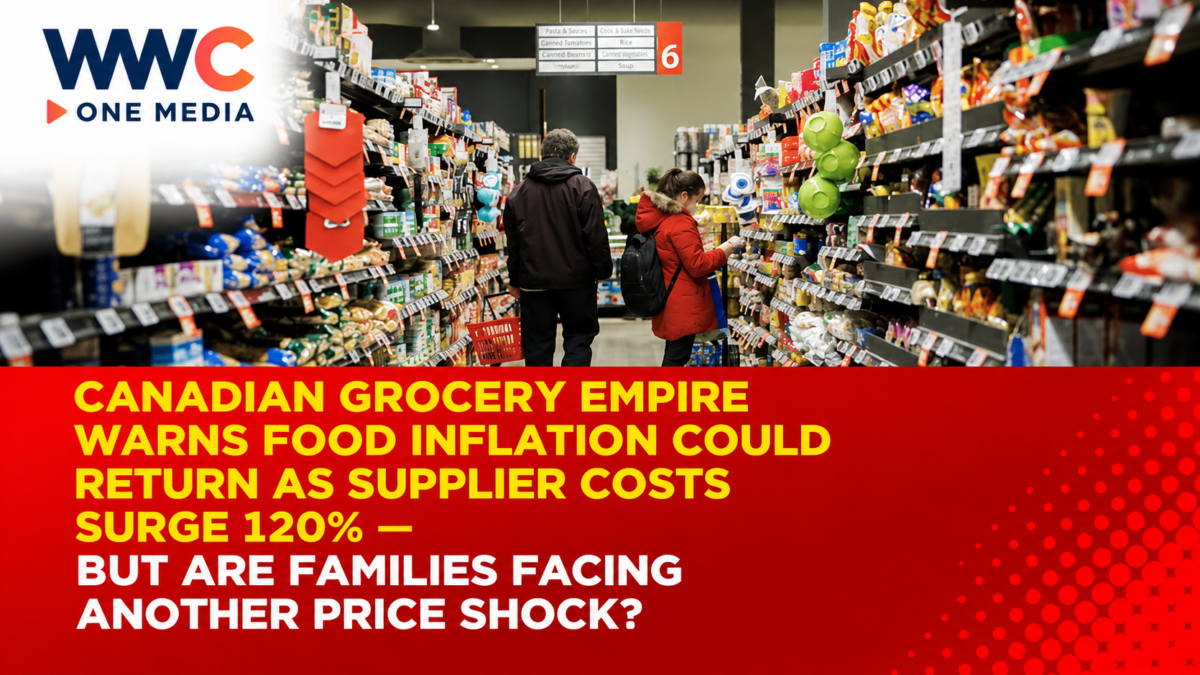
Canadian families who hoped the worst of the grocery inflation crisis was finally behind them may be facing another financial challenge as one of the country’s most influential supermarket businesses warns that rising supplier costs, expensive fuel and global trade disruptions could push food prices higher again.
The warning comes as billionaire-linked grocery giant Loblaw Companies, controlled through the Weston family’s business interests, reports a sharp increase in the value of price increases requested by suppliers.
According to Loblaw’s October 26 Food Inflation Report, the dollar value of proposed supplier price increases for the fourth quarter was 120% higher than a year earlier, even though the number of requests had declined by approximately 35%.
The development suggests that fewer suppliers are seeking price adjustments, but those requests collectively involve substantially larger amounts.
The concern comes at a particularly sensitive moment for Canadian households.
Official figures show grocery inflation slowed to just 1.7% in September, down from 2.8% in August.
But supermarket prices remain approximately 33% higher than they were in September 2020, according to figures cited in Canadian retail industry reporting.
Meanwhile, higher global energy prices, transportation costs, tariffs and extreme weather threaten to increase expenses throughout the food supply chain.
The Bank of Canada has also warned that businesses may pass more of their rising costs to consumers in the coming months.
The crucial question is whether the recent slowdown in grocery inflation represents lasting relief — or merely a temporary pause before another wave of food price increases.
Canada’s Grocery Inflation Slows, But New Price Pressures Are Building
At first glance, Canada’s latest food inflation figures appear encouraging.
According to Statistics Canada data cited in Loblaw’s October inflation report, grocery prices increased 1.7% year over year in September.
That was a notable slowdown from August’s 2.8% increase.
The improvement suggests that some of the extreme food-price pressures experienced in recent years have eased.
However, slower inflation does not necessarily mean products have become cheaper.
A 1.7% inflation rate means the measured grocery price basket is still more expensive than it was a year earlier, but prices are increasing at a slower pace.
For households that have already endured several years of cumulative increases, the cost of everyday food remains significantly elevated.
Canada’s largest supermarket chains are therefore confronting a consumer market in which affordability continues to shape purchasing decisions.
And new wholesale pressures threaten to undermine the recent improvement.
Loblaw Reports a 120% Jump in Supplier Price Increase Requests
One of the most striking figures in Loblaw’s October report concerns supplier pricing.
The retailer said the total dollar value of proposed price increases for the fourth quarter was 120% higher than during the same period in 2025.
At the same time, the number of requests declined by 35%.
These figures suggest that suppliers submitting requests are seeking larger total price adjustments.
However, the 120% increase should not be confused with a 120% rise in actual supermarket prices.
It measures the value of proposed supplier increases, not increases already passed on to shoppers.
Loblaw said it had successfully challenged hundreds of millions of dollars in proposed supplier increases during 2026.
The company argues that negotiating against unjustified wholesale increases is an important part of protecting consumers from higher prices.
Yet rising supplier requests reveal mounting pressure throughout the food supply chain.
Manufacturers and distributors are dealing with higher costs for transportation, energy, packaging and imported materials.
Some of those expenses may ultimately be reflected in retail prices.
The critical uncertainty is how much of the increase supermarkets will absorb, negotiate away or pass on to shoppers.
Who Controls Loblaw, Canada’s Grocery Powerhouse?
Loblaw Companies is Canada’s largest food and pharmacy retailer.
Its businesses include Loblaws, No Frills, Real Canadian Superstore, Maxi, Shoppers Drug Mart and other retail operations.
The group is closely associated with the billionaire Weston family, one of Canada’s most influential business dynasties.
Galen G. Weston is chairman of Loblaw and a central figure in the family’s retail holdings.
The company’s chief executive is Per Bank, who is responsible for day-to-day leadership and commercial strategy.
The distinction matters because corporate ownership, board leadership and operational management involve different responsibilities.
The company’s size gives it an important role in Canada’s food distribution and retail markets.
It also means Loblaw faces substantial public scrutiny whenever grocery prices rise.
During previous inflationary episodes, Canada’s major supermarket chains became targets of consumer frustration over affordability and perceived corporate profits.
Loblaw faced a consumer boycott movement in 2024, reflecting broader concerns over the cost of groceries.
Today, the company is emphasizing discount stores, negotiations with suppliers and value-focused shopping as part of its response to changing consumer behavior.
Why Diesel Prices Could Trigger Another Grocery Price Shock
One of the biggest risks to Canadian food prices is the cost of transportation.
Modern grocery systems depend on extensive networks of trucks, warehouses, refrigerated delivery vehicles and international shipping routes.
Fuel is an essential expense at nearly every stage.
In October, The Canadian Press reported that economists and food industry specialists were warning about the impact of rising diesel prices on Canada’s grocery supply chain.
Statistics Canada data cited in that reporting showed diesel prices were approximately 75% higher year over year in August.
Higher diesel costs can affect farmers transporting crops, food processors receiving raw materials and distributors delivering groceries to retail stores.
Perishable products are especially sensitive because they require timely transport and, in many cases, temperature-controlled storage.
Even if wholesale commodity prices remain stable, the additional cost of distributing food can eventually influence retail prices.
That makes transportation inflation particularly important for a geographically large country such as Canada.
The Bank of Canada’s October Monetary Policy Report also highlighted the way higher energy costs are spreading through the broader economy.
While fuel prices tend to react quickly to changes in oil markets, the impact on other products may emerge more gradually.
That delayed effect creates a risk that consumers could encounter higher food prices months after the initial energy shock.
Tariffs and the Canada-US Trade Dispute Add Another Layer of Risk
Canada’s food industry is also navigating changing international trade conditions.
Tariffs and retaliatory trade measures can increase the cost of imported products and materials.
Some food products cross international borders multiple times during processing, packaging and distribution.
A tariff affecting packaging materials, transportation equipment or agricultural inputs can therefore influence the final cost of food, even when the finished product itself is not directly targeted.
Loblaw has warned that trade uncertainty and higher import costs could create additional pricing pressure.
In its September food inflation report, the company identified certain imported products, including selected dairy products and baking ingredients, as categories exposed to tariff-related costs.
Trade tensions have also encouraged retailers to place greater emphasis on Canadian-made products and alternative sourcing arrangements.
However, changing suppliers is not always straightforward.
Domestic producers may face capacity constraints, while international suppliers can offer particular products at lower prices.
Consequently, trade measures can influence both product availability and cost.
The extent of their impact will depend on the final tariff arrangements, exchange rates and supply-chain adjustments.
Bank of Canada Warns More Businesses May Raise Consumer Prices
Canada’s central bank is closely monitoring the possibility that higher business expenses could translate into broader inflation.
In its October 28 Monetary Policy Report, the Bank of Canada said inflation had remained close to 3% in recent months, partly because of higher gasoline prices.
The central bank’s analysis identified several sources of rising costs, including energy disruptions, imported goods and tariff-related expenses.
Its surveys also indicated that businesses had absorbed much of their recent cost increases rather than immediately passing them on to consumers.
However, many firms expected to transfer a greater share of those costs to customers over the following year.
That warning is particularly relevant to the grocery industry.
When suppliers raise wholesale prices, retailers must decide whether to reduce profit margins, negotiate alternative terms or increase shelf prices.
If cost pressures persist for an extended period, maintaining existing retail prices can become more difficult.
The central bank projects that overall Canadian inflation could approach 3.5% by the end of 2026.
That forecast refers to the entire consumer price index, not specifically to groceries.
Nevertheless, rising food prices could contribute to the broader inflation outlook if the pressures identified by the grocery industry materialize.
Bank of Canada Raises Interest Rates as Inflation Risks Intensify
On October 28, the Bank of Canada raised its benchmark interest rate by 25 basis points to 2.5%.
The decision marked the central bank’s first increase since July 2023, according to Reuters.
Governor Tiff Macklem warned that elevated energy costs could eventually spread into a wider range of consumer prices.
The rate increase reflects the difficult position facing monetary policymakers.
Higher interest rates can help contain inflation by reducing demand and moderating spending.
However, they can also increase borrowing costs for homeowners, businesses and consumers.
Canadian households already facing expensive groceries may therefore encounter additional pressure from mortgage and other borrowing expenses.
The central bank must balance price stability against the risk of slowing economic growth.
A more persistent rise in food and energy inflation could complicate that balancing act.
Discount Grocery Chains Are Becoming More Important
Canadian shoppers are increasingly seeking lower-cost alternatives.
Loblaw CEO Per Bank told The Canadian Press that discount operations such as No Frills and Maxi have become central to the company’s strategy for attracting price-conscious consumers.
The company has been investing in expanding these formats while emphasizing competitive pricing.
Discount supermarkets typically focus on a narrower product range, operational efficiency and private-label products.
Their growing popularity reflects a change in household spending behavior.
Consumers may increasingly compare unit prices, purchase store-brand alternatives and reduce discretionary spending.
For retailers, this creates competition for customers who remain sensitive to even relatively small price differences.
However, discount shopping cannot entirely protect households from inflation when costs rise across the broader supply chain.
If fuel, packaging and agricultural commodity prices increase substantially, even lower-cost retailers may face higher operating expenses.
El Niño Could Push Agricultural Prices Higher
Weather is another major uncertainty for global food markets.
El Niño can alter rainfall patterns and temperatures across important agricultural regions.
Depending on its severity and geographic effects, it can influence crop yields, irrigation availability and the supply of certain commodities.
Loblaw’s September food inflation report identified the possibility of a strong El Niño as a risk to future food prices.
The potential consequences extend beyond Canadian farms.
Canada imports a substantial variety of food products from international markets.
If adverse weather affects harvests in major exporting countries, prices for some imported products could rise.
Extreme weather can also disrupt shipping, storage and distribution.
However, El Niño does not affect every crop or country in the same way.
Its actual economic consequences depend on local conditions, agricultural production and trade patterns.
WWC ONE MEDIA previously explored similar risks in El Niño Emerges as Biggest Threat to Philippine Inflation as Prices Surge.
The report examined how drought conditions could affect rice, other agricultural products and household expenses in the Philippines.
Although the two countries have different food supply systems, the common vulnerability lies in the relationship between extreme weather, agricultural production and consumer prices.
Global Food Inflation Is Becoming a Broader Economic Concern
Canada’s grocery warning is not occurring in isolation.
Food inflation has become an important concern across major and emerging economies.
The sources of pressure differ by country.
Some markets face higher import costs.
Others are experiencing extreme weather, agricultural shortages, elevated energy prices or disruptions to international trade.
In Indonesia, for example, uncertainty over rainfall and harvest conditions has contributed to concerns about future rice prices.
WWC ONE MEDIA covered those developments in Indonesia Rice Prices Set to Stay Near Record Highs as El Niño Threatens 2027 Harvest.
The report highlighted how weather-related disruptions and supply constraints could keep staple food prices elevated into 2027.
While Canada’s food market is structurally different, the Indonesian situation illustrates why global agricultural conditions matter.
International commodity markets connect producers, processors, exporters, importers and retailers.
When supplies tighten in one major producing region, pricing effects can spread through global trade networks.
Not every domestic price increase is caused by international developments, but global pressures can compound local costs.
Philippine Consumers Are Facing Similar Pressures
The renewed Canadian grocery inflation warning also offers important lessons for the Philippines.
Filipino households have been dealing with increases in food, fuel and transportation expenses.
In early October, WWC ONE MEDIA reported on the possibility that the country could experience a broader and more persistent inflation episode.
In Philippines Faces Broader, Stickier Inflation Wave as Food, Fuel and Labor Costs Rise, economists warned that several inflation drivers were beginning to overlap.
These included higher energy prices, agricultural disruptions, transportation costs and changes in labor expenses.
The connection to Canada is important because food inflation can emerge from multiple pressures operating simultaneously.
A major oil-price increase can raise distribution expenses.
Extreme weather can damage production.
Currency depreciation can make imported products more expensive.
And rising costs for agricultural inputs can affect future harvests.
When these factors reinforce one another, controlling food inflation becomes more difficult.
Food Manufacturers Are Reconsidering Their Supply Chains
Food producers are responding to uncertainty by investing in more resilient supply and distribution networks.
These efforts can include expanding domestic production, improving storage facilities, securing alternative suppliers and modernizing food processing operations.
In the Philippines, large agribusiness groups are also seeking to reduce exposure to supply disruptions.
WWC ONE MEDIA examined one such initiative in Aboitiz Foods Strengthens Philippine Food Supply as El Niño Damage Hits ₱6.5 Billion — But a Bigger Threat to Pork Prices Is Emerging.
The report explored investments intended to reinforce feed production and food supply operations during a period of agricultural uncertainty.
Similar principles apply across international markets.
Companies that diversify sourcing, improve logistics and reduce waste may be better equipped to withstand some supply shocks.
However, infrastructure improvements require investment and do not eliminate every source of inflation.
Could Grocery Inflation Accelerate Again in 2027?
The answer depends on several economic developments.
First, fuel prices will play an important role.
If diesel remains expensive, transportation and distribution costs could continue rising.
Second, the outcome of trade negotiations will influence the cost of imported goods and materials.
Third, weather conditions will affect agricultural output and commodity prices.
Fourth, retailers’ negotiations with suppliers will help determine how much wholesale inflation reaches store shelves.
Finally, consumer demand will affect how readily businesses can pass on higher costs.
If households become increasingly price-sensitive, retailers may absorb some cost increases to protect sales volumes.
However, doing so could pressure margins.
If demand remains relatively resilient, businesses may have more scope to increase prices.
No single outcome is certain.
Canada’s latest grocery data show that food inflation has eased, but the underlying cost environment remains vulnerable to renewed disruption.
What Canadian Households Should Watch Next
The coming months will provide important evidence about whether the grocery inflation warning becomes reality.
October and November consumer price data will indicate whether the recent moderation continues.
Wholesale commodity and transportation costs will offer early indications of future pressure.
Retailers’ financial disclosures could reveal whether supplier price requests are being accepted or rejected.
The Bank of Canada’s next policy decisions will also shed light on its assessment of the broader inflation environment.
For consumers, the practical consequences may appear in the prices of meat, produce, packaged goods and other household necessities.
But any increases will vary by category.
Some products may become more expensive while others remain stable or decline.
It is therefore important not to treat industry warnings as proof that every grocery item is about to experience a major price increase.
The Bigger Question: Can Canada’s Grocery Industry Prevent Another Affordability Crisis?
Canada’s major supermarket businesses face a difficult challenge.
They must maintain competitive prices while responding to higher supplier expenses and operational costs.
Consumers, meanwhile, are still adjusting to the cumulative impact of several years of inflation.
The latest supplier requests show that cost pressures have not disappeared.
But their eventual effect on shoppers will depend on negotiation outcomes, competition, supply conditions and consumer demand.
The Bank of Canada’s inflation outlook suggests that broader economic pressures could remain elevated into 2027.
That makes the grocery sector a critical area to watch.
For households, the concern is straightforward.
Even modest additional food-price increases can be painful when everyday essentials are already substantially more expensive than they were before the pandemic.
The Bottom Line
Loblaw’s warning about rising supplier costs raises renewed concerns over Canada’s grocery inflation outlook.
The total dollar value of proposed fourth-quarter supplier price increases has surged by 120% compared with a year earlier, even as official grocery inflation slowed to 1.7% in September.
Higher diesel costs, tariff uncertainty, global commodity fluctuations and potential weather disruptions could make it harder for supermarkets to sustain the recent improvement.
Yet another major spike in food inflation remains a risk rather than a confirmed outcome.
As Canada’s grocery giants confront rising wholesale costs and financially stretched consumers, one question remains: Will retailers succeed in holding back the next wave of price increases — or are families about to discover that the grocery inflation crisis was never truly over?