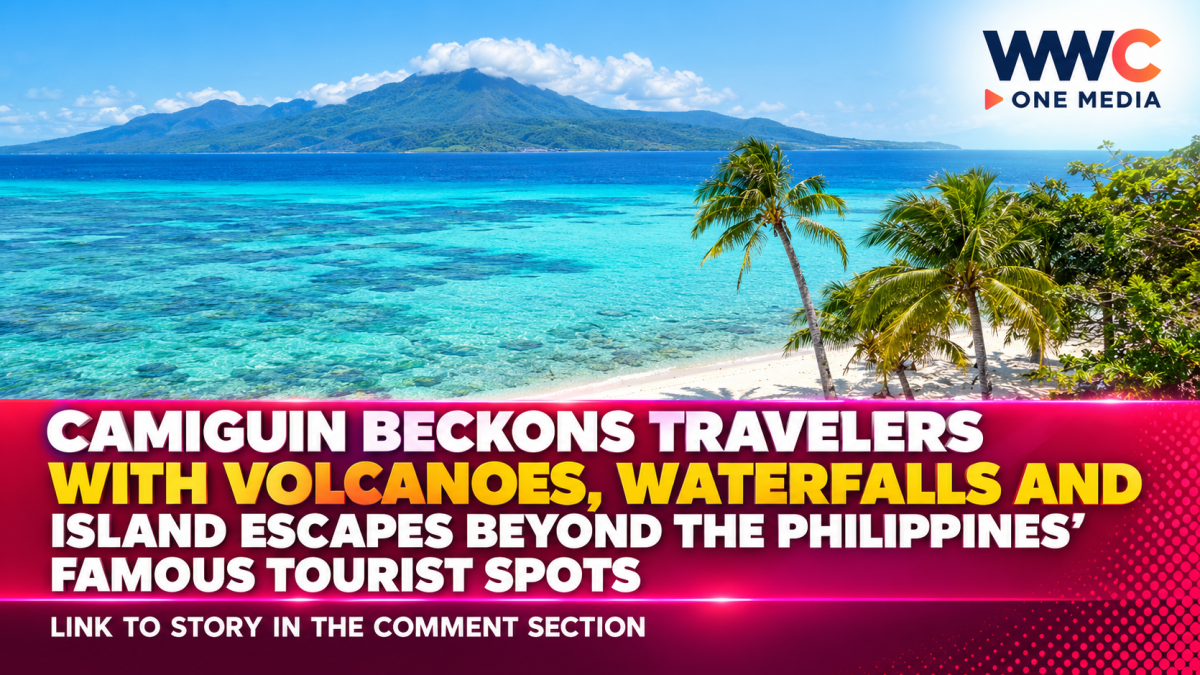
MANILA — Camiguin may not have the same international name recognition as Boracay, Bohol, Palawan or Siargao, but the small island province in Northern Mindanao is steadily drawing travelers with a combination of volcanic landscapes, waterfalls, springs, marine attractions and heritage sites.
Known as the “Island Born of Fire,” Camiguin packs seven volcanoes into a relatively compact destination, giving the island a character that is distinctly different from the country’s better-known beach destinations. Its appeal is not centered on a single famous beach, but on the variety of experiences available within a short distance of one another.
One of the island’s most recognizable attractions is White Island, an uninhabited sandbar off the coast of Mambajao. The sandbar offers expansive views of Camiguin’s volcanic mountains and surrounding waters and is particularly popular for swimming, snorkeling and photography. The island can only be reached by boat, making the short trip part of the experience.
For travelers looking for a different kind of island excursion, Mantigue Island Nature Park provides a protected marine environment surrounded by clear waters and coral reefs. The four-hectare island features a small forest and is recognized as a destination for swimming and snorkeling.
Camiguin’s volcanic history is equally important to its tourism identity.
The Sunken Cemetery in Catarman is marked by a large cross standing offshore, commemorating a cemetery that was submerged following the eruption of Mt. Vulcan in the 19th century. The site has since become one of the island’s defining landmarks, combining natural history, local heritage and marine tourism.
The island also offers waterfalls for visitors who want to move inland. Katibawasan Falls, one of Camiguin’s best-known attractions, drops from the slopes of Mt. Timpoong into a cool pool surrounded by vegetation. Tuasan Falls offers another setting, with a more forested approach and a natural environment that appeals to travelers looking for a quieter outdoor experience.
Then there are Camiguin’s springs, where the island’s volcanic geology becomes part of the visitor experience.
Ardent Hot Spring, located at the foot of Mt. Hibok-Hibok, is among the province’s best-known geothermal attractions. Visitors can also cool down at Sto. Niño Cold Spring, creating an unusual contrast between hot and cold spring experiences within the same island destination.
Beyond its natural attractions, Camiguin also carries visible reminders of its past. The ruins of Guiob Church, remnants of a Spanish-era church complex damaged by volcanic activity, provide another stop for travelers interested in the island’s cultural and historical character. The Walkway to the Old Volcano, meanwhile, combines scenery with religious heritage through its Stations of the Cross.
Camiguin’s relatively compact geography also makes it possible to combine several different activities in a single trip. A traveler can spend part of a day on a sandbar, visit a heritage site, explore a waterfall and finish with a soak in a hot spring without needing to cross a large island or spend hours moving between destinations.
That variety is increasingly becoming part of Camiguin’s appeal. Rather than competing directly with destinations built around nightlife or resort development, the island offers a slower travel experience centered on nature, adventure, local culture and outdoor exploration. Recent travel guides continue to highlight its mix of volcanoes, springs, waterfalls, marine sites and heritage attractions.
The island also has a strong food and cultural identity, with lanzones among its best-known local products. The annual Lanzones Festival has become an important celebration of the fruit harvest and Camiguin’s local culture, adding another reason for travelers to consider visiting during the festival period.
For first-time visitors, planning remains important. Boat trips to White Island and Mantigue depend on sea conditions, while weather can affect outdoor activities and access to some attractions. Travelers should also verify current boat schedules, entrance fees and local tourism requirements before departure because these can change.
Camiguin’s appeal ultimately comes from how much it offers without requiring travelers to choose between completely different types of vacations. It can be an island-hopping destination, an adventure trip, a heritage journey, a food experience or simply a quieter escape from the country’s busier tourist centers.
For travelers searching for a Philippine destination that feels less conventional while still offering beaches, mountains, waterfalls, springs and history, Camiguin presents a compelling alternative.
The bigger question now is whether Camiguin can continue attracting more travelers while preserving the slower pace, natural landscapes and local character that make the Island Born of Fire stand apart.