
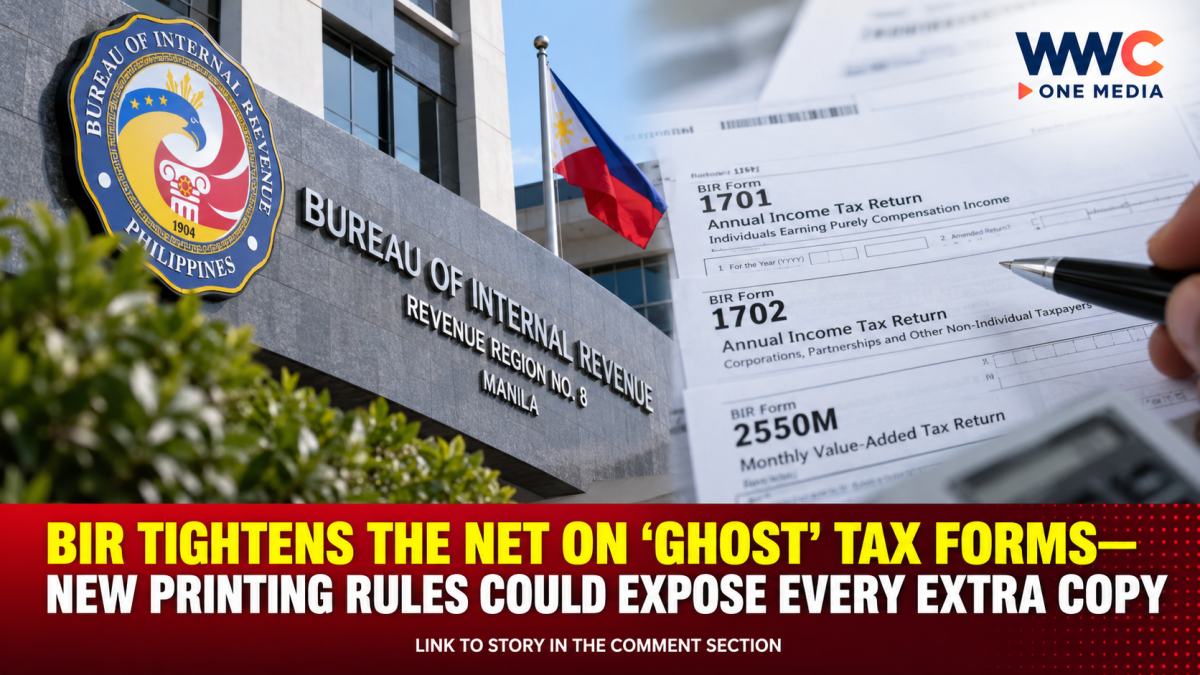
MANILA, Philippines — The Bureau of Internal Revenue (BIR) has tightened its grip on the printing of sensitive tax forms, rolling out stricter controls designed to prevent unauthorized copies, missing documents and other irregularities that could potentially fuel fraud or corruption.
Under Revenue Memorandum Order (RMO) No. 24-2026, the BIR now requires sensitive accountable forms to be produced exclusively in controlled areas within the premises of a recognized government printer.
The new rules prohibit the subcontracting or transfer of printing work, while a BIR supervisory committee will be tasked with monitoring production records to ensure that only the authorized number of forms is printed.
The goal is simple but sweeping: every form must be accounted for—from the printing press to its final delivery.
Every Copy, Serial Number Now Under Watch
Under the new procedures, printed forms must be counted before they leave the printing facility and checked again on the following working day.
Production reports must also include the serial numbers of every batch, creating a documented trail that could make it harder for unauthorized or excess copies to disappear from official records.
The tighter controls also extend to materials generated during the printing process.
Proofs, spoiled copies, printing plates and other production materials must be properly accounted for and destroyed in the presence of representatives from the government printer and the Commission on Audit (COA), with a certificate issued afterward, according to the order.
Printing machines, meanwhile, must be sealed or locked when not in use.
The BIR supervisory committee may also conduct random inspections covering access controls, surveillance systems and the handling of sensitive information.
Any irregularity that could compromise the integrity of the forms must be reported for legal evaluation and possible sanctions.
BIR Builds on Longstanding Fight Against Unauthorized Printing
The latest crackdown comes against the backdrop of longstanding BIR rules governing the printing of tax documents and commercial invoices.
Under the National Internal Revenue Code, businesses must secure an Authority to Print (ATP) from the BIR before receipts, sales invoices or commercial invoices can be printed. The documents must also be serially numbered and contain required taxpayer information, while printers are required to maintain records of clients who use their services.
The BIR has also long required printers of official receipts and invoices to undergo accreditation.
Revenue Regulations No. 15-2012 established policies for the accreditation of printers and the monitoring of their compliance with Authority to Print requirements. The system was designed to help the BIR match printing records and identify questionable or dubious entries.
In a separate issuance, the BIR warned that receipts and invoices printed by non-accredited or unauthorized printers are considered invalid, with potential consequences for taxpayers, including the inability of VAT taxpayers to use such documents to support input tax claims.
Why the New Rules Matter
While previous BIR regulations largely focused on controlling who can print receipts and invoices, the new RMO takes the controls further by tightening the actual production process for sensitive accountable forms.
The rules now emphasize physical safeguards, detailed production logs, serial-number tracking, controlled access, inspections and the documented destruction of excess or spoiled materials.
That means the BIR is not just watching the final document—it is seeking greater control over what happens before, during and after the printing process.
The order also allows the supervisory committee to approve the destruction of printing materials, replacing a previous requirement for prior authorization from the BIR commissioner, according to the report.
RMO No. 24-2026 was signed by BIR Commissioner Charlito Martin Mendoza and dated July 13, 2026, with immediate effect.
The Bigger Picture: Closing the Gaps
The stricter printing controls signal another effort by the BIR to close potential gaps in the handling of government tax documents.
By requiring forms and production materials to be tracked, counted, serially recorded and, when necessary, destroyed under supervision, the agency is building a tighter chain of accountability around documents that could otherwise be vulnerable to unauthorized reproduction.
For taxpayers and government offices handling accountable forms, the message is increasingly clear:
An unrecorded extra copy may no longer be just an administrative oversight—it could become an irregularity requiring explanation, investigation and possible legal action.
As the BIR intensifies its broader push for stronger tax administration and enforcement, the printing room itself is now becoming another critical frontline in the government’s campaign against document-related irregularities.
And with every batch now expected to leave a paper trail, the question is: how many questionable copies will the new system finally bring to light?
WWC ONE MEDIA J.M.S




Leave a Reply