
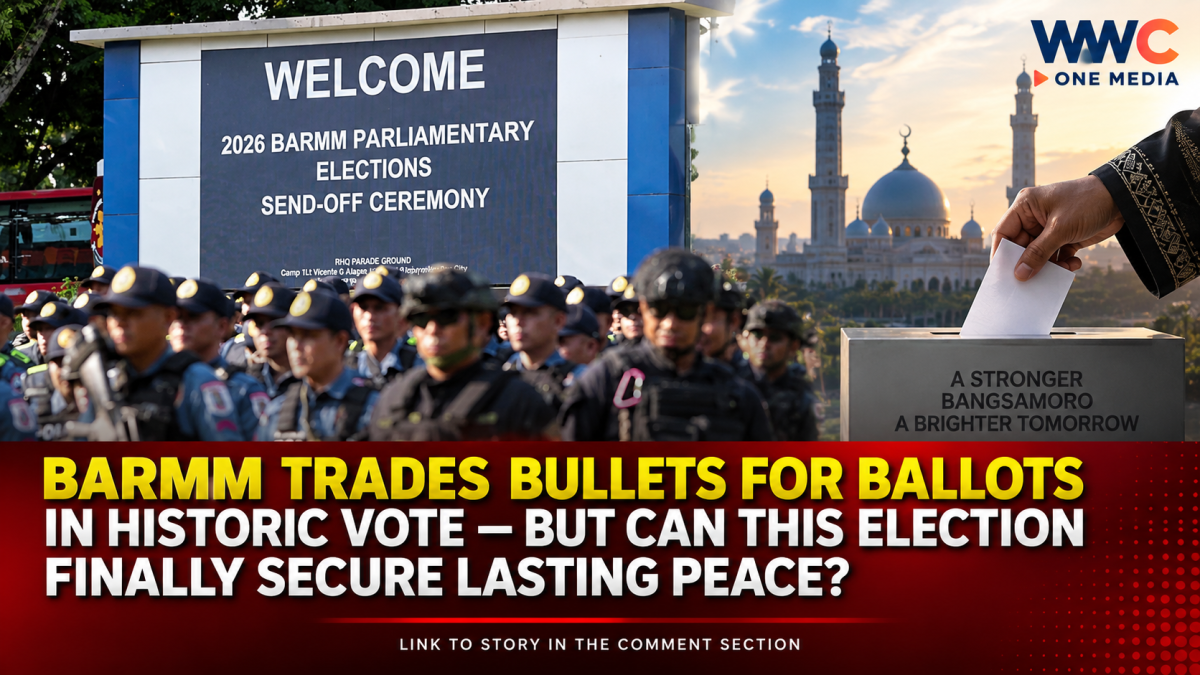
MARAWI CITY, Philippines — In a region long defined by armed conflict, displacement and decades of struggle for self-rule, the Bangsamoro Autonomous Region in Muslim Mindanao (BARMM) is preparing for a historic moment: the people are being asked to trade the power of bullets for the power of the ballot.
On September 14, millions of registered voters are set to participate in the first regular parliamentary elections in BARMM, a landmark vote that could shape not only the future of the region’s government but also the next chapter of the decades-long Bangsamoro peace process.
At a basketball court in Marawi City, election ballots were piled on pallets and prepared for deployment across the Muslim-majority autonomous region — a striking symbol of how far Bangsamoro has traveled from years of conflict toward democratic self-governance.
A Historic Vote After Decades of Conflict
The upcoming election marks the transition from the Bangsamoro Transition Authority (BTA), which has governed the region since BARMM was established in 2019, to the region’s first regularly elected parliament.
BARMM itself emerged from the peace process between the Philippine government and the Moro Islamic Liberation Front (MILF), culminating in the 2014 Comprehensive Agreement on the Bangsamoro and the passage of the Bangsamoro Organic Law.
For generations, the Moro struggle for self-determination was marked by armed conflict involving the Philippine government and various Moro movements. The establishment of BARMM was intended to transform that conflict into a political process centered on autonomy, representation and democratic governance.
The September 14 vote is now being viewed as one of the most important tests of whether the peace process can move beyond agreements and institutions and deliver a functioning elected government.
More Than 2.3 Million Voters Expected
Official peace and election preparations have put the BARMM electorate at approximately 2.39 million registered voters, covering Basilan, Lanao del Sur, Maguindanao del Norte, Maguindanao del Sur, Tawi-Tawi, Cotabato City and the Special Geographic Areas in North Cotabato.
The new Bangsamoro Parliament will have 80 seats, with:
- 40 seats allocated through the party-representative system
- 32 district seats
- 8 reserved sectoral seats
Voters will select both a regional political party and a district representative, while the remaining seats are reserved for sectors including women, youth, traditional leaders, ulama, Non-Moro Indigenous Peoples and settler communities.
Lanao del Sur, one of the region’s most vote-rich areas, is expected to play a particularly significant role in the election. Mainland BARMM provinces account for the overwhelming majority of the region’s electorate, according to recent election data reported by MindaNews.
Thousands of Security Personnel Mobilized
Despite the powerful symbolism surrounding the vote, authorities are taking no chances.
The Philippine National Police has mobilized thousands of personnel for the elections, while the Armed Forces of the Philippines, Commission on Elections and other government agencies have coordinated security preparations across the region.
Recent reports said more than 4,000 police personnel from neighboring regional offices were among those deployed or mobilized to support election security operations. The broader security plan has also involved AFP joint task forces and police augmentation forces.
The preparations come amid continuing concerns over election-related violence. Earlier reports identified more than 100 areas in BARMM as areas of concern, prompting authorities to tighten security measures ahead of the vote.
Government and MILF Strengthen Ceasefire Coordination
One of the most significant developments ahead of the election has been the renewed coordination between the Philippine government and the MILF.
Government representatives, military officials, MILF commanders and peace mechanisms recently reaffirmed commitments aimed at maintaining the ceasefire and preventing violence during the electoral period.
The agreement strengthened coordination involving the Coordinating Committees on the Cessation of Hostilities and the Ad-Hoc Joint Action Group, mechanisms designed to prevent misunderstandings and clashes between government and MILF forces.
Officials have stressed that a peaceful election means more than simply preventing armed attacks.
It must also be credible, transparent and reflective of the genuine will of Bangsamoro voters.
From Armed Struggle to Political Competition
Perhaps the most powerful significance of the election lies in the transformation taking place across Bangsamoro.
Former combatants and organizations once associated with armed struggle are now participating in political competition. The transition reflects one of the central promises of the peace process: that political institutions and democratic participation can replace violence as the means of resolving disputes and pursuing self-determination.
But analysts caution that the election will not automatically resolve every challenge facing the region.
BARMM’s first elected government will inherit difficult questions involving governance, security, political competition, economic development and the delivery of long-promised peace dividends.
The election is therefore not simply the end of a transition period.
It may be the beginning of BARMM’s most difficult test yet.
Can the Ballot Protect the Peace?
For many Bangsamoro communities, September 14 represents something generations never had the chance to experience: the opportunity to choose representatives for a parliament created through a negotiated peace settlement.
The ballots being transported across BARMM carry more than names of candidates and political parties.
They carry the hopes of a region attempting to prove that political participation can succeed where decades of armed conflict failed.
The question now is whether the historic election can produce not only winners and losers, but also stronger institutions, public trust and a peace durable enough to survive the pressures of democratic competition.
BARMM has spent decades fighting for the right to shape its own future. On September 14, that future will be placed in the hands of voters — one ballot at a time.



Leave a Reply