MANILA, Philippines — November 3, 2026 — The growing threat of a potentially very strong El Niño is prompting banks around the world to reassess their exposure to climate-related financial risks, with some lenders considering loan restructuring and repayment adjustments for customers whose businesses could be hit by drought, flooding and extreme weather.
The issue is particularly important for agricultural borrowers, fishing businesses and companies that depend on climate-sensitive supply chains.
A Bloomberg report published on November 1 said several international banks are reviewing loan portfolios and assessing how the developing El Niño cycle could affect their clients’ ability to repay debt.
Among the possible measures are debt rescheduling, repayment grace periods and more detailed assessments of individual borrowers.
The developments come as the Philippines prepares for worsening dry conditions that could affect agricultural production, rural livelihoods, food supplies and the wider economy.
However, the reported reviews should not be mistaken for a nationwide announcement that Philippine banks are automatically changing the terms of existing loans.
Why Banks Are Reassessing Their Borrowers
El Niño is a climate phenomenon associated with warmer-than-average sea surface temperatures in the central and eastern tropical Pacific. It can change rainfall patterns and increase the likelihood of drought in some regions while contributing to heavier rainfall and flooding elsewhere.
These weather disruptions can become financial problems when businesses lose production, experience higher operating costs or struggle to generate enough income to repay their loans.
For example, a farmer facing reduced harvests may have less money available to repay an agricultural loan. Fishing businesses can also face operational difficulties when changing weather and ocean conditions disrupt their activities.
The impact may extend beyond farms and fishing communities.
Food processors, transport companies, agricultural suppliers and other businesses that depend on reliable production and distribution may also face higher costs or supply interruptions.
For banks, the concern is that borrowers exposed to these risks could become more likely to miss payments or default.
BBVA Reviews Loan Portfolios as El Niño Risks Build
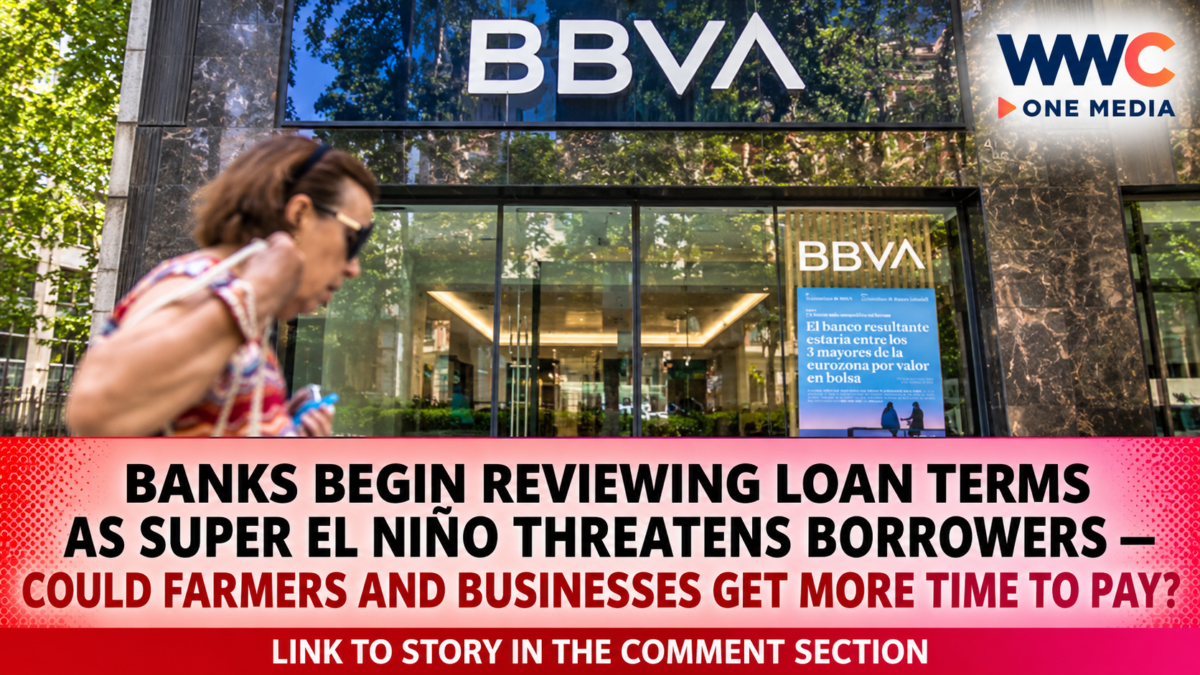
According to Bloomberg, Spanish banking group Banco Bilbao Vizcaya Argentaria (BBVA) has asked local risk teams to review loan portfolios in countries including Peru, Argentina and Colombia.
The bank is examining how El Niño, combined with global warming, could affect borrowers and increase credit risks.
BBVA said potential measures for its most vulnerable customers could include debt rescheduling.
The bank also plans to share its analysis with clients as part of its advisory process once its assessments are sufficiently developed.
This is an important distinction: reviewing a loan portfolio does not automatically mean every borrower will receive a payment holiday or lower monthly instalments. Any adjustment would depend on the bank’s assessment and the circumstances of the customer.
Other Banks Are Monitoring Climate-Related Credit Risks
The Bloomberg report also identified several other financial institutions examining their exposure to El Niño-related disruptions.
Danske Bank has warned that the consequences could extend beyond agricultural businesses, including companies affected through shipping and logistics supply chains.
JPMorgan Chase and Citigroup have published research examining how the climate phenomenon could affect agriculture, commodities, energy markets and the broader economy.
In Peru, Credicorp estimated that approximately 9 percent of its loan book was directly exposed to clients at risk from El Niño.
Intercorp Financial Services has also introduced special El Niño-related loan provisions for customers in agriculture and fishing. The options include grace periods and repayment rescheduling.
Standard Chartered said it was conducting portfolio-level analysis and incorporating climate risks into assessments of individual corporate clients.
These examples show how financial institutions are increasingly treating extreme weather as a potential credit and business risk rather than solely an environmental issue.
Why the Philippines Faces Particular Pressure
The Philippines is especially exposed because agriculture, food production and water availability are sensitive to changing rainfall patterns.
PAGASA’s October 21, 2026 monitoring update said a strong to very strong El Niño was present in the Tropical Pacific. Most climate models indicated that it could continue through the first quarter of 2027, with related impacts potentially extending into the first half of the year.
The outlook raises concerns for farmers who depend on rainfall or irrigation to maintain production.
Reduced water availability can affect rice, corn and other crops, while prolonged heat can increase pressure on livestock and agricultural operations.
The consequences may also reach consumers if lower production contributes to higher food prices.
The United Nations has similarly warned that the Philippines faces interconnected climate risks involving food security, water resources, livelihoods and household welfare.
Agricultural Losses Are Already Raising Concerns
The potential financial impact is not merely theoretical.
The Department of Agriculture has warned that the current El Niño could cause as much as ₱20 billion in agricultural damage under its projections.
The agency has also identified millions of farmers and fisherfolk whose livelihoods could be affected under a worst-case scenario.
In Davao Region, a separate Department of Agriculture assessment placed reported agricultural losses at approximately ₱584.68 million, affecting 6,205 farmers and 6,634 hectares of farmland.
Rice accounted for the largest share of the reported regional losses, at approximately ₱390.24 million.
These figures illustrate why banks and financial institutions are paying attention to the ability of agricultural borrowers to maintain income during prolonged dry conditions.
WWC ONE MEDIA previously reported on the growing agricultural losses in Davao as rice farmers face mounting El Niño pressure.
Could El Niño Increase Bad Loans in Philippine Banks?
One concern for the Philippine banking sector is the possibility that borrowers affected by drought and higher operating costs may struggle to meet their financial obligations.
BusinessMirror reported on October 29 that the country’s gross non-performing loans ratio eased to 3.27 percent in September 2026, based on preliminary Bangko Sentral ng Pilipinas data.
However, economist Michael Ricafort of Rizal Commercial Banking Corp. warned that a severe El Niño could weaken the repayment capacity of borrowers, particularly those in agriculture and related industries.
He also pointed to the possibility that higher inflation could reduce the purchasing power of lower-income households and make debt repayment more difficult.
This creates a wider financial risk: even borrowers outside agriculture could experience pressure if food, electricity, transport and other essential expenses continue increasing.
For banks, the challenge is to identify vulnerable customers early enough to assess risks and consider appropriate responses.
El Niño Could Add to Inflation and Economic Growth Risks
The potential effects extend beyond loan repayment.
China Bank Research has warned that a severe El Niño could increase inflation while reducing economic growth through its effects on agricultural production and other parts of the economy.
The impact could begin with lower crop yields and gradually spread through food manufacturing, distribution and consumer prices.
Electricity demand may also rise during periods of extreme heat, while reduced water availability could affect hydropower generation.
WWC ONE MEDIA previously examined how El Niño could become one of the biggest threats to Philippine inflation.
The central bank faces a difficult policy challenge because higher interest rates cannot directly increase rainfall, restore damaged crops or create additional food supplies.
The government may therefore need to combine monetary policy with agricultural support, water management, food-supply planning and targeted assistance.
What Loan Restructuring Could Mean for Borrowers
Loan restructuring is one possible way lenders can respond when customers face temporary financial difficulties.
Depending on the bank’s policies and the borrower’s circumstances, possible arrangements may include:
- Repayment rescheduling: Adjusting the timing of repayments.
- Grace periods: Allowing an agreed period before certain payments become due.
- Revised repayment arrangements: Modifying the repayment schedule to reflect a borrower’s circumstances.
- Closer financial monitoring: Reviewing a customer’s business conditions and ability to meet future obligations.
These measures are not automatic entitlements for every borrower affected by bad weather.
Customers should not assume that a bank has suspended payments or changed an existing loan agreement unless the lender has formally confirmed the arrangement.
The Bloomberg report describes measures being assessed or used by particular international financial institutions. It does not establish that all Philippine banks have adopted the same policies.
What Happens Next?
The coming months will be important for both the agricultural sector and the banking industry.
Financial institutions will need to monitor which borrowers are most exposed to prolonged dry conditions, while farmers and businesses will be watching rainfall, irrigation availability and government support.
The Bangko Sentral ng Pilipinas and other financial authorities will also have to consider how climate-related disruptions could affect credit quality and overall financial stability.
For agricultural borrowers, early communication with lenders may become increasingly important if weather-related losses threaten their ability to meet repayment schedules.
The bigger question is whether financial institutions can identify vulnerable borrowers and respond before temporary climate-related losses become long-term debt problems.
As El Niño threatens crops, livelihoods and business operations, will loan restructuring help protect vulnerable borrowers — or could the next major drought also become a serious test for the Philippine banking sector?