
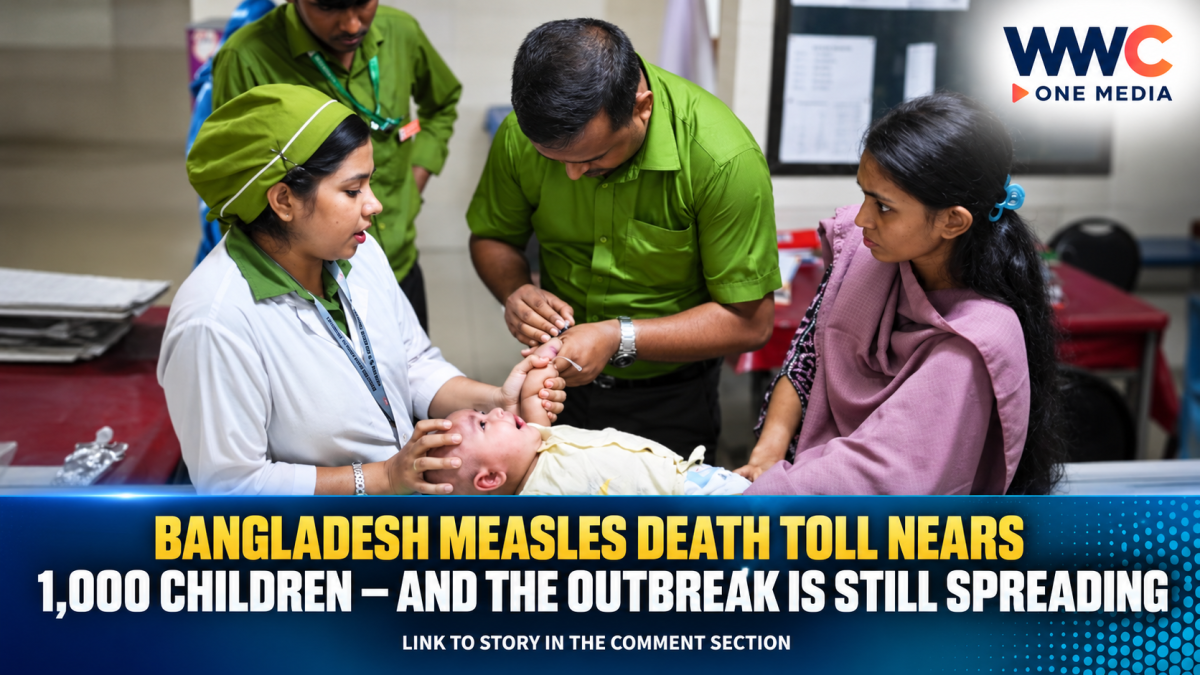
DHAKA, Bangladesh — Bangladesh is nearing a devastating milestone as the death toll from its massive measles outbreak climbs toward 1,000 children, with hospitals struggling to cope and hundreds of new suspected cases still being reported every day.
The latest figures from Bangladesh’s Directorate General of Health Services (DGHS) showed that 991 people — overwhelmingly children — had died from confirmed measles and measles-like symptoms since March 15, after four more children died within a 24-hour period.
Of the total deaths, 100 were laboratory-confirmed measles fatalities, while 891 were classified as suspected measles-related deaths, according to the latest official data.
The outbreak has now become one of Bangladesh’s most serious public health crises in decades.
Hundreds of New Cases Reported Daily
The crisis is far from over.
Bangladesh recorded 843 new suspected measles cases and 74 newly confirmed infections in the latest 24-hour reporting period, bringing the nationwide totals since mid-March to more than 163,000 suspected cases and 19,600 confirmed infections.
More than 143,000 suspected measles patients have been admitted to hospitals, according to DGHS data, although more than 137,000 have since recovered and been discharged.
Earlier reports from hospitals in Dhaka described overcrowded children’s wards, with infants and young children requiring oxygen and intensive medical care as doctors battle severe complications.
More than 1,000 suspected cases have been reported on some days during the outbreak, highlighting the continued pressure on Bangladesh’s already stretched healthcare system.
Children Hit Hardest by the Deadly Virus
Measles is one of the world’s most contagious diseases and spreads primarily through coughing and sneezing.
While many people recover, the virus can cause life-threatening complications, particularly among young children and those with weakened immune systems. Serious complications can include severe pneumonia, breathing problems and inflammation of the brain.
Reports from Dhaka’s major children’s hospitals have painted a grim picture, with parents watching as critically ill children receive emergency treatment and doctors work to manage severe infections.
Bangladesh’s outbreak is particularly dangerous because many of the sickest children are also vulnerable to other health problems, including malnutrition, making recovery more difficult.
Vaccination Gaps Under Scrutiny
Health authorities have launched large-scale vaccination efforts in an attempt to stop the outbreak.
According to recent reports, Bangladesh has vaccinated nearly 19.5 million children through a special immunization program since April, alongside routine vaccination services. Another nationwide special vaccination campaign is expected to begin later this month.
Health officials and international health experts have linked the scale of the crisis to declining vaccination coverage, which has weakened the population’s protection against measles.
Bangladesh had previously maintained strong community-level protection against the virus, but falling immunization rates created gaps that allowed measles to spread rapidly through vulnerable communities.
The outbreak is now serving as a stark warning about the consequences of declining vaccination coverage in densely populated countries.
Dhaka Division Records the Heaviest Toll
The outbreak has affected communities across Bangladesh, but the Dhaka division has recorded the highest number of deaths, accounting for hundreds of fatalities, according to the latest health data.
With Bangladesh’s population exceeding 170 million and many communities living in densely populated areas, health authorities face a major challenge in identifying cases quickly, isolating infections and reaching children who missed routine vaccinations.
Hospitals continue to treat thousands of children while authorities race to expand immunization coverage.
The Race to Stop the Death Toll
The most alarming question now is whether Bangladesh can stop the outbreak before the death toll crosses the grim 1,000-child mark.
With hundreds of suspected cases still being reported and hospitals continuing to receive severely ill children, health officials face an urgent race against time.
The latest DGHS figures show the outbreak is still active — and despite mass vaccination efforts, the number of victims continues to rise.
For families across Bangladesh, the statistics represent a far more painful reality: overcrowded hospital wards, anxious parents and children fighting for their lives against a disease that is largely preventable through vaccination.
As Bangladesh prepares for another nationwide vaccination push, the coming weeks could determine whether the country finally begins to bring its deadliest measles outbreak in decades under control — or whether the death toll will continue climbing beyond the 1,000 mark.
WWC ONE MEDIA J.M.S



Leave a Reply