
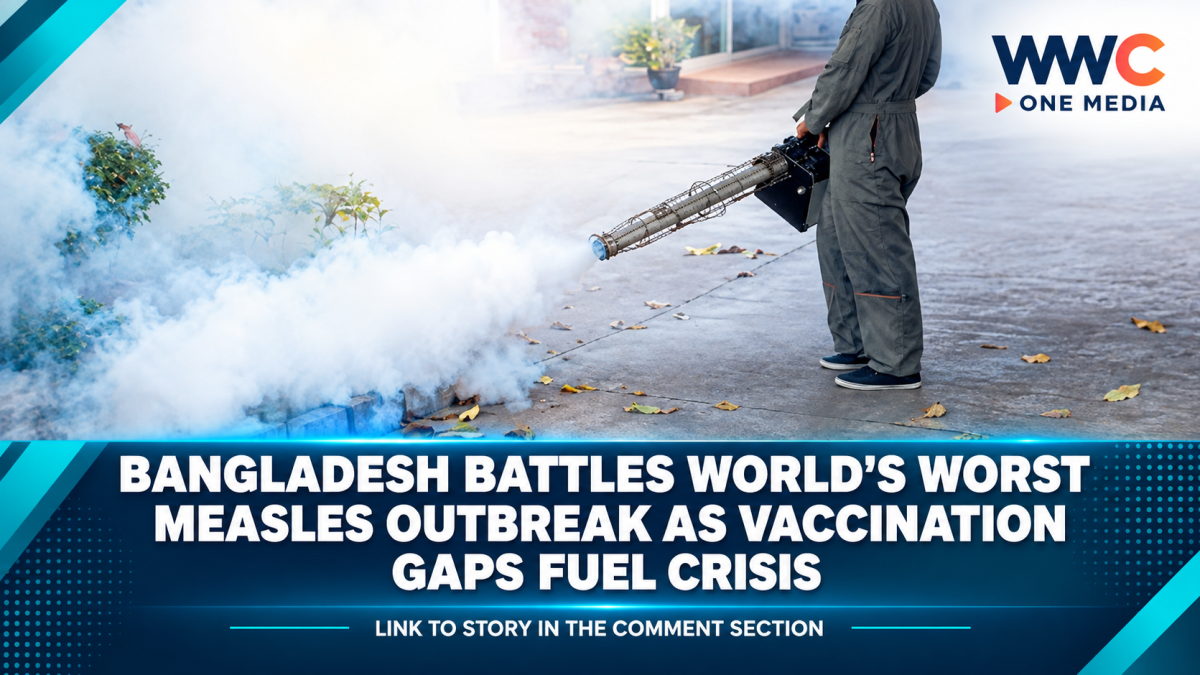
DHAKA — Bangladesh is battling what has become the world’s largest measles outbreak, with nearly 1,000 suspected and confirmed deaths and more than 166,000 suspected cases reported since March.
The crisis has overwhelmed hospitals and placed renewed attention on gaps in routine childhood vaccination after immunisation programmes were disrupted during political turmoil and vaccine shortages.
Health experts say the outbreak is particularly dangerous for young children, including infants who are too young to receive routine measles vaccinations.
Nearly 1,000 deaths reported
Bangladesh has reported 999 suspected and confirmed measles-related deaths since the outbreak began accelerating in March 2026.
More than 166,000 suspected cases have also been recorded, with hospitals admitting large numbers of sick children.
The scale of the outbreak has placed Bangladesh at the top of global measles outbreak lists, reversing years of progress toward eliminating the highly contagious disease.
Vaccination gaps helped fuel the outbreak
Health officials and experts have linked the crisis to major gaps in immunisation.
Routine vaccination programmes were disrupted in 2024 and 2025 during a period of political instability, while vaccine supply problems further delayed protection for children.
WHO had previously warned that nationwide vaccine shortages, routine immunisation gaps and the lack of regular nationwide supplementary vaccination campaigns had left a growing number of children vulnerable to infection.
Young children among the most vulnerable
Children under five have been heavily affected by the outbreak.
WHO said earlier in the crisis that young children accounted for the overwhelming majority of reported cases, with infants and children who missed vaccinations facing the greatest risk of severe illness.
Children under nine months are especially vulnerable because they are generally too young for routine measles vaccination, leaving them dependent on wider community immunity for protection.
Emergency vaccination campaign launched
Bangladesh launched an emergency measles-rubella vaccination campaign in April, initially targeting high-risk areas before expanding the response.
The campaign aimed to close immunity gaps and protect millions of vulnerable children, with support from international health organisations including WHO, UNICEF and Gavi.
WHO also reported that more than 166,000 children in Rohingya refugee camps in Cox’s Bazar were vaccinated during the emergency response.
Hospitals struggle under growing pressure
Despite the vaccination campaign, hospitals have continued to receive large numbers of patients.
More than 146,000 suspected measles patients have reportedly required hospital treatment since the outbreak began, placing enormous pressure on Bangladesh’s healthcare system.
The crisis has become even more difficult because the country is also dealing with a growing dengue outbreak, creating additional demand for hospital beds and medical staff.
Outbreak reverses years of progress
Bangladesh had previously made significant progress in reducing measles.
But WHO warned in April that recent disruptions had reversed some of those gains, allowing immunity gaps to widen across the country.
The disease spread across dozens of districts and all major regions, creating a nationwide public health emergency.
Health experts say controlling the outbreak will require more than a single emergency campaign.
Key priorities include:
- Restoring routine childhood immunisation
- Ensuring reliable vaccine supplies
- Identifying children who missed vaccinations
- Improving disease surveillance
- Strengthening hospital capacity
- Increasing public awareness about vaccination
Risk of further spread remains
Bangladesh’s major cities and transport hubs could also increase the risk of the disease spreading further.
WHO has warned that population movement and busy international transit routes could contribute to wider transmission, including across national borders.
Bangladesh shares land borders with India and Myanmar, adding another challenge to efforts aimed at controlling the outbreak.
The bottom line
Bangladesh is fighting its most serious measles crisis on record, with nearly 1,000 suspected and confirmed deaths and more than 166,000 suspected cases reported since March 2026.
Health experts say disruptions to routine vaccination, vaccine supply problems and missed immunisations left large numbers of children vulnerable.
An emergency vaccination campaign is underway, but hospitals remain under intense pressure as new patients continue to arrive.
For Bangladesh, the challenge now is not only to contain the current outbreak but to rebuild the routine immunisation system needed to prevent another crisis from happening again.
WWC ONE MEDIA J.M.D



Leave a Reply