
For many Southeast Asian students studying in South Korea, earning a degree is only the beginning. The bigger questions often come after graduation: How can they enter Korea’s job market? What visa options are available? And where can they turn for advice from people who have already made the transition from student to professional?
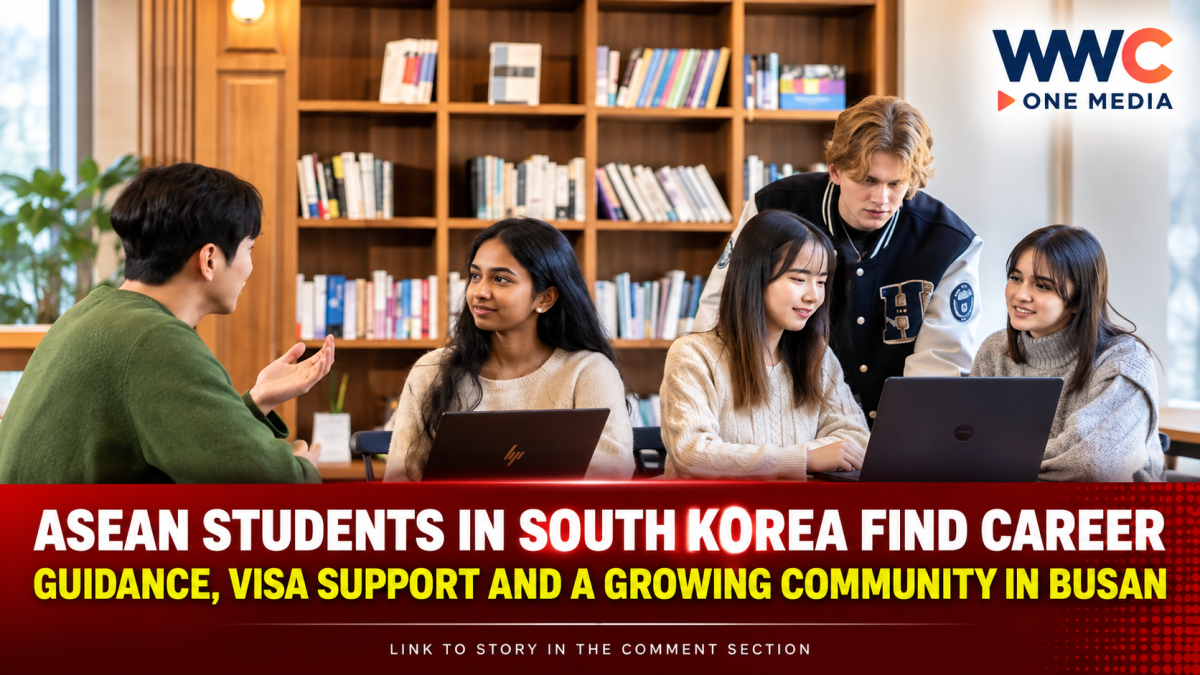
Those questions took center stage in Busan, where about 100 ASEAN students gathered at Pukyong National University for a joint orientation and career mentorship program designed to help international students navigate life, employment and career planning in Korea.
The event was co-hosted by the ASEAN-Korea Centre, the ASEAN Youth Network in Korea, Pukyong National University, Dongseo University and Busan University of Foreign Studies.
Rather than focusing solely on academics, the program addressed some of the practical challenges international students face as they prepare for life beyond university—including job hunting, work visas and changes to Korea’s visa pathways.
From Campus Life to Korea’s Job Market
The orientation gave undergraduate and graduate students an opportunity to hear directly from other ASEAN students about studying and living in Korea.
The career mentorship portion went a step further.
A professional consultant provided information on visa applications and job-search strategies, while a representative from Korea’s Ministry of Foreign Affairs explained recent developments involving visa pathways.
Students also heard from five ASEAN professionals working for Korean companies, who shared their experiences with preparing for employment, adapting to Korean workplaces and developing their careers.
Small-group mentoring sessions then allowed students to speak directly with the professionals and ask questions about their own career concerns.
For students navigating a foreign education system and labor market, that peer-to-peer connection can be particularly valuable.
Building a Community Beyond the Classroom
The Busan gathering was also about creating a stronger ASEAN community in Korea.
The ASEAN-Korea Centre has operated its career mentorship program since 2017, helping ASEAN students explore employment opportunities and prepare for careers in Korea. The latest event expanded that effort by combining career support with an orientation program for students.
The event also followed a July 27 memorandum of understanding between the ASEAN-Korea Centre and the three participating Busan universities, marking the first joint event under the new partnership. The organizations said the cooperation is intended to establish a lasting foundation for collaboration and expand support for ASEAN students in the region.
Philippine Consul General in Busan Leah Victoria Carada also delivered a special lecture on strengthening Philippines-Korea exchanges and supporting international students.
That participation highlights the broader role of ASEAN diplomatic and community networks in helping Southeast Asian students adapt to life and opportunities in Korea.
Why Career Support Matters for ASEAN Students
The push for stronger career support reflects a wider challenge surrounding international student mobility.
An ASEAN study on graduate employability has emphasized the importance of career support, university-industry cooperation and stronger networking opportunities with companies and alumni to improve the long-term employment prospects of mobile students.
South Korea has likewise increasingly linked international education with employment and longer-term settlement, particularly as the country seeks to attract international talent and address regional demographic and economic challenges. Recent academic research describes Korea’s approach as connecting international students’ study experiences with employment and potential settlement.
That makes initiatives such as the Busan mentorship program significant beyond a single weekend event.
For ASEAN students, the goal is not simply to study in Korea. It is increasingly about understanding how education can translate into professional opportunities while maintaining connections with communities from their home countries.
A Growing ASEAN-Korea Bridge
The Busan event ultimately brought together three things that international students often need most: information, professional connections and community.
For students considering careers in Korea, hearing directly from ASEAN professionals who have already entered the Korean workplace can provide a more practical perspective than classroom instruction alone.
And for Korea, stronger connections with ASEAN students can help deepen people-to-people ties with Southeast Asia while building relationships with a future generation of professionals familiar with both regions.
As cooperation between ASEAN institutions and Korean universities expands, programs like this could become an increasingly important bridge between studying in Korea and building a career there.




Leave a Reply