Appeals Court Pushes Back on Trump’s Demand for Journalists’ LinkedIn Records — Could America’s Confidential Sources Be at Risk?
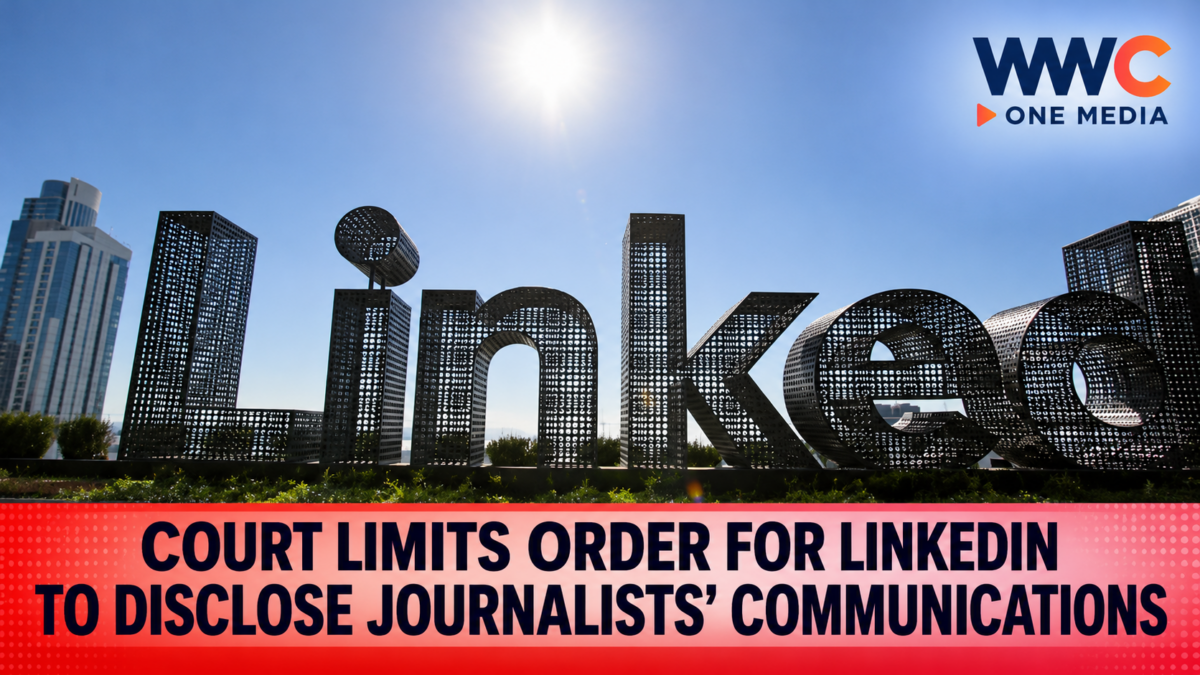
WASHINGTON, D.C. — November 10, 2026 — A major legal setback has emerged for the Trump administration after a federal appeals court ruled that the government cannot demand broad access to journalists’ LinkedIn records in its investigation into a classified military information leak.
In a unanimous decision Tuesday, a three-judge panel of the 4th U.S. Circuit Court of Appeals ordered a lower court to narrow a disclosure order requiring LinkedIn to provide records involving journalists targeted by the investigation.
The ruling represents an important development for press freedom, digital privacy and the constitutional protections journalists rely on when communicating with confidential sources.
The original order covered an 18-month period involving journalists who had published nearly 1,000 stories on a wide range of subjects.
The appeals court warned that complying with such an expansive demand could expose confidential sources who had nothing to do with the national security investigation.
However, the decision was not a complete victory for LinkedIn or the journalists.
The judges rejected the company’s request to eliminate the disclosure order entirely, recognizing that the government has a legitimate responsibility to investigate unauthorized disclosures of classified information.
The case now returns to a lower court, where the government must present a narrower request.
The decision creates a difficult balancing act for the Trump administration: How can authorities investigate potentially dangerous national security leaks without exposing journalists’ unrelated sources and undermining press freedom?
Appeals Court Rejects Broad Government Demand for Journalists’ LinkedIn Records
The ruling came from a three-judge panel of the 4th U.S. Circuit Court of Appeals, which unanimously concluded that the original disclosure order was too broad.
Judge J. Harvie Wilkinson III wrote the opinion, emphasizing that the government cannot simply collect extensive records from journalists because doing so is technically convenient.
The judges determined that a blanket demand could expose confidential sources across an enormous range of unrelated reporting.
The targeted journalists worked on nearly 1,000 stories over the 18-month period covered by the order.
Their employer was not identified in the publicly available court records.
The original demand could have revealed every confidential source with whom the journalists communicated through LinkedIn during that period.
That is the central problem identified by the appeals court.
Investigators may be looking for information connected to one particular classified leak, but an unrestricted collection of journalists’ records could expose contacts, sources and communications unrelated to the investigation.
The judges therefore instructed U.S. District Judge Elizabeth Hanes to narrow the disclosure order.
The decision does not prevent investigators from obtaining relevant evidence.
It requires them to pursue that evidence within more carefully defined legal limits.
Why Is the Trump Administration Investigating Journalists’ LinkedIn Communications?
The investigation began after an unidentified news organization published a report revealing classified information about a highly sensitive American military operation in a foreign country.
The publication prompted the Trump administration to investigate who disclosed the information.
Authorities are attempting to identify individuals who may have improperly shared classified operational details.
The government argues that unauthorized disclosures involving military operations can create serious national security risks.
Such information could potentially reveal sensitive operational capabilities, expose military personnel to danger or provide intelligence advantages to foreign adversaries.
However, the investigation has raised concerns because authorities sought records connected to journalists rather than limiting their requests to clearly identified individuals or specific relevant communications.
The legal dispute centers on the extent to which the government can obtain third-party digital records that might identify journalists’ confidential sources.
This is particularly important because reporters increasingly use professional networking platforms, messaging applications and other digital services to communicate with people who provide information about government activities.
A source who speaks to a journalist may be willing to share information only if their identity remains protected.
If government agencies can obtain broad records identifying those contacts, potential sources may become less willing to communicate with the press.
That could make investigative journalism considerably more difficult.
Nearly 1,000 Stories Could Have Been Swept Into One Investigation
One of the most concerning aspects of the case is the scope of the original disclosure order.
The journalists covered a wide variety of subjects over approximately 18 months.
Their reporting included nearly 1,000 stories, meaning the government request was not confined to a small group of articles concerning the classified military operation.
Instead, the order could have exposed communications with sources connected to unrelated investigations and reporting projects.
Imagine a journalist investigating government spending, corruption, national security or public-sector misconduct.
Some sources may be willing to provide documents or information only because they believe their identities will remain confidential.
A broad disclosure request could potentially expose those relationships even when they have no connection to the military leak under investigation.
The appeals court recognized this danger.
Its decision emphasized that the government cannot automatically obtain every available record simply because collecting the information is administratively convenient.
The judges made clear that legitimate national security concerns do not eliminate the need for judicial scrutiny.
What the Three Appeals Court Judges Actually Decided
The decision is particularly significant because the panel did not completely side with either party.
The judges rejected the government’s overly broad approach but also refused to eliminate the disclosure order entirely.
The panel included:
- J. Harvie Wilkinson III, nominated to the 4th Circuit by Republican President Ronald Reagan.
- James Andrew Wynn, nominated by Democratic President Barack Obama.
- Nicole G. Berner, nominated by Democratic President Joe Biden.
The unanimous decision is notable because the judges were appointed by presidents from different political parties.
That does not mean the ruling represents a political consensus on every aspect of the Trump administration’s investigation.
It does demonstrate that the legal issue was addressed through a unanimous judicial opinion rather than a divided panel.
Wilkinson emphasized that national security and freedom of expression are both important interests that the courts must consider.
The government deserves meaningful latitude to investigate classified leaks.
But that authority has limits, particularly when requests could expose confidential sources unrelated to the alleged wrongdoing.
LinkedIn Fought the Disclosure Order to Protect Its Users
LinkedIn, the Microsoft-owned professional networking platform, challenged the original disclosure order.
The company argued that the demand was substantially overbroad and sought to prevent the government from obtaining extensive records that could expose journalists’ communications.
The company also sought to have the order quashed entirely.
The appeals court rejected that complete remedy but agreed that the original demand required substantial narrowing.
The distinction matters because LinkedIn was not asking the court to eliminate the government’s ability to investigate classified leaks under all circumstances.
The dispute concerned the scope of the records being demanded and the potential consequences for users whose information could be exposed.
The case also raises wider questions about the responsibilities of technology companies when governments request information about users.
Professional networking platforms contain more than employment histories and business connections.
They can also reveal relationships between journalists, government employees, industry specialists, political advisers and confidential sources.
That makes the legal safeguards governing access to such records increasingly important.
Microsoft Previously Warned About Government Access to Private User Data
LinkedIn’s parent company, Microsoft, has also raised concerns about the broader implications of government demands for third-party digital information.
During earlier proceedings, Microsoft’s chief legal officer, Jon Palmer, discussed the importance of allowing technology companies to challenge requests they believe are overly broad.
The argument extends beyond journalism.
Businesses and individuals increasingly store sensitive information through online platforms and cloud-based services.
If providers cannot challenge questionable government demands or if disclosure restrictions prevent meaningful legal review, users may have fewer practical safeguards over their information.
The LinkedIn case therefore has implications for more than reporters.
It could influence how courts evaluate government requests for digital records held by technology companies.
The wider issue is whether users should be able to trust that their information will not be exposed through unnecessarily broad investigative demands.
The First Amendment Is at the Center of the Legal Battle
The First Amendment to the US Constitution protects freedom of speech and freedom of the press.
Those protections are particularly important for investigative journalists who rely on confidential sources to uncover information that government officials or other powerful institutions may not voluntarily disclose.
However, the First Amendment does not provide journalists with unlimited immunity from legitimate government investigations.
Authorities can investigate criminal conduct, including the unauthorized disclosure of classified information.
The difficult question is how to balance those responsibilities against the potential damage caused by exposing confidential sources.
In this case, the appeals court concluded that the original order went too far.
A more narrowly tailored request may still be permitted if it is supported by the government’s legitimate investigative needs.
The decision is therefore not a blanket declaration that journalists’ digital records can never be obtained by law enforcement.
Instead, it reinforces the importance of proportionality and judicial oversight.
A Previous Court Fight Over Donald Trump’s Records Offers Important Context
The LinkedIn dispute is not the first major confrontation involving a technology platform, the government and the privacy of information connected to Donald Trump.
During the earlier investigation led by special counsel Jack Smith, Twitter, now known as X, challenged aspects of a government demand involving Trump’s account information.
That dispute involved questions about disclosure restrictions, legal procedures and whether the company could inform Trump about the government’s request.
The earlier case was different in its facts and legal circumstances.
Nevertheless, both disputes demonstrate the increasingly important role technology companies play in protecting or disclosing information held on their platforms.
As more communications move online, the government increasingly depends on technology providers to obtain digital evidence.
Courts must therefore consider how traditional constitutional protections apply to modern communications systems.
What the Decision Means for American Journalists
The ruling provides an important safeguard against indiscriminate collection of journalists’ records.
It sends a message that investigators cannot simply demand large amounts of unrelated information because it might contain something useful.
For journalists, the decision reinforces the importance of protecting confidential sources.
However, it does not eliminate the risk that government investigators could obtain specific records through appropriately limited legal requests.
The ruling also does not establish that the administration illegally targeted journalists or that every government request for their information violates the Constitution.
Those questions depend on the facts, the legal authority used and the scope of the request.
The most important development is that a federal appeals court has required additional judicial scrutiny before the government can obtain the broad collection of records originally requested.
What Happens Next in the LinkedIn Leak Investigation?
The case now returns to U.S. District Judge Elizabeth Hanes in Virginia.
She must reconsider the disclosure order and determine how it can be narrowed.
The government will have to identify a more specific scope for the information it seeks.
LinkedIn and the other parties will continue to have an opportunity to challenge the request under the applicable legal procedures.
Several questions remain:
- Which specific LinkedIn records will investigators ultimately be permitted to obtain?
- Can the government identify records directly connected to the classified military leak without exposing unrelated sources?
- What safeguards will protect journalists’ communications and other users’ private information?
- Will the revised order satisfy the appeals court’s requirements?
- Could the dispute lead to additional legal challenges involving digital privacy and press freedom?
The appeals court has not ended the investigation.
It has sent the matter back for a more limited and legally justified approach.
Why This Case Matters Beyond Washington
The dispute carries international implications because American technology companies serve users, journalists and businesses across the world.
LinkedIn is used by professionals to establish relationships, communicate with industry contacts and exchange information.
For journalists working internationally, the platform can also provide access to experts, government officials and individuals with knowledge of important events.
A legal precedent allowing excessively broad access to professional networking records could influence how users think about digital privacy and confidential communication.
Conversely, stronger judicial safeguards could encourage greater confidence in online platforms.
The decision also highlights the continuing tension between national security and press freedom in democratic societies.
Governments have legitimate reasons to protect classified military information.
Journalists have equally important responsibilities to investigate government actions and report matters of public interest.
The challenge is ensuring that neither responsibility becomes an excuse for unnecessarily weakening the other.
The Bottom Line: Court Protects Journalists From a Broad Data Grab, but Trump’s Leak Investigation Continues
The 4th U.S. Circuit Court of Appeals has delivered an important decision in a case involving the Trump administration, LinkedIn and journalists’ confidential sources.
The unanimous ruling requires a lower court to narrow a government disclosure order that could have exposed communications involving journalists who published nearly 1,000 stories over 18 months.
The judges rejected the idea that the government could collect a broad range of records simply because some might help identify the source of a classified military leak.
However, the court also rejected LinkedIn’s request to eliminate the disclosure order entirely.
The government can continue pursuing relevant evidence, provided that its request respects the legal protections and interests identified by the appeals court.
The case now returns to the lower court for further proceedings.
For journalists, the decision is an important reminder that confidential sources deserve meaningful protection.
For the Trump administration, it means the investigation must proceed with a narrower and more carefully justified request.
And for millions of people who use online platforms to communicate professionally, the dispute raises a much bigger question.
If the government can demand journalists’ digital records to uncover one classified leak, what prevents unrelated confidential sources and private professional relationships from being exposed next?