
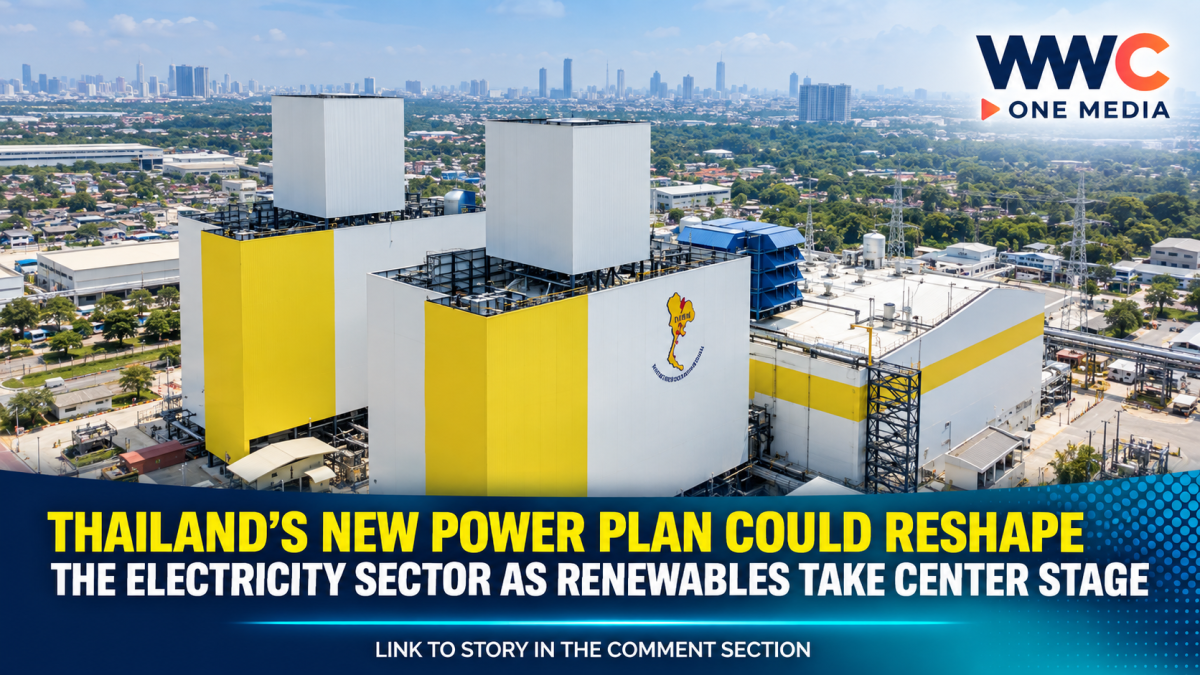
BANGKOK — Thailand’s electricity sector is entering a major transition, with the country’s long-term power strategy increasingly focused on renewable energy, modern grid technology and greater energy security.
The shift comes as Thailand tries to balance three competing priorities: keeping electricity reliable, controlling costs and reducing greenhouse-gas emissions.
Thailand’s Power Development Plan (PDP) is the country’s long-term framework for determining how much electricity generation capacity will be needed and what types of energy should supply it. The Electricity Generating Authority of Thailand (EGAT) describes the PDP as a master plan designed to ensure sufficient and secure electricity supply while taking economic, environmental and energy-policy factors into account.
Renewable energy moves closer to the center
Thailand’s energy authorities are increasingly preparing for a power system in which renewable sources play a much larger role.
EGAT says it is developing solar, floating solar, wind and hydropower projects while also upgrading the country’s electricity grid to handle a larger share of variable renewable generation.
That change is important because solar and wind production can fluctuate depending on weather conditions.
To address that challenge, Thailand is looking at technologies that can make the electricity system more flexible—including battery energy storage systems (BESS), pumped-storage hydropower and improved renewable-energy forecasting.
The grid could become just as important as new power plants
Building additional generating capacity is only one part of the transformation.
Thailand will also need a stronger and more flexible transmission network capable of moving electricity from different generation sources to areas where demand is highest.
EGAT has identified grid-development projects aimed at supporting increasing electricity demand and accommodating additional private-sector generation. Its transmission plans include projects serving the Greater Bangkok area as well as wider system expansion.
This could become increasingly important as Thailand attracts energy-intensive industries and digital infrastructure.
Rooftop solar adds another layer
The transition is also moving beyond large power plants.
On September 9, Thailand’s Finance Minister announced a 50-billion-baht ($1.52 billion) program to support rooftop solar installations, with the scheme expected to begin in mid-October. The government also plans tax exemptions for certain imported solar-panel components.
If widely adopted, rooftop solar could allow households and businesses to generate more of their own electricity while reducing pressure on the centralized power system.
But greater distributed generation also creates new challenges for the grid, including the need to manage electricity flows and balance supply and demand.
Thailand wants less exposure to imported fuel
Energy security is another major driver behind the shift.
EGAT has highlighted Thailand’s reliance on imported liquefied natural gas (LNG), noting that LNG can account for a significant portion of electricity generation. Because fuel costs can make up a large share of electricity-generation costs, fluctuations in international energy markets can feed through into the cost of power.
Increasing renewable generation could therefore serve two purposes at once: cutting emissions and reducing exposure to imported-fuel price shocks.
EGAT has said its energy strategy is aimed at reducing dependence on imported fuels while accelerating clean-energy development and modernizing the electricity network.
But gas is not disappearing overnight
Thailand’s transition should not be mistaken for an immediate end to fossil-fuel generation.
Natural gas remains an important source of electricity and provides dispatchable generation that can help balance variable renewable sources.
EGAT has emphasized the need to maintain energy security and affordability while increasing renewable energy, meaning Thailand’s transition is likely to involve a mixed power system for years to come.
The challenge will be determining how quickly cleaner sources can expand without compromising reliability or pushing electricity costs higher.
Data centers could add another major test
Thailand’s electricity demand could also be affected by the country’s growing digital economy.
Large data centers require substantial amounts of electricity, and the government is now examining how such developments should be managed.
Recent reporting indicates Thailand has asked operators of dozens of proposed data-center projects to pause construction while authorities develop a stronger regulatory framework addressing issues including electricity demand and water consumption.
That makes power planning increasingly important—not just for households, but also for attracting major technology and industrial investment.
The next electricity era
Thailand’s power-sector transformation is therefore about much more than building new renewable-energy projects.
It involves rewiring the way electricity is generated, stored, transported and consumed.
Renewable power, rooftop solar, batteries, pumped-storage facilities, forecasting technology and grid upgrades are expected to become increasingly important components of the system.
At the same time, policymakers must keep electricity affordable and ensure that the grid remains reliable as the country’s energy mix changes.
The success of the next Power Development Plan could ultimately determine whether Thailand can achieve that balance.
The biggest change may not be the number of new power plants Thailand builds—but how the entire electricity system learns to work together.
WWC ONE MEDIA G.A




Leave a Reply