
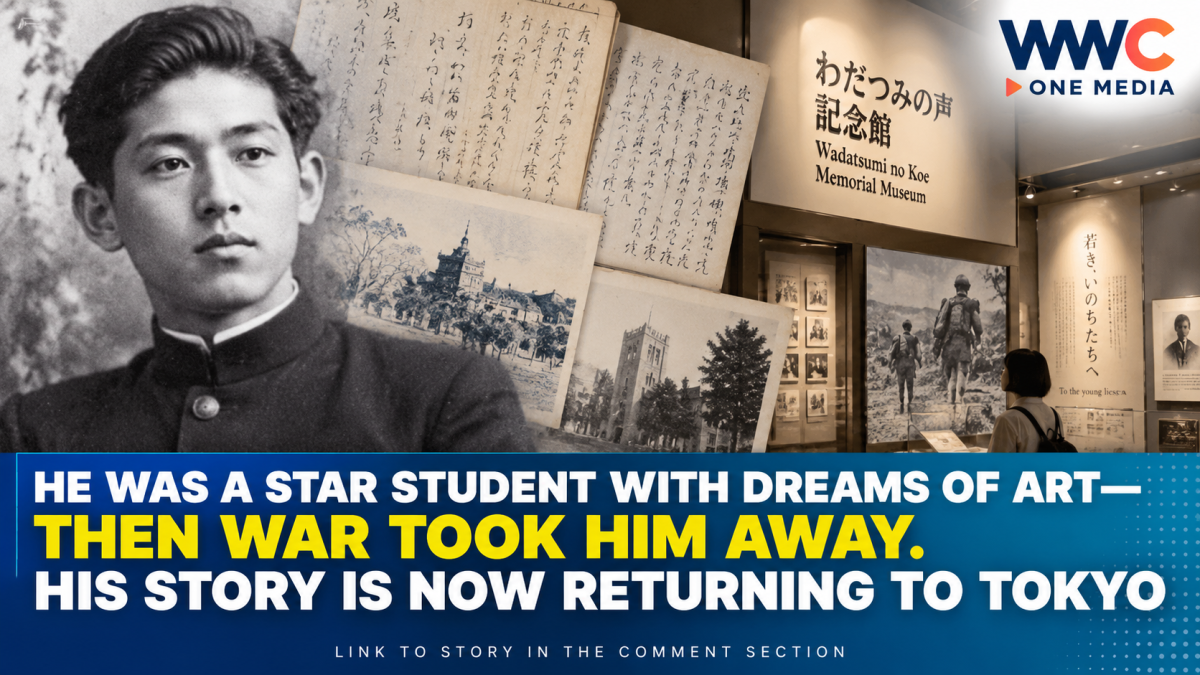
TOKYO, Japan — More than eight decades after World War II cut short the lives of thousands of young Japanese students, a small Tokyo museum is keeping their voices alive through the letters, diaries, sketches and personal belongings they left behind.
Now, a newly donated collection of around 200 personal items belonging to Itaru Maruo, a promising Tokyo Imperial University student whose life was interrupted by wartime mobilization, is adding a deeply personal chapter to Japan’s continuing effort to preserve the memories of its student soldiers.
The collection has been donated to the Wadatsumi no Koe Memorial Museum in Tokyo’s Bunkyo Ward, which preserves materials connected to students who died during the Asia-Pacific War. The museum’s name is associated with the famous postwar collection Kike Wadatsumi no Koe, or Listen to the Voices from the Sea, which compiled the writings of students who died in the war.
The story has gained renewed attention following reporting highlighted by The Japan Times, while additional information from Jiji Press-related coverage and the museum itself has shed more light on the man behind the newly preserved documents.
A Brilliant Student Whose Future Was Interrupted by War
Itaru Maruo was not simply another name lost to history.
Born in Tokyo in 1920, Maruo entered the Department of Aesthetics and Art History at Tokyo Imperial University—now the University of Tokyo—in 1942. He pursued art and painting while also building a reputation in baseball, reflecting a remarkably active student life before the war changed his future.
But Japan’s worsening wartime situation eventually reached university campuses.
In 1943, the Japanese government ended draft deferments for many university students, forcing thousands of young men to leave their classrooms and prepare for military service. Historians and university records describe the policy as one of the defining moments of Japan’s wartime student mobilization.
At Waseda University alone, more than 4,500 students were affected by wartime mobilization, while Keio University says about 3,500 of its students were sent to battlefields during the war.
For Maruo, the consequences were irreversible.
From University Life to the Battlefield
Maruo entered military service in January 1944 and was sent to China, according to the Wadatsumi no Koe Memorial Museum’s own records. Although he had been immersed in art history, painting, sports and academic life, his future was suddenly redirected by war.
Yet even during military service, Maruo reportedly continued to draw, write and pursue his intellectual interests.
The newly preserved collection includes diaries, sketches, letters, photographs, manuscripts and military correspondence sent to his family. Some of his personal writings reveal that his passion for art and knowledge survived even as war reshaped every part of his life.
Maruo later fell ill and died at a military hospital in Dunhua, in Jilin Province in Manchuria—now northeastern China—on August 30, 1945.
He was 25.
The tragedy came just weeks after Japan announced its surrender, making his story an especially painful reminder of how long the human consequences of war continued even after the fighting was effectively ending.
200 Personal Items Found More Than 80 Years Later
The collection of around 200 items was donated after Maruo’s materials were discovered by a family member among belongings kept at a family home, according to Jiji Press-related reporting.
The documents include handwritten letters, notebooks, photographs and other personal effects that offer a rare window into the life of a young man whose ambitions extended far beyond the battlefield.
The Wadatsumi no Koe Memorial Museum says Maruo’s collection is particularly significant because of both its size and its range.
Museum records describe him as a highly active and well-rounded student who combined interests in art history, painting, exhibitions, theatre, music and sports. The collection has the potential to contribute not only to war and peace studies but also to research involving university history, art history and Japanese cultural life before and during the war.
The Museum Where Student Soldiers’ Voices Still Speak
Located near the University of Tokyo’s Hongo campus, the Wadatsumi no Koe Memorial Museum opened in 2006 and focuses on preserving the posthumous writings and personal materials of students who died during the Asia-Pacific War.
Visitors can see materials including diaries, letters, wills and other documents left behind by young men whose education and personal lives were interrupted by military mobilization. The museum is maintained largely through donations and volunteer support, with free admission for visitors.
The museum’s importance lies in its deeply personal approach to history.
Instead of presenting war only through military campaigns, statistics and political decisions, its collections show the individual lives behind the conflict—the students who had parents, friends, academic ambitions, hobbies and dreams before being sent away.
The museum itself says these personal materials create an opportunity to think about war through encounters with individual young people whose lives were cut short.
Japan’s Student Mobilization: When Classrooms Became a Path to War
The wider history behind Maruo’s story remains one of the most powerful chapters of Japan’s wartime experience.
In October 1943, Japan formally suspended conscription deferments for many university students aged 20 and older. Students who had been studying law, literature, politics, economics and other subjects suddenly found themselves preparing for military examinations and deployment.
The change inspired the term gakuto shutsujin, often translated as student mobilization or the dispatch of student soldiers.
Some students received farewell ceremonies before departing. Others tried to continue attending lectures during their final weeks at university, knowing that their academic lives were about to end. One Waseda student, according to university archives, continued filling his diary and attending classes during the 60 days before he entered military service.
Many never returned.
Waseda University records show that thousands of people connected to the university died in the war, while Keio University records say more than 2,200 people affiliated with the institution lost their lives.
Why Maruo’s Story Matters Today
The rediscovery of Maruo’s letters and sketches comes as Japan continues to debate how its wartime history should be remembered and passed on to younger generations.
Museums, universities and peace institutions across Japan continue to preserve student diaries, military letters and personal artifacts because direct witnesses to World War II are becoming increasingly few.
At the Wadatsumi no Koe Memorial Museum, the mission is especially personal: preserve the voices of young people whose futures disappeared before they had the chance to fully live them.
Maruo’s collection makes that mission impossible to view as just another history lesson.
Here was a young university student interested in art and knowledge. A baseball player. A painter. A writer. Someone with a future that might have taken countless directions.
Instead, his life ended at 25.
More than 80 years later, his handwriting, sketches and letters are helping tell the story he never got to finish.
A Warning Written in Letters and Diaries
The museum is approaching two decades since its opening, and its collections continue to grow as families discover and donate materials preserved across generations.
According to Jiji Press-related reporting, the museum holds thousands of historical materials connected to wartime student deaths and the experiences of young people sent away from their families.
The newly donated Maruo collection serves as more than an archive of one man’s life.
It raises a haunting question that remains relevant long after World War II:
Who might these young people have become if war had never taken their futures away?
For Itaru Maruo, the answer will never be known.
But more than eight decades after his death, his letters are finally speaking again.
And this time, people are listening.




Leave a Reply