
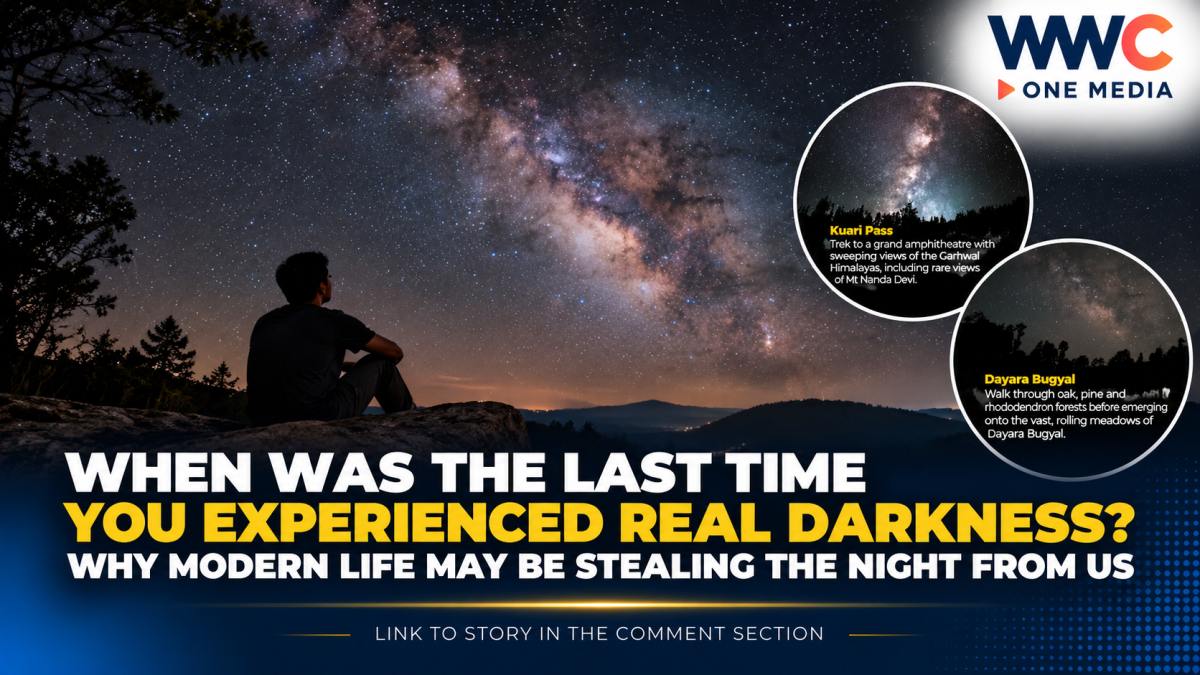
MANILA, Philippines — When was the last time you experienced real darkness?
Not a dimly lit bedroom. Not a hotel room with glowing air-conditioning controls. Not a night interrupted by a smartphone screen, streetlights outside the window or the blinking lights of electronic devices.
Real darkness.
For millions of people living in cities, the answer may be harder to remember than expected.
Modern life has transformed the night. Streets glow around the clock, buildings remain illuminated, screens follow us into bed and even our bedrooms often contain small but constant sources of artificial light.
But as scientists continue to study the relationship between light, darkness and human biology, one thing is increasingly clear: darkness is not simply the absence of light. It plays an important role in how our bodies understand when it is time to rest.
The World Has Become Brighter — Even at Night
For most of human history, the rhythm of life was shaped by one simple cycle: daylight and darkness.
Morning light helped signal the start of the day. Sunset brought a gradual transition into darkness.
Today, that pattern has changed dramatically.
Artificial light allows cities to operate long after sunset and has brought enormous benefits to modern life. But widespread exposure to light at night has also raised questions about what happens when the natural boundary between day and night begins to disappear.
Scientists studying circadian rhythms — the internal biological processes that help regulate sleep, wakefulness and other functions — have found that light is one of the most important signals used by the body’s internal clock.
Your Body Knows the Difference Between Day and Night
The human body operates on an internal rhythm that follows approximately 24 hours.
This system helps coordinate the sleep-wake cycle, hormone activity and other biological processes.
Light exposure is one of its strongest environmental signals.
Bright light during the day helps reinforce daytime alertness, while dimmer evenings and darkness at night help support the body’s transition toward sleep.
According to DarkSky International, controlled studies have shown that exposure to light after dark can suppress melatonin, shift sleep-wake cycles and interfere with normal circadian signaling. However, researchers also caution that the direct health effects of typical outdoor light pollution remain an active area of research and should not be overstated.
In other words, the science is clear that light can influence our biological clocks. But scientists are still working to understand exactly how different levels and sources of nighttime light affect health in everyday life.
Even Bedroom Light Could Affect Your Body Clock
Recent research is adding to concerns about nighttime light exposure.
A 2024 study involving 142 healthy young adults in China found that higher levels of real-world bedroom light at night were associated with a later circadian phase. Participants exposed to brighter nighttime conditions showed delays in the timing of their biological clocks.
The study does not prove that every source of light in a bedroom will cause health problems.
But it does reinforce a growing message from sleep and circadian researchers: the timing, intensity and consistency of our light exposure matter.
That could mean the glowing television in the corner matters.
The phone screen before bed matters.
The bright ceiling light switched on at midnight matters.
And the natural darkness we rarely experience anymore may matter too.
The Bigger Problem May Be That We Are Also Not Getting Enough Daylight
There is another side to the darkness conversation.
Modern people may not simply be getting too much light at night.
They may also be getting too little bright light during the day.
A 2026 study examining real-world light exposure and sleep patterns found that earlier sleep and wake timing were associated with longer daytime light exposure and more regular light patterns. More stable and less fragmented light exposure was also linked to stronger deep-sleep intensity during the early part of the night.
Another 2026 study explored what researchers described as “biological darkness” — very low daytime light exposure — and found changes in cortisol and sleep architecture among healthy participants exposed repeatedly to low-intensity morning light. The findings add to growing interest in the importance of getting sufficient light during the day as well as reducing unnecessary light at night.
The ideal message may not be to simply avoid light.
It is to restore a clearer contrast between day and night.
Bright days. Dim evenings. Dark nights.
Why Real Darkness Feels So Rare
Think about a typical night in a modern city.
There are streetlights.
Car headlights.
Digital billboards.
Office towers.
Apartment windows.
Security lighting.
Televisions.
Phones.
Smartwatches.
Charging devices.
Routers.
Air-conditioning displays.
The list goes on.
Many people have become so accustomed to artificial illumination that complete darkness can actually feel uncomfortable.
Yet darkness was once the normal background of human life.
Today, it has become something people often need to deliberately search for.
That search has also helped fuel interest in dark-sky destinations, where visitors travel far from major cities to experience star-filled skies and natural nighttime environments.
DarkSky International argues that protecting natural darkness is important not only for astronomy and the night sky but also for ecosystems and the preservation of natural day-night cycles.
Light Pollution Is More Than an Astronomy Problem
When people hear the term “light pollution,” they often think about astronomers struggling to see the stars.
But the issue is much broader.
Artificial light at night can affect wildlife, including animals that depend on darkness for navigation, hunting, reproduction and migration.
Scientists have also spent decades studying how disrupted light-dark cycles may influence human circadian rhythms.
A major scientific review published in 2023 described how artificial light at night can disrupt biological rhythms involved in sleep, metabolism and mood.
However, researchers continue to emphasise an important distinction: associations between artificial light and health outcomes do not always prove direct causation.
More long-term and real-world research is still needed.
So, How Dark Should Your Bedroom Be?
There is no single magic number that works for everyone.
But sleep and circadian experts generally recommend reducing unnecessary light exposure during the evening and maintaining a dark sleep environment when possible.
That does not mean everyone needs to sleep in complete blackout conditions.
It does mean taking a closer look at the amount of artificial light surrounding you.
Simple changes may include:
- Dimming lights in the evening
- Reducing unnecessary screen use before bed
- Turning off unused electronic displays
- Using curtains or blinds to reduce intrusive outdoor light
- Avoiding bright overhead lights during the night when possible
- Getting more natural or bright light exposure during the day
DarkSky International points to evidence-based recommendations that support bright light during daytime hours, dimmer conditions in the evening and darkness at night as a pattern that can help support normal physiology, sleep and wakefulness.
Maybe Darkness Is the Next Luxury
For years, wellness has focused on what we should add to our lives.
More supplements.
More treatments.
More technology.
More tracking.
More routines.
But perhaps one of the most overlooked parts of modern wellness is something that requires adding almost nothing at all.
Less light.
Less stimulation.
Less glowing technology.
Less of the artificial brightness that has made night feel increasingly like an extension of the day.
Tatler’s question — when was the last time you experienced real darkness? — is more than a philosophical one.
It forces us to consider just how disconnected modern life has become from one of the most basic environmental rhythms on Earth.
The Bottom Line
Real darkness is becoming increasingly rare in modern life.
Scientists know that light plays a major role in regulating the body’s circadian rhythms, and research continues to explore how nighttime light exposure and insufficient daytime light may influence sleep and broader wellbeing.
The science does not suggest that every streetlight or glowing device will automatically make you sick.
But it does suggest that the contrast between day and night matters.
So tonight, try something simple.
Turn off the unnecessary lights.
Put the phone away.
Let your eyes adjust.
And ask yourself one more time:
When was the last time you actually experienced the dark?
For many of us, the answer may be longer ago than we think.
WWC ONE MEDIA J.M.D




Leave a Reply