
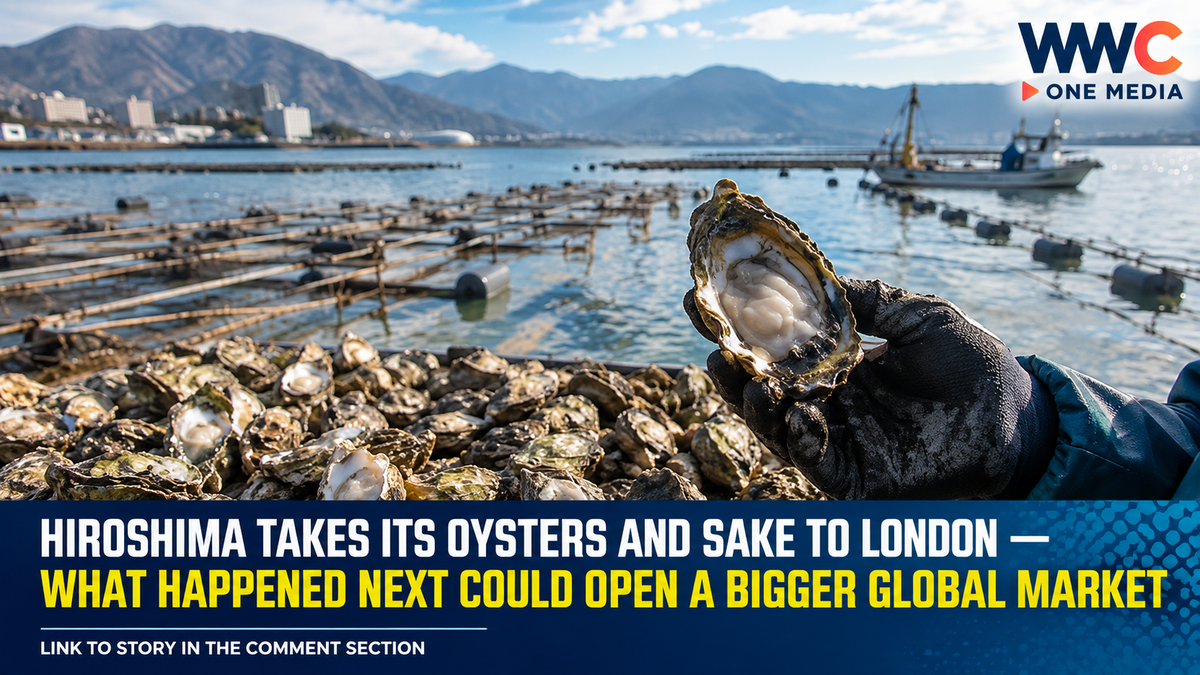
LONDON — Hiroshima is taking one of Japan’s most recognizable food pairings — premium oysters and sake — beyond its shores, with the prefecture making a fresh push to win over the British market.
Hiroshima Governor Mika Yokota and representatives from the prefecture’s sake industry held a promotional event in London on September 8, introducing British buyers, lawmakers and food-industry figures to Hiroshima oysters and locally produced Japanese sake.
Around 20 guests attended the event, where several sake varieties were paired with Hiroshima oysters served both raw and as tempura. The event was part of Hiroshima’s broader effort to expand exports of its regional food products amid growing international interest in Japanese cuisine.
But the message from Hiroshima went beyond simply showcasing Japanese food.
The prefecture is specifically looking to expand oyster exports to the United Kingdom and strengthen its presence in European markets. A separate report by KSB/ANN said the London event featured Hiroshima oysters prepared through low-temperature cooking and frying, highlighting their ability to retain their rich, meaty texture even when cooked.
That could give Hiroshima an advantage in a market where raw oysters are particularly popular.
One London oyster specialist praised the Hiroshima product for its thick meat and distinctive aroma, while other participants said its texture and flavor could appeal to British consumers.
Why Hiroshima oysters stand out
Hiroshima is Japan’s largest oyster-producing prefecture. Hiroshima Prefecture says its oysters are known for having relatively small shells but large, richly flavored meat, benefiting from the nutrient-rich waters of the Seto Inland Sea.
The Hiroshima tourism authority says the prefecture accounts for roughly 60% of Japan’s oyster market, making oysters an important part of the region’s food identity as well as its economy.
The prefecture has already been working to expand overseas sales. Hiroshima began exporting oysters to the European Union in 2023, while Japan added oysters to its priority export products in 2025 as part of a broader effort to expand overseas demand for Japanese food.
The UK, however, presents a particularly interesting opportunity.
British consumers are already familiar with oysters, meaning Hiroshima does not necessarily have to create an entirely new market. Instead, its strategy is to convince consumers and food businesses that Japanese oysters offer a different flavor, texture and culinary experience.
Sake adds another layer to the strategy
Hiroshima is also using its reputation as one of Japan’s major sake-producing regions to strengthen the pitch.
The prefecture has more than 40 sake breweries, while Hiroshima is widely recognized as one of Japan’s major sake-producing areas.
That reputation received an additional international boost this year when Hiroshima hosted the sake judging portion of the 2026 International Wine Challenge in May.
The 2026 competition attracted 1,738 sake entries from 457 breweries, with judges from 21 countries and regions participating. Hiroshima itself had a record 32 breweries entered, with six local sake products winning gold medals.
The timing of the London promotion was therefore significant: Hiroshima was not simply selling oysters and sake separately, but presenting them as complementary products capable of representing the region internationally.
The bigger goal: turning Hiroshima’s food identity into global exports
For Hiroshima, the London event represents a broader strategy to transform international interest in Japanese cuisine into sustained demand for regional products.
The prefecture has been increasing overseas promotion of its agricultural, seafood and alcoholic-beverage industries, with Governor Yokota leading a European sales campaign. Hiroshima’s government has explicitly identified export expansion and strengthening the international value of its sake brands as goals.
The push comes at a challenging moment for Hiroshima’s oyster industry. Japanese reports noted that producers suffered significant oyster mortality last year, while this year’s oyster shipments are expected to begin later than usual, with producers continuing to monitor growing conditions amid concerns linked to extreme summer heat.
That makes finding higher-value overseas markets even more important.
For now, London has provided Hiroshima with a platform to put its oysters and sake directly in front of British food professionals and potential buyers.
The bigger question is whether that first taste will turn into regular demand — and eventually make Hiroshima oysters and sake a more familiar pairing on menus across Britain and Europe.




Leave a Reply