
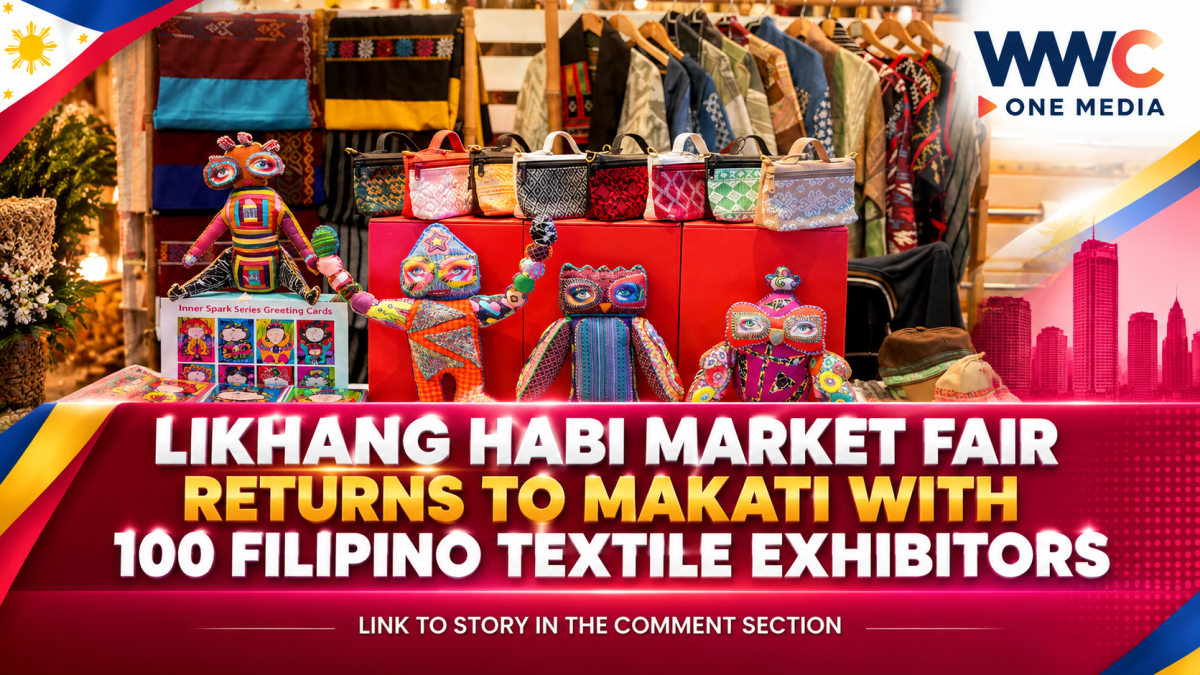
MAKATI CITY — The Likhang HABI Market Fair will return for its 16th edition in October, bringing together 100 exhibitors from across the Philippines to showcase handwoven textiles, traditional crafts and contemporary designs.
Organised by HABI: The Philippine Textile Council, the three-day event will take place from Oct 9 to 11, 2026, at SPACE at One Ayala in Makati City.
This year’s fair carries the theme “Worth Every Thread”, highlighting the work, cultural knowledge and craftsmanship behind Philippine handwoven textiles.
100 exhibitors from across the Philippines
The fair will bring together weavers, artisans, designers, makers and textile advocates representing micro, small and medium enterprises from different parts of the country.
Visitors can expect to see a wide range of traditional and contemporary Filipino textiles, including fabrics made using regional weaving techniques.
Among the textiles expected to be featured are:
- Inabel from Ilocos
- Suksok from Aklan
- T’nalak from Cotabato
- Abaca-based textiles
- Piña or pineapple fibre fabrics
- Other locally produced natural fibres and handwoven materials
The event aims to provide artisans and weaving communities with direct access to buyers while giving urban audiences an opportunity to learn more about the people and traditions behind the fabrics.
More than a market for traditional fabrics
While the fair is known for showcasing Philippine weaving traditions, the event has increasingly become a platform for contemporary design and entrepreneurship.
Participating exhibitors will present both traditional textiles and modern products that apply handwoven materials to fashion, accessories, homeware and other contemporary designs.
Over the years, HABI has seen small artisan enterprises grow from limited product lines into larger businesses employing more weavers and craftspeople.
The organisation says the annual fair has also become a space where artisans, designers and communities can exchange ideas while finding new ways to develop traditional crafts without losing their cultural roots.
Weaving competitions take centre stage
Two major national competitions will also form part of this year’s programme.
The fair will host the exhibition and judging of entries for the:
- 9th Lourdes Montinola Piña Weaving Competition
- 5th Eloisa Hizon Gomez Abaca Weaving Competition
The competitions are designed to recognise craftsmanship and encourage innovation in Philippine textile traditions.
The Piña competition focuses on the artistry of pineapple fibre weaving, while the Abaca competition highlights different techniques and applications using one of the Philippines’ most important natural fibres.
Award ceremonies are scheduled for Oct 10 and Oct 11.
Talks and documentaries will explore Philippine textile traditions
The programme will also include Kwentong Kultura, a series of educational discussions focusing on issues affecting the local textile sector.
Topics are expected to include:
- Cultural preservation
- Textile curation
- Product development
- Entrepreneurship
- Traditional weaving practices
- The future of Philippine textiles
Documentary screenings focusing on Philippine textile traditions will also be held during the fair, including special features produced by GMA News and Public Affairs’ i-Witness.
Preserving tradition while encouraging innovation
One of HABI’s central goals is to help preserve Philippine textile traditions while ensuring they remain relevant to modern markets.
Traditional weaving communities face challenges ranging from changing consumer demand to the need for younger generations to continue learning the craft.
Events such as the Likhang HABI Market Fair aim to connect heritage with contemporary opportunities.
Instead of treating handwoven fabrics simply as historical objects, the fair encourages artisans and designers to explore new applications while respecting traditional techniques and cultural knowledge.
That approach has become increasingly important as Filipino-made textiles gain greater attention in fashion, design and cultural industries.
A meeting place for weavers and designers
The fair has also developed into a major annual gathering for people involved in the Philippine textile industry.
Weavers from rural communities are able to meet directly with designers, buyers and customers, while smaller enterprises gain an opportunity to introduce their work to a wider audience.
For visitors, the event offers a chance to see how textiles from different regions vary in:
- Materials
- Colours
- Patterns
- Weaving techniques
- Cultural influences
- Production methods
Each fabric can reflect the history, environment and traditions of the community where it was created.
Why Philippine handwoven textiles matter
The Philippines has a wide range of textile traditions developed by communities across Luzon, the Visayas and Mindanao.
Many rely on natural materials such as abaca, piña and locally produced fibres.
The techniques used to transform these materials into fabric have often been passed from one generation to another.
Supporters of the industry argue that preserving these traditions requires more than simply displaying old textiles.
Weavers and artisan communities also need sustainable markets, new customers and opportunities to develop viable businesses.
The Likhang HABI Market Fair is designed to address both sides of that challenge — preserving heritage while creating economic opportunities for the people who keep these traditions alive.
The bottom line
The 16th Likhang HABI Market Fair will bring 100 exhibitors from across the Philippines to Makati this October for one of the country’s biggest annual celebrations of handwoven textiles and local craftsmanship.
The three-day event will feature traditional fabrics, contemporary designs, educational talks, documentary screenings and two major national weaving competitions.
For HABI and the communities taking part, the event represents more than a marketplace.
It is a meeting point between tradition and innovation — connecting Filipino weavers and artisans with new audiences while helping ensure the country’s textile heritage continues into the future.
The 16th Likhang HABI Market Fair will run from Oct 9 to 11, 2026, at SPACE at One Ayala in Makati City.
WWC ONE MEDIA J.M.D
Leave a Reply