
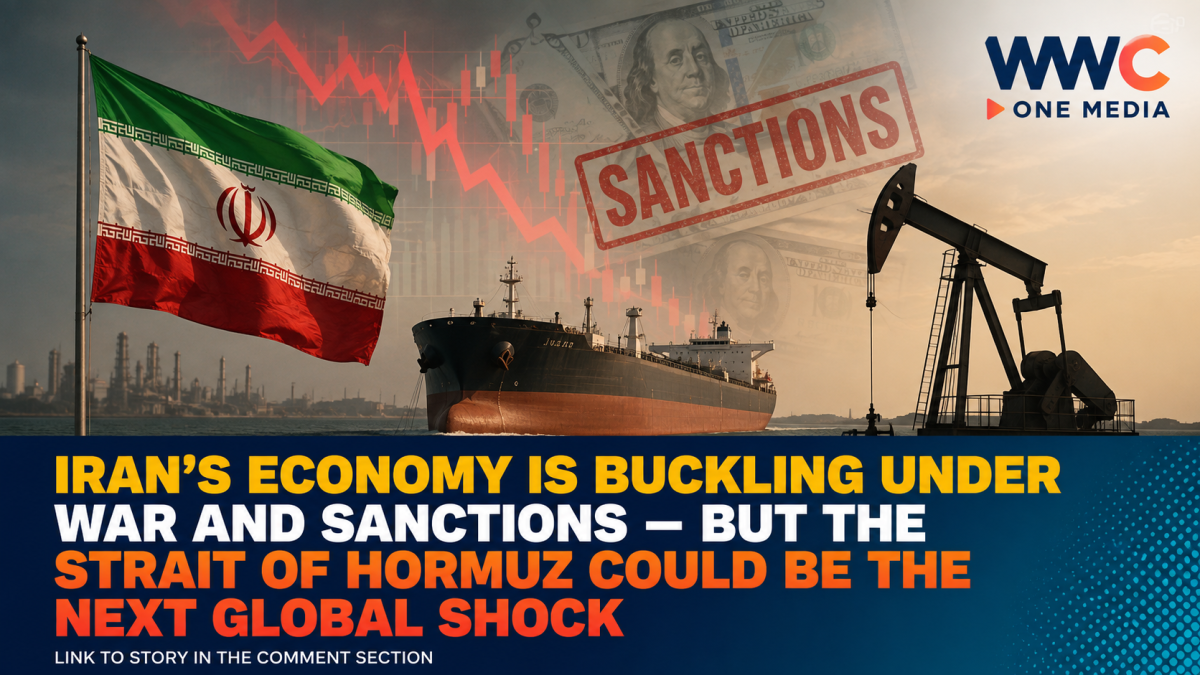
DUBAI — Iran is facing intensifying economic pressure as its prolonged conflict with the United States and a fresh wave of sanctions squeeze trade, fuel inflation and raise fears of further instability at home.
Iranian President Masoud Pezeshkian has acknowledged the scale of the economic damage, with recent reports indicating that foreign trade has contracted sharply while inflation has surged. The worsening financial situation comes as Washington expands its campaign to isolate Tehran economically and tensions remain high around the strategically vital Strait of Hormuz.
According to Reuters, Iran’s foreign trade has fallen by nearly 35 per cent, while inflation reached 66 per cent in the past month, underscoring the growing strain on households and businesses as the conflict enters its sixth month.
US Turns Up the Economic Pressure
The United States has continued to target financial channels it says help Iran circumvent international restrictions.
In its latest measures, Washington moved against the UAE branches of Egypt’s Banque Misr, alleging they had served as an important financial channel connected to Iranian networks. U.S. authorities also announced action against individuals and entities allegedly linked to Iran’s Bank Melli and money-laundering operations. Egypt’s central bank said the measures apply specifically to Banque Misr’s UAE branches and not to the bank’s operations in Egypt.
Iran has strongly condemned the widening sanctions, while insisting it will resist attempts to isolate its economy. The pressure campaign has become increasingly significant as diplomacy between Washington and Tehran remains stalled.
The Strait of Hormuz Is Still the Wild Card
The economic battle is closely tied to the continuing crisis in the Strait of Hormuz — one of the world’s most important energy shipping routes.
Before the conflict, the waterway carried roughly a fifth of globally traded oil, making any prolonged disruption a major concern for energy markets and the wider global economy. Shipping through the strait has been severely affected during the conflict, with Tehran and Washington offering sharply different accounts of who controls access and whether safe passage can be guaranteed.
Iran’s Revolutionary Guards have said they maintain control over the strait and that restrictions will remain until Tehran’s conditions are met. The United States, meanwhile, has maintained pressure on Iran and has said it has the capability to sustain its naval operations in the region.
The dispute has turned Hormuz into more than a military flashpoint: it has become a powerful bargaining chip in a conflict already affecting global energy supplies and trade.
Economic Pain Raises the Stakes Inside Iran
Iran’s leadership is now confronting a difficult balancing act. The government must manage rising prices, weakened trade and the risk of public frustration while maintaining its position against U.S. pressure.
Iran’s leadership has publicly called for greater focus on inflation, unemployment and domestic production, while political divisions over whether to pursue a diplomatic settlement have become increasingly important. The Associated Press has reported that, despite worsening economic conditions, Iran’s leadership has shown little sign of abandoning its broader strategy of resistance and internal control.
What Happens Next?
For now, neither side appears ready to make the concessions needed for a lasting settlement.
Mediation efforts and discussions over reopening shipping routes have continued, including diplomatic engagement involving regional countries. But major disagreements remain over sanctions, security guarantees and the terms for restoring normal navigation through the Strait of Hormuz.
The question now is whether Iran’s worsening economic reality will push the conflict toward diplomacy — or whether the pressure will instead harden Tehran’s position.
With inflation rising, trade shrinking and one of the world’s most critical shipping lanes still at the centre of a geopolitical standoff, the consequences of the Iran crisis may increasingly be felt far beyond the Middle East.
And if the deadlock over Hormuz deepens, the next economic shock may not stop at Iran’s borders.




Leave a Reply