
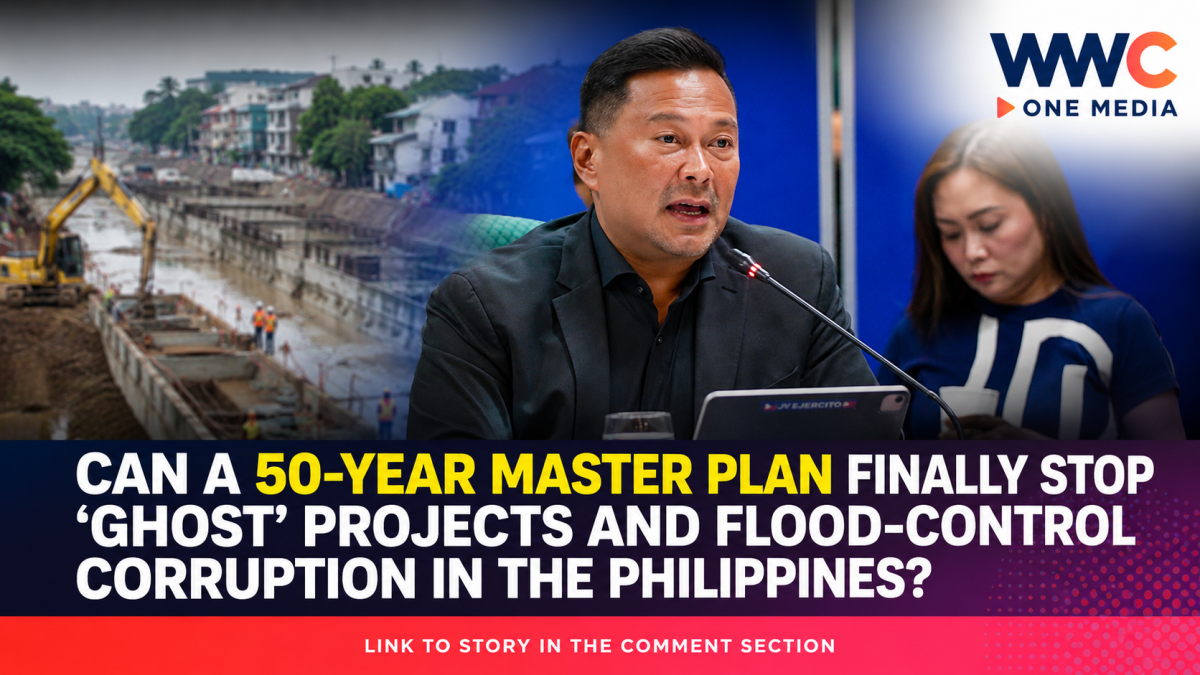
MANILA, Philippines — After years of massive infrastructure spending, persistent flooding and allegations of irregular government projects, Senator JV Ejercito is renewing his push for a long-term national development master plan that he believes could help prevent wasteful and potentially anomalous projects before they begin.
Ejercito is advocating for the proposed Masterplan for Infrastructure and National Development (MIND) Act, a measure designed to create a long-term, integrated roadmap for the country’s infrastructure development—one that could continue beyond changes in political administrations.
The proposal comes amid continuing public scrutiny of government flood-control spending and alleged anomalies involving infrastructure projects. Ejercito argues that a clearer national blueprint would make it more difficult for agencies to pursue projects that are disconnected from actual development priorities.
“If we have a master plan for infrastructure and national development, we can avoid these anomalies,” Ejercito has said, referring to projects that may be pursued even when they are not aligned with the country’s most urgent needs.
According to recent reporting by GMA News, Ejercito said the proposed master plan would help support the country’s long-term development goals, streamline public and private infrastructure investments, and clarify the responsibilities of government agencies involved in major projects. He also emphasized the need to prioritize flood-prone areas and complete unfinished flood-control projects.
A 30- to 50-Year Vision for Philippine Infrastructure
Ejercito’s proposal goes beyond roads and bridges. The senator has called for an integrated national plan that would connect roads, railways, airports, seaports, energy, water and digital infrastructure under a single long-term vision.
In a privilege speech earlier this week, Ejercito said the Philippines needs an infrastructure roadmap that can span approximately 30 to 50 years and remain relevant regardless of who occupies Malacañang or holds key government positions.
Supporters of the MIND Act say one of its key benefits would be continuity. Major infrastructure projects often take years to complete, making long-term planning critical to prevent projects from being abandoned, duplicated or replaced when political priorities change.
The proposal has also gained support from other lawmakers. During Senate deliberations in July, Senator Risa Hontiveros said a comprehensive master plan could help ensure that infrastructure spending is driven by genuine community and economic needs rather than short-term or politically motivated priorities. The Senate discussions consolidated proposals from several lawmakers, including Ejercito, Erwin Tulfo, Jinggoy Estrada and Senate President Sherwin Gatchalian.
Flood Control Crisis Adds Urgency to the Debate
The renewed push for a national infrastructure blueprint comes as questions continue to surround the effectiveness and implementation of flood-control projects.
For years, lawmakers have questioned why severe flooding continues to affect communities despite billions of pesos being allocated to flood mitigation. In 2024 alone, senators scrutinized approximately P255 billion allocated for flood-control projects, calling for greater accountability and an assessment of whether government spending was producing the intended results.
The issue has become even more politically sensitive following investigations and cases linked to alleged irregularities in flood-control projects. As of July 2026, GMA News Research reported that 45 individuals and two major contracting firms had been charged in connection with cases arising from the broader flood-control controversy.
For Ejercito, the answer should not be limited to prosecuting wrongdoing after public funds have already been spent.
The bigger challenge, he argues, is building a system that helps prevent questionable projects from being approved in the first place.
P1.47 Trillion Infrastructure Push Raises Stakes
The debate over planning and accountability is becoming increasingly important as the government prepares another massive infrastructure program.
According to the Department of Budget and Management, the Marcos administration has proposed P1.47 trillion for its “Build Better More” infrastructure initiative under the proposed P7.2-trillion National Expenditure Program for 2027, with the Department of Public Works and Highways receiving the largest share of the proposed infrastructure funding.
Ejercito has stressed that infrastructure spending remains essential for economic growth—but says spending more money alone is not enough. Projects must be properly planned, connected to broader development goals and completed effectively.
Recent reporting by the Philippine News Agency also quoted Ejercito calling for faster infrastructure spending to support economic growth while maintaining accountability amid concerns over alleged flood-control anomalies.
Can a Master Plan Really Curb Corruption?
A national master plan would not automatically eliminate corruption. Investigations, transparent procurement, independent oversight and strong enforcement would still be necessary.
But proponents say the MIND Act could address a critical vulnerability: the planning stage.
By requiring projects to fit into a comprehensive and continuing national development strategy, lawmakers hope to make it easier to identify unnecessary projects, reduce arbitrary budget insertions and ensure that infrastructure investments respond to real needs.
The proposed measure could also help answer a question that Filipinos have repeatedly asked whenever another major flood strikes despite years of government spending:
Are the right projects being built in the right places—or is the country still spending billions without a unified roadmap?
As Congress considers the MIND Act, the proposal is shaping up to be more than a debate about roads, bridges and flood-control systems. It is increasingly becoming a test of whether the Philippines can build an infrastructure program that survives political cycles—and protects public money before another costly project goes wrong.
The question now is whether lawmakers can turn the long-term plan into law before the next generation is left paying for the gaps of the last one.




Leave a Reply