
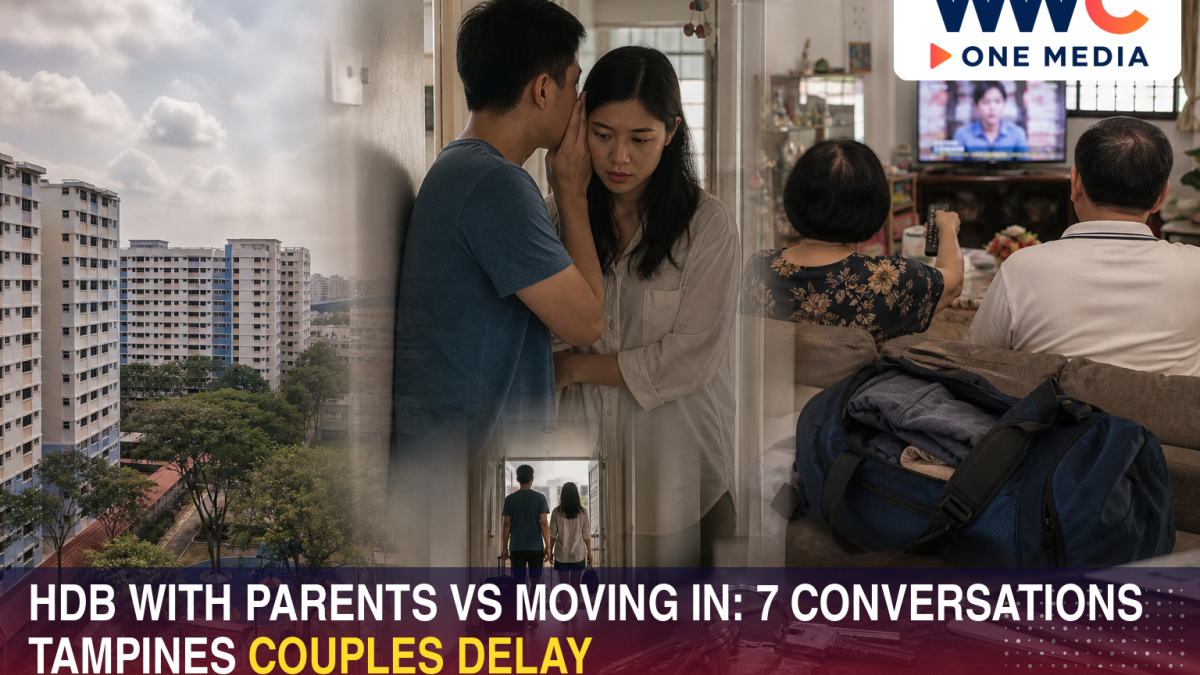
SINGAPORE — In Tampines, HDB with parents vs moving in is rarely a sofa question. It is a Sunday-lunch question couples postpone because the spare room already has a wardrobe, the East West Line is downstairs, and nobody wants to be the child who made the hall quiet. Staying looks like respect. Renting looks like a scene. Both can be true. Neither is a plan.
Have these seven conversations before a listing, and before the void deck hears a rumour.
1. HDB with parents vs moving in is two different lives, not a nicer sofa
Staying in the family flat is not free housing. It is a life with a built-in audience, a built-in cook, and a Chinese New Year story: we are still here, we are waiting. Moving in together is a different product. A door that closes. A Sunday that does not automatically include a parent’s shopping list.
Name which life you are buying. If the real want is a closed door three nights a week, a nicer mattress will not deliver it. If the real want is daily family meals, a rental in Pasir Ris will feel like exile even if the photos were pretty. Write one sentence each, separately, then compare. Those sentences can both be love. They are not the same lease.
2. CPF and money: Ordinary Account is not a rental float
Open the apps. CPF Ordinary Account money has a job in housing purchase. It is not the cash you use to float a market rental. Deposits, rent, and the first months of a couple’s groceries come from take-home — the number you can PayNow — not from the CPF line you mentally add to “what we have.”
Say who still hands a share of salary to the household as a child of the house. That transfer can be honour. It can also mean the partner is dating a dependent unless you both chose the number. If you stay, split utilities, family rice, and couple dates as three lines, not one guilty lump. If you leave, name deposit, first month, and a sinking fund for hungry nights.
3. Guests and overnights without a performance breakfast
If a partner can only stay when they arrive after parents sleep and leave before the coffee, you do not have a shared life. You have a workaround. Decide whether that is a season with an end date or a rule you both accept. Pretending it is fine while collecting irritation is how Tampines hallways become cold.
Guests are the other half. In a family HDB, the living room is not yours to lend. Write the overnight rule in hours and in breakfast terms. “Stay, eat, say good morning” is a different house from “arrive after 11, leave before 7, do not use the good cups.” If only one version is available, moving is not drama. It is the only honest listing.
4. The kitchen is a hierarchy, not a shared Pinterest board
Someone already owns the stove. In a parents’ Tampines kitchen that person is usually a mother, a father who claims weekend soup, or a helper with a sequence you will wreck by frying an egg. Ask: can the partner cook without an audience. Whose condiments can be moved. What happens to leftovers. Who does the wet work after 9 p.m. when the hall is trying to sleep.
Food is how a household says who belongs. A partner who is always a guest at the table will start eating elsewhere. A child of the house who treats the partner as kitchen staff will start a different fight, dressed up as “she doesn’t help.”
5. Privacy named in hours, not in vibes
“I want space” is a mood. “I need the living room to ourselves after 9 p.m. twice a week, and a closed bedroom door for Zoom without a parent walking in with fruit” is a request. If that cannot happen in the current flat, moving is logistics. If it can happen, staying is not failure. Write the hours.
Tampines 4-rooms still have thin walls. Tone travels. Agree a pause protocol: downstairs, a walk toward Tampines Hub, a 20-minute silence that is announced, not performed. Renting does not invent maturity. It just removes the extra ears. Privacy is also phones and illness. Who sees the couple’s chat over a shoulder. Whether a fever means the partner can stay and nurse, or means they should not trouble the house.
6. The timeline in months, including the honest “not yet”
If you are not moving, say until when. A parent’s health, a work pass, a savings target, a BTO ballot you have not even joined: name it. Open-ended not-yet is how one person starts a secret listing search and the other feels ambushed at Sunday lunch. Put the review on a calendar like a bill.
Be specific enough to hurt a little. “After bonus” is fog. “We look at rentals in March if the joint cash is X and both of us still want a door” is a sentence. If the plan is marriage-then-flat, say whether dating in the family house is the path you both accept until then.
7. Who tells the parents — and in which language
This is the conversation couples delay the longest, because it has a face. Who speaks. In English, Mandarin, Malay, Tamil, or the mix the table actually uses. Together at the dining table, or one child as messenger in the kitchen after the other has gone home. Singapore families notice who speaks. One person as messenger becomes the family villain. Deliver it together if you can.
You do not need a speech. You need one paragraph: we are planning to rent by this month because we need a door that closes; we will still be here on these days; we will contribute until we leave. Or: we are staying, and these are the overnight and kitchen rules we are asking for. If you cannot say that paragraph to each other, you are not ready to say it to parents.
A script for the first parent conversation
Sit. Phones down. One of you opens: we want to talk about how we live for the next year. The other fills the practical lines. Then you stop talking long enough for the table to react.
Expect a counter-offer: stay, we will give you the master, we will renovate. Sometimes that is love. Sometimes it is a delay dressed as a gift. You already have conversations 1 and 6 on paper. Use them. Thank them. Do not improvise a new life in the moment to keep the hall warm. If a parent issues a verdict about the partner, return to the paragraph. Do not put them in the corridor to “give the family space” as a punishment.
If only one of you wants to leave the Tampines flat
That is the real conversation. Do not paper it with a nicer sofa. A partner who needs a closed door and a partner who needs daily family meals are not in a styling disagreement. They are in a life-shape disagreement. Counselling is cheaper than a lease you will resent.
Can the person who wants to stay protect the person who wants to leave, in real time, when a parent comments on weight, job, religion, or a wedding date. If the answer is no, staying is not filial. It is exposing. The other way: can the person who wants to leave still show up on the Sundays you named. If the answer is no, moving will not make you a better child. It will make you a missing one.
Sundays after you stay, and Sundays after you go
If you leave, decide which Sundays return to Tampines before the first weekend becomes a referendum. If you stay, decide which Sundays the couple gets entirely, without a family lunch bolted on.
Bottom line
HDB with parents vs moving in, for Tampines couples, is seven talks: which life you are buying, CPF and cash that match the story, guests and overnights without a performance breakfast, a kitchen that says who belongs, privacy in hours, a timeline in months, and who tells the parents in a language the table uses. Delay them and the spare room will teach you anyway. Have them before the listing, and before Sunday lunch.




Leave a Reply