
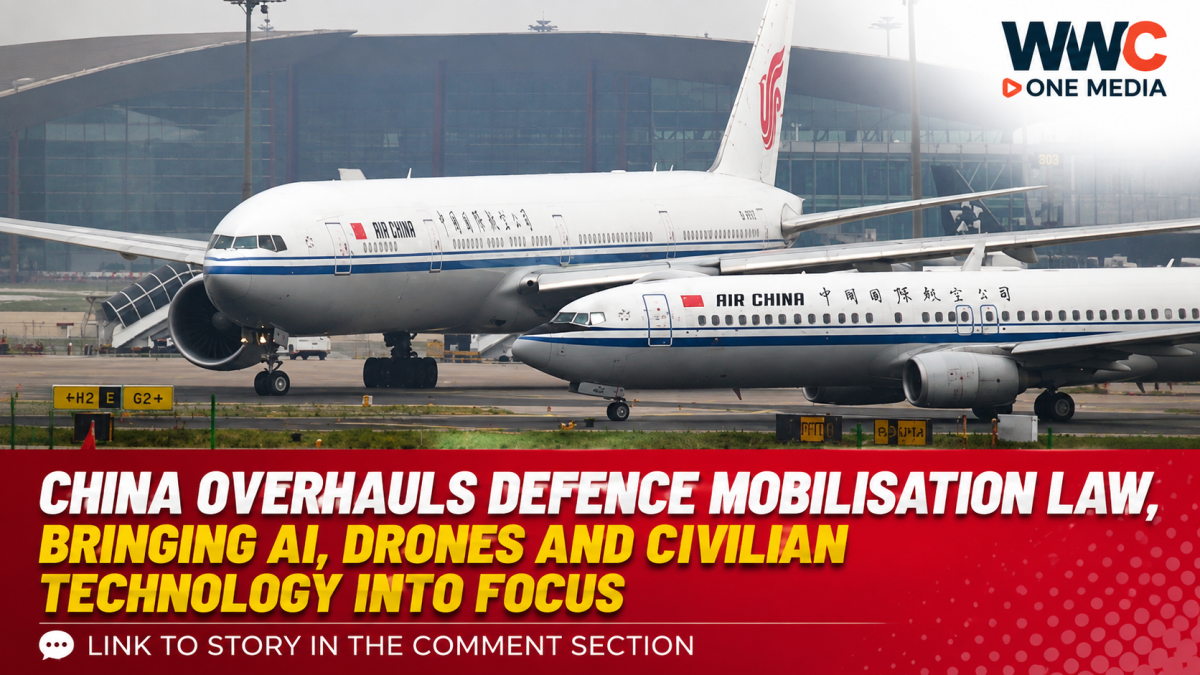
China’s three largest state-owned airlines are turning increasingly toward international travel demand for relief after reporting combined first-half losses of about 8.2 billion yuan (US$1.2 billion).
Air China, China Eastern Airlines and China Southern Airlines all reported deeper losses in the first six months of 2026, even as their revenues grew by roughly 10%. The results highlight the difficult balancing act facing China’s aviation industry: airlines need more passengers and revenue, but sharply higher fuel costs and weak domestic pricing are squeezing profits.
Fuel costs wipe out revenue gains
The biggest financial problem has been jet fuel.
Fuel expenses at all three carriers increased between 35% and 38% in the first half of the year, largely because oil prices surged following the conflict in the Middle East. Unlike many international competitors, Chinese airlines have relatively limited fuel-hedging protection, leaving them particularly exposed to sudden increases in energy costs.
The individual results show how severe the pressure has become:
- Air China: 2.3 billion yuan net loss
- China Eastern Airlines: 2.2 billion yuan net loss
- China Southern Airlines: 3.7 billion yuan net loss
China Southern suffered the largest loss among the three.
Together, the carriers lost about 8.17 billion yuan, reversing their combined first-quarter profit of 4.82 billion yuan.
International routes are becoming the bright spot
Despite the losses, there is one area giving the airlines some reason for optimism: international travel.
Revenue increased 10.5% at Air China, 11.1% at China Eastern and 9.7% at China Southern, with international traffic playing an important role in the gains. European routes have performed particularly well as some passengers avoided Middle Eastern aviation hubs affected by the regional conflict.
Air China has already indicated that it plans to increase flights to Europe and North America during the second half of 2026, citing stronger international performance compared with domestic routes.
That strategy could help the airlines generate additional revenue without relying entirely on a weak domestic market.
But there is a catch.
Airlines cannot simply raise ticket prices
Chinese carriers face limited room to push up domestic fares.
A softer economy has made travelers more price-sensitive, while China’s extensive high-speed rail network gives passengers another option for many domestic journeys. Raising ticket prices too aggressively could therefore reduce demand further.
That leaves airlines absorbing much of the increase in fuel and operating costs.
Analysts also warn that putting more aircraft onto international routes could eventually create additional capacity and limit how much airlines can increase international fares.
The summer travel season isn’t providing enough relief
The third quarter is traditionally one of the most important periods for Chinese airlines, but the 2026 summer season has been disappointing.
An unusually active typhoon season disrupted flights during the peak travel period. Flight Master projected that passenger traffic carried by Chinese airlines in July and August could decline 3.6% year on year to about 142 million passengers.
If that projection holds, it would represent the first contraction in China’s peak summer aviation season since 2022.
Analysts now see bigger losses ahead
The deterioration has forced analysts to significantly reassess the airlines’ full-year outlook.
HSBC analysts expect Air China, China Eastern and China Southern to record a combined 16.8 billion yuan loss in 2026, compared with an earlier market expectation of a combined profit of about 1.3 billion yuan.
That would extend the three airlines’ streak of annual financial difficulties, with the latest first-half results representing their seventh consecutive year of first-half losses.
China is still expanding its homegrown aircraft fleet
Despite the financial pressure, the airlines continue to take delivery of China’s domestically manufactured COMAC C919 aircraft.
China Eastern had 17 C919s in its fleet after receiving three during the first half. Air China and China Southern each had 11 after receiving two and three respectively.
China Eastern, however, has reduced its expected C919 deliveries between 2026 and 2028 by 13 aircraft from its previous forecast. Air China maintained its forecast, while China Southern did not provide a comparable delivery projection in its interim report.
A difficult bet on global demand
China’s aviation sector is therefore caught between two very different markets.
Domestic aviation is struggling with weak pricing power and competition from high-speed rail, while international travel is showing stronger demand but remains vulnerable to geopolitical disruption and rising fuel costs.
The three airlines are responding by shifting more capacity toward overseas routes and seeking stronger international demand.
Whether that strategy can offset their mounting losses will depend heavily on three factors: fuel prices, international passenger demand and the ability to maintain fares without discouraging travelers.
For now, China’s aviation giants are betting that the world outside China can provide the growth their domestic market is no longer delivering.
And with analysts now forecasting billions more yuan in losses, that bet is becoming increasingly important.
WWC ONE MEDIA J.M.D




Leave a Reply