
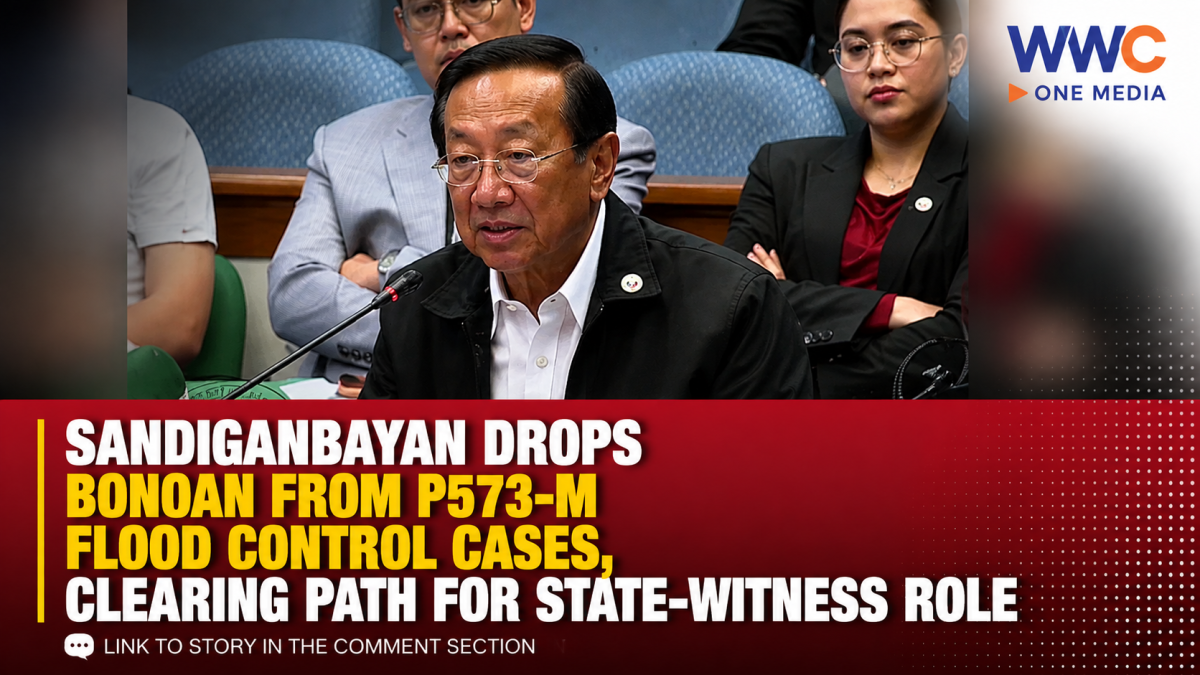
MANILA, Philippines — Former Department of Public Works and Highways (DPWH) Secretary Manuel Bonoan has been removed as a co-accused in the plunder and graft cases involving detained Sen. Jinggoy Estrada, in a major development in the government’s widening investigation into alleged corruption in flood-control projects.
The Sandiganbayan Fifth Division voted 2-1 to grant the Office of the Ombudsman’s request to amend the criminal informations and discharge Bonoan from the two cases before the division. The court said determining which accused may be used as a state witness falls within the Ombudsman’s prosecutorial discretion.
The ruling is significant because Bonoan had agreed to cooperate with investigators, and prosecutors say his knowledge of the DPWH system could help them trace how the alleged flood-control kickback scheme operated and identify other personalities who may have been involved.
What the court’s decision means
Bonoan had been charged alongside Estrada and three other former DPWH officials in cases involving allegations of more than P573 million in kickbacks connected to flood-control and infrastructure projects.
With the Fifth Division’s latest ruling, Bonoan is no longer an accused in those two cases. The court also ordered the recall of the warrant of arrest and hold-departure order issued against him in those cases.
The move effectively opens the door for Bonoan to serve as a state witness, although the legal distinction is important: being discharged as an accused does not mean a court has declared him innocent of every allegation connected to the broader flood-control controversy.
Why prosecutors wanted Bonoan out of the case
The Office of the Ombudsman asked to discharge Bonoan after he agreed to cooperate with the government.
Prosecutors said his testimony could help expose the alleged mechanism behind the kickback scheme and potentially assist investigations involving other personalities linked to the broader flood-control controversy.
The Ombudsman previously described Bonoan’s cooperation as important to uncovering the alleged “architecture” behind the machinery involved in the questioned projects.
The P573-million allegation
The cases before the Fifth Division stem from allegations that Estrada, Bonoan and other officials participated in a scheme involving budget insertions and allocations for DPWH projects.
Prosecutors allege the scheme generated approximately P573 million in kickbacks.
A separate allegation involving P213.75 million concerns two flood-control projects in Bulacan. Prosecutors have alleged that the amount represented roughly 25% of the projects’ combined value.
These remain allegations that must be proven in court. None of the accused should be treated as guilty simply because charges have been filed.
Not every case against Bonoan has disappeared
This is one of the most important details in the latest development.
The Fifth Division’s decision removes Bonoan from the plunder and graft cases pending before that division, but he still faces a separate graft case before the Sandiganbayan Second Division.
That distinction became especially important after the Second Division previously rejected the prosecution’s attempt to remove Bonoan from that case.
In its August ruling, the Second Division said removing Bonoan after Estrada had already been arraigned could prejudice the senator’s defense because it would change the prosecution’s theory from alleged conspiracy to one focused on Estrada’s individual liability. The court, however, said prosecutors could seek Bonoan’s discharge as a state witness at the appropriate stage if the legal requirements were met.
So the latest ruling does not amount to a blanket dismissal of every criminal case involving Bonoan.
The ruling was not unanimous
The decision also came with a significant disagreement inside the Sandiganbayan.
The Fifth Division ruled 2-1, with Associate Justice Gener Gito dissenting.
Gito questioned whether the court had been given enough information about the exact nature of Bonoan’s proposed cooperation, including what information he would provide, what his testimony would contain and which cases it would cover.
The majority, however, held that the Ombudsman has substantial discretion in determining which accused should be used as a state witness, particularly when prosecutors believe the person’s cooperation could strengthen criminal prosecutions.
What’s next for Jinggoy Estrada?
Estrada remains an accused in the flood-control cases.
Following the ruling, the senator said he respects the court’s decision but intends to pursue all legal remedies available to him. He has repeatedly denied the allegations and maintained that he will rely on due process and the rule of law.
Estrada’s arraignment before the Fifth Division is scheduled for September 3, 2026, according to GMA News.
That makes the timing of the Bonoan ruling particularly significant.
The former DPWH secretary could potentially become a key government witness just as the court proceedings against Estrada move into another critical phase.
Why Bonoan’s cooperation could matter
The flood-control investigation has expanded well beyond a single criminal case.
Authorities are examining alleged irregularities involving government infrastructure projects, budget allocations and supposed kickbacks. Prosecutors have indicated that information from Bonoan could potentially be relevant to other investigations, including cases being prepared against additional personalities.
Philstar reported that Ombudsman Jesus Crispin Remulla had said Bonoan could provide testimony relevant to cases involving former House Speaker Martin Romualdez, although Romualdez has denied wrongdoing and his camp has questioned the push to use Bonoan as a witness.
That means Bonoan’s cooperation could become much bigger than the Estrada case alone.
The bigger picture
The latest Sandiganbayan ruling represents a major strategic shift in the government’s flood-control corruption investigation.
Instead of continuing to prosecute Bonoan alongside Estrada in the Fifth Division cases, prosecutors now have an opportunity to use his insider knowledge of the DPWH system to potentially build cases against other individuals.
But the next test will be crucial:
What exactly will Bonoan tell investigators — and will his testimony lead prosecutors to the people they say were behind the alleged system?
That answer could determine whether his discharge becomes one of the most consequential developments yet in the country’s flood-control corruption investigation.
Accuracy and legal-status note
The alleged kickback scheme and accusations against Estrada, Bonoan and the other respondents have not been proven in court. The Sandiganbayan’s Fifth Division ruling concerns Bonoan’s discharge from those particular cases and his potential cooperation as a state witness; it should not be interpreted as a finding that the underlying corruption allegations are true. Bonoan also remains involved in a separate graft case before the Sandiganbayan Second Division.
WWC ONE MEDIA J.M.D




Leave a Reply