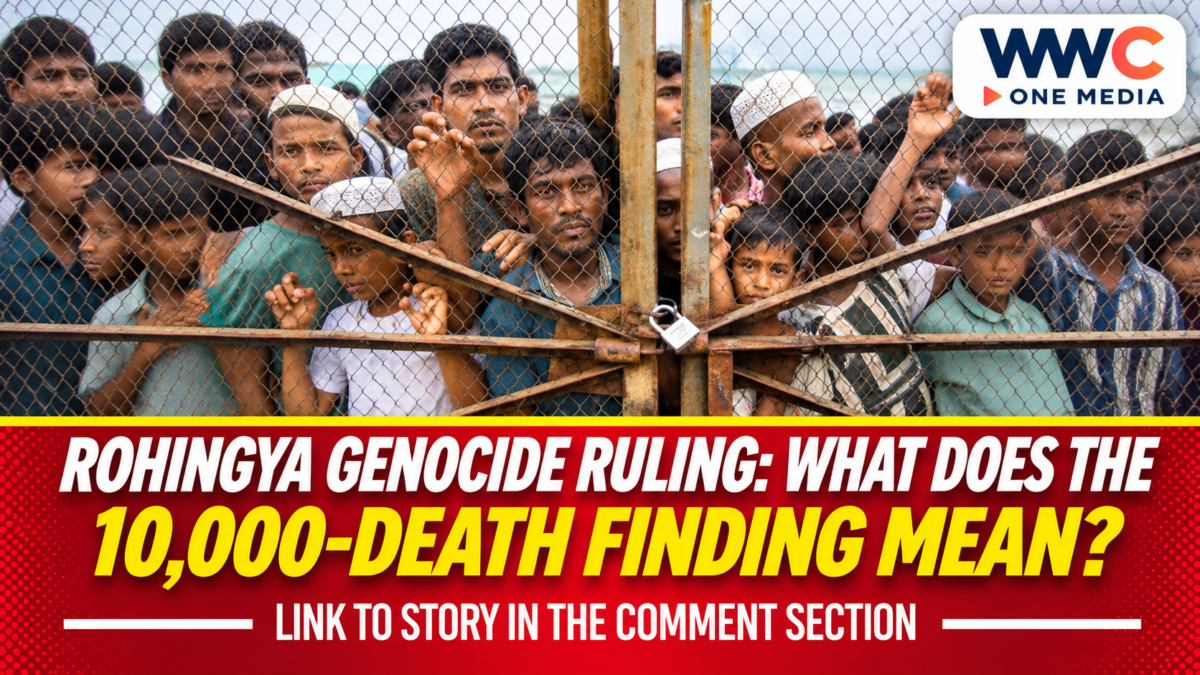
THE HAGUE — Nov. 21, 2026. The International Court of Justice (ICJ) found on Nov. 19 that Myanmar committed genocide against the Rohingya during military operations in northern Rakhine State in 2017. The Rohingya genocide ruling also accepted that the evidentiary record supported an estimate of at least 10,000 deaths, while requiring Myanmar to pursue accountability and remedies for those harmed.
The distinction between a court-supported estimate, a finding of state responsibility and the eventual delivery of compensation matters. The judgment establishes legal duties, but does not mean that each death has been individually documented, that individual commanders have been convicted, or that displaced families can safely return today.
Rohingya Genocide Ruling: What the Judges Found
The case was brought by The Gambia in November 2019 under the Genocide Convention. In its Nov. 19 judgment, the Court found by nine votes to six that Myanmar committed genocide against the Rohingya in northern Rakhine State.
The judges examined killings and other acts as well as whether the evidence demonstrated an intent to destroy the protected group in whole or in part. Genocide is not simply another term for wartime deaths: the Convention requires a particular form of intent, and the Court examined that requirement separately from the underlying violence.
The decision addresses the international responsibility of Myanmar as a state. It does not operate as a criminal verdict against an individual commander. The Court directed the country to investigate people reasonably suspected of acts prohibited under the Convention and, where warranted, prosecute and punish them.
The judgment also found breaches of duties to punish genocide and adopt implementing legislation. In one separate finding, the Court did not conclude that Myanmar had directly and publicly incited genocide by private persons in northern Rakhine State. That narrower finding does not undo the genocide determination.
What the 10,000-Death Estimate Means
The Court assessed evidence gathered about the 2017 operations, including material from a United Nations fact-finding mission. It considered the mission’s estimate of at least 10,000 deaths supported by the record and concluded that thousands of Rohingya civilians had been killed by Myanmar security forces.
This is a judicial assessment of the available evidence, not a claim that the Court published an individually verified roll of 10,000 names. It also is not a count of all deaths or displacement associated with every subsequent phase of Myanmar’s conflicts.
The Court considered broader patterns, including injuries and attacks on people fleeing, sexual violence and destruction of villages. Those findings informed its evaluation of what occurred during the clearance operations and the intent behind the conduct.
Analysis: A numerical finding helps establish the scale of the harm. But its legal significance depends on the entire evidentiary assessment, including the acts committed, the protected group affected and the intent that the Court found proved.
Why Evidence Preservation Matters
A separate part of the judgment concerns Myanmar’s compliance with the Court’s January 2020 provisional measures. The Court found that Myanmar breached its obligation to protect evidence relevant to allegations of genocide.
The Court identified developments after the provisional order, including construction on former Rohingya village sites and destruction of remnants of other villages. The ruling treats preservation of evidence as a legal obligation separate from the eventual question of reparations.
This is important for any future investigation of individual suspects. Investigators and courts may need reliable documents, witness evidence, site information and records of property loss to assess responsibility and remedies.
WWC has previously explained how ASEAN maintained restrictions on Myanmar’s political representation. Those diplomatic restrictions are a separate regional policy question; they are not equivalent to enforcement of the ICJ judgment.
What Myanmar Must Do for Rohingya Families
The ICJ required restitution measures, including facilitating safe, voluntary and dignified return and family reunification for people displaced by the wrongful acts. It also identified the return or replacement of lost property, searches for missing people, dignified handling of the dead, rehabilitation and protection against discrimination and persecution.
Where restitution cannot fully repair the harm, the judgment requires compensation. It did not set a final monetary award on Nov. 19. Instead, the amount and arrangements are to be addressed in a later phase, with Myanmar required to report within two years of the judgment on restitution and compensation matters.
A legal requirement for safe return does not establish that present conditions permit return. The UN refugee agency reported on Nov. 19 that more than 1.3 million Rohingya refugees remained displaced across the region, most in Bangladesh, with more than 100,000 internally displaced in Myanmar’s Rakhine State.
The human consequences intersect with regional policies. WWC has examined Malaysia’s proposed talks over Rohingya repatriation and concerns about returns to Myanmar while protection questions remain. Those are separate developments, not evidence that the Court’s conditions have already been fulfilled.
What Happens Next
The judgment establishes state responsibility and legal duties; implementation will require evidence of actual change. Relevant benchmarks include investigations and prosecutions, legislation complying with the Convention, protection against discrimination, restitution arrangements and access to genuine remedies.
The reporting deadline is Nov. 19, 2028, two years after delivery of the judgment. That is a deadline for Myanmar’s report to the Court, not a promise that every compensation claim will be paid or every displaced family returned by that date.
Analysis: The decisive test is whether rights recognised in The Hague translate into safety, documentation, remedies and accountability for Rohingya people. The Court’s judgment settles an important legal question; its humanitarian consequences remain to be demonstrated.
Frequently Asked Questions
Did the ICJ rule that Myanmar committed genocide?
Yes. On Nov. 19, 2026, the Court found by nine votes to six that Myanmar committed genocide against the Rohingya in northern Rakhine State.
Did the ICJ establish that 10,000 Rohingya were killed?
The Court found the UN fact-finding mission’s estimate of at least 10,000 deaths supported by the evidence. It was an estimated toll, not an individualised victim registry.
Does the ruling convict Myanmar’s military leaders?
No. It determines state responsibility. Individual criminal liability requires separate investigations and proceedings.
Did the ICJ set a compensation amount?
No. Compensation and its modalities are to be addressed in a later phase. Myanmar must submit a relevant report within two years of Nov. 19, 2026.
Can Rohingya refugees now safely return to Myanmar?
The judgment requires safe, voluntary and dignified return measures, but does not establish that conditions currently permit those returns.