NEW DELHI, India, Nov. 21, 2026 — Energy Efficiency Services Limited (EESL) is among the public-sector organisations represented at India’s 45th International Trade Fair, where the Ministry of Power is presenting energy-saving appliances, smart electricity systems and emerging clean-energy technologies. The exhibition at Bharat Mandapam forms part of a government showcase scheduled to remain open until Nov. 27.
The event highlights a question increasingly relevant to governments and consumers: can technologies presented at exhibitions deliver measurable reductions in electricity use, operating costs and emissions once deployed?
For EESL, the answer depends not only on innovation but also on purchasing costs, programme implementation, maintenance and independently assessable results.
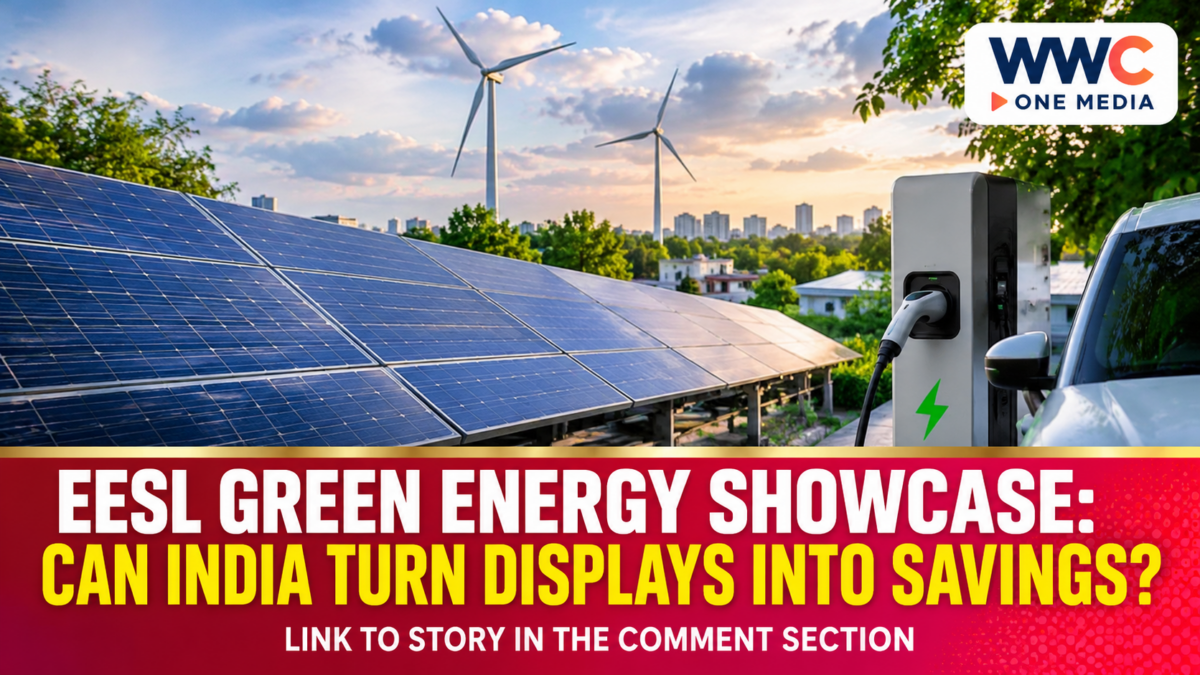
EESL Green Energy Showcase Puts Practical Savings in Focus
The Ministry of Power’s trade-fair pavilion brings together several electricity-sector organisations, including EESL and the Bureau of Energy Efficiency.
Its exhibits include an energy-efficient smart-home demonstration, electricity storage systems, smart-meter applications and models illustrating developments in power infrastructure.
Interactive installations and virtual-reality presentations are designed to explain how different technologies work.
The government’s presentation also includes green-hydrogen concepts, carbon-capture applications, pumped-storage projects and digital electricity-management tools.
These displays cover different stages of technological development. Some concern established consumer products, while others illustrate infrastructure concepts or systems requiring substantial investment.
That distinction matters because public exposure to technology is not equivalent to commercial deployment.
A demonstrated product may still need procurement, installation, financing and performance monitoring before its potential benefits become measurable.
What EESL’s Previous Programmes Reveal
EESL is a joint venture of public-sector undertakings under India’s Ministry of Power.
Its responsibilities have included programmes aimed at reducing electricity consumption through efficient lighting, appliances and other technologies.
One established initiative is Unnat Jyoti by Affordable LEDs for All, commonly known as UJALA.
Government figures released in January 2025 showed that the programme had distributed 36.87 crore LED bulbs, equivalent to 368.7 million units.
The figures demonstrated the scale of India’s effort to make efficient household lighting more widely available.
EESL has also implemented the Street Lighting National Programme, which replaces conventional public lighting with energy-efficient LED systems.
By Jan. 6, 2025, more than 1.34 crore LED streetlights had been installed under the programme.
Government estimates associated those installations with annual electricity savings exceeding 9,001 million units.
These figures concern previously reported programme achievements. They should not be interpreted as outcomes generated by the November 2026 exhibition.
Why Energy Efficiency Is an Economic Issue
Electricity efficiency can reduce demand without requiring an equivalent increase in electricity generation.
Replacing inefficient appliances, improving lighting and managing consumption more carefully can lower the amount of electricity needed to deliver similar services.
For households, the financial benefit depends on equipment costs, operating hours, electricity tariffs and product performance.
For businesses, lower consumption may improve operating efficiency, although the size of any savings depends on actual equipment use.
Government institutions face additional considerations, including procurement rules, maintenance contracts and budget constraints.
The Philippines is confronting comparable questions. WWC ONE MEDIA has examined how new electricity procurement options could affect government energy costs.
The common lesson is that efficiency measures need realistic financial assessments rather than assumptions that every technology automatically produces savings.
From Efficient Lighting to Smart Energy Systems
EESL’s history shows how government-backed purchasing programmes can influence demand for efficient products.
The organisation subsequently expanded its attention beyond conventional lighting.
In November 2023, it launched the National Efficient Cooking Programme and the Energy Efficient Fans Programme.
The official announcement set initial ambitions involving 20 lakh induction cookstoves and one crore efficient ceiling fans.
Those figures described programme objectives, not verified final distribution totals.
The broader electricity transition also involves smarter equipment, flexible electricity networks and technologies capable of supporting renewable generation.
India’s trade-fair presentation reflects that wider range of possibilities, including electricity storage and consumer energy-management systems.
For Philippine readers, similar infrastructure questions appear in renewable-energy development. WWC ONE MEDIA has covered energy-efficiency and clean-power technologies within the ADB’s Philippine project pipeline.
The comparison is useful, but the programmes differ in financing, regulation and implementation arrangements.
What Could Turn the Exhibition Into Measurable Results?
The exhibition offers an opportunity to explain complicated energy technologies to households, businesses and institutions.
But the economic test begins after the demonstration.
For an efficient appliance, credible performance assessment requires information about purchase price, electricity consumption, operating conditions and expected service life.
A smart-metering system requires reliable readings, usable consumer information and effective electricity-management arrangements.
Infrastructure technologies face additional challenges involving investment requirements, technical readiness and integration into existing networks.
Public-sector programmes also require accountability.
Officials and programme managers need to distinguish installations from announcements, estimated energy savings from measured outcomes, and procurement commitments from completed delivery.
These distinctions are equally relevant to Philippine consumers evaluating investments in energy technology.
For example, WWC ONE MEDIA’s coverage of rooftop solar financing options for Filipino households illustrates why financing conditions and actual electricity requirements matter when assessing potential benefits.
A successful exhibition may increase awareness, but measurable impact requires evidence beyond visitor interest.
What Happens Next?
The Ministry of Power’s pavilion is scheduled to remain open until Nov. 27, 2026.
After the fair, the meaningful questions will concern implementation: which technologies secure funding, which programmes expand and what performance information becomes publicly available?
EESL’s documented history in efficient lighting provides a useful foundation for assessing future efforts.
However, earlier achievements do not guarantee that newer products or infrastructure concepts will achieve similar results.
The strongest evidence of progress would be completed projects accompanied by transparent cost, operational and energy-saving data.
For India, the longer-term challenge is to convert technological visibility into accessible, reliable and economically justified energy services.
For other markets, including the Philippines, the lesson is straightforward: clean-energy ambitions become more valuable when their results can be measured.
Frequently Asked Questions
What is EESL in India?
Energy Efficiency Services Limited is a joint venture of public-sector undertakings under India’s Ministry of Power. It implements energy-efficiency initiatives involving lighting, appliances and related technologies.
What did the Ministry of Power showcase at IITF 2026?
The pavilion features energy-efficient smart-home demonstrations, electricity storage technologies, smart-meter applications, green-hydrogen concepts and other electricity-sector initiatives.
How many LED bulbs were distributed under UJALA?
Official figures dated Jan. 6, 2025, reported 36.87 crore LED bulbs distributed, equivalent to 368.7 million bulbs.
Does the trade fair confirm new EESL contracts?
No. The official exhibition announcement establishes participation and displays, but does not itself confirm new EESL contracts or completed deployments arising from the event.
When does the India International Trade Fair 2026 end?
The Ministry of Power’s official announcement states that its pavilion can be visited until Nov. 27, 2026.