
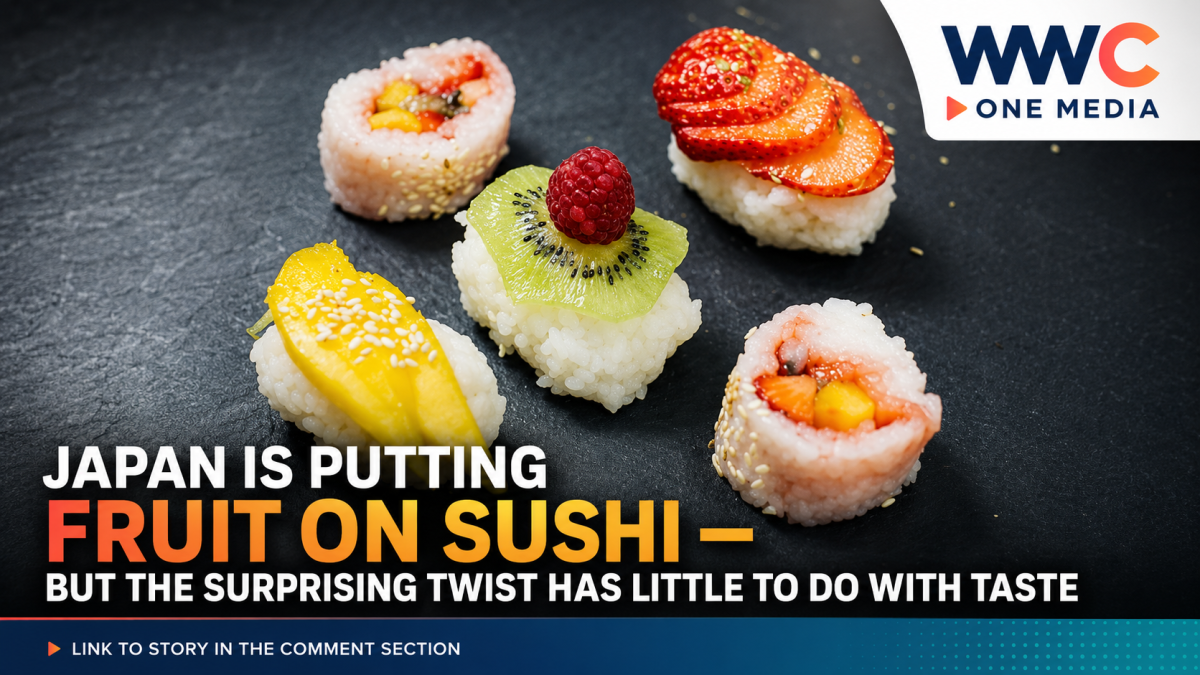
Japan’s sushi scene is taking an unexpected turn as restaurants and supermarkets experiment with fruit-and-fish combinations in a bid to revive interest in seafood, particularly among younger consumers.
The unusual pairings — including tuna with mango, salmon with peach, and red sea bream with orange — are gaining attention for their colorful presentation and refreshing flavors, according to a recent report by The Japan Times, citing Jiji Press.
The trend is not simply about creating Instagram-worthy sushi. It comes as Japan faces a broader challenge: fish consumption has been declining, especially among younger generations, while seafood prices and supply pressures are making some traditional favorites increasingly expensive.
One supermarket chain is already putting the concept into practice.
Tobu Store Co., which operates supermarkets mainly in Tokyo and neighboring Saitama Prefecture, began selling a sushi roll containing minced tuna, green onion and mango at selected outlets in late June. By August, the product had expanded to more than 40 stores.
The retailer said it was looking for products that could combine taste and visual appeal while keeping prices under control, particularly as shortages and higher prices have affected seafood such as saury and squid. Shoppers have reportedly described the tuna-mango combination as unusual but surprisingly compatible.
The experiment is also reaching sushi restaurants.
At a restaurant in Tokyo’s Shibuya district, chefs have paired Hokkaido-raised Yakuzen Salmon with peach simmered in red vinegar. The combination was initially developed with foreign customers in mind, but the restaurant found that the sweetness and acidity of peach worked well with the salmon’s rich, fatty flavor — prompting the dish to be offered to Japanese customers as well.
Other combinations being explored include tuna carpaccio with melon, red sea bream with orange and yellowtail with grapefruit, showing how Japanese food businesses are increasingly looking beyond conventional sushi pairings.
Why the unusual combinations matter
Behind the novelty is a serious business problem.
Japan’s seafood industry is dealing with changing consumption habits, supply constraints and rising costs. Recent reporting has highlighted particularly difficult conditions for some fish species. For example, Japanese reporting on the 2026 saury season says the expected amount of saury arriving in the Northwest Pacific is projected at 429,000 metric tons, more than 60% below 2025 and the lowest forecast since the survey began in 2003.
At the same time, Japan is experiencing broader food-price pressure. Teikoku Databank reported that 4,923 food and beverage products were scheduled for price increases in September 2026, while 19,083 items had already been confirmed for price hikes during the year. Rising logistics costs, a weaker yen and higher crude-oil prices were among the factors cited.
That pressure is pushing food companies and restaurants to rethink how seafood is marketed — not merely as a traditional staple, but as something that can be made more accessible, visually exciting and appealing to younger consumers.
The strategy can already be seen in the country’s major sushi chains. Sushiro, for example, launched a September seasonal campaign featuring natural tuna, Hokkaido saury and herring, while also introducing creative sushi offerings.
For Japan’s seafood businesses, the fruit-on-sushi trend may therefore be more than a quirky food fad. It represents an attempt to make fish feel new again at a time when consumers are facing higher prices and changing eating habits.
Whether tuna and mango or salmon and peach become lasting favorites remains to be seen. But Japan’s message to younger diners is becoming clear: traditional sushi does not necessarily have to stay traditional.
WWC ONE MEDIA MJE

Leave a Reply