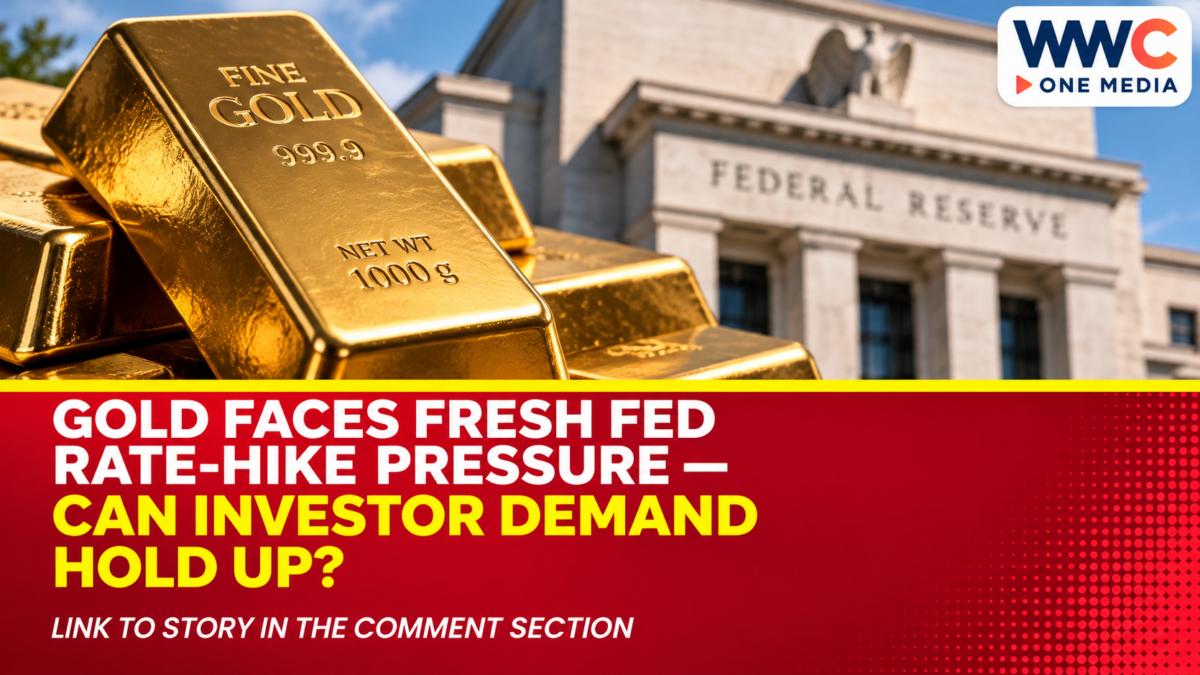
NEW YORK — Nov. 19, 2026. Gold faces renewed pressure from US interest-rate expectations after minutes of the Federal Reserve’s October meeting, released Nov. 18, showed that almost all participants viewed further increases as likely to be appropriate under their baseline outlook. The central bank had left its policy range unchanged at 3.75%–4.00% on Oct. 28, while two voting members favoured an immediate quarter-point increase.
The prospect of higher yields matters to a metal that pays no interest. But central-bank policy is only one influence on gold: investment flows, the US dollar, geopolitical uncertainty and official-sector buying can also change the balance of demand.
Gold Fed Pressure: What the Minutes Actually Say
The Oct. 27–28 Federal Open Market Committee minutes recorded broad concern that inflation remained above the 2% objective. Almost all participants judged that another rate increase would probably be appropriate if their baseline expectations for prices and employment were realised.
The minutes did not announce a new increase on Nov. 18. They reported deliberations at an earlier meeting, when the committee voted 10–2 to maintain its target range. Governors Lisa Cook and Beth Hammack preferred raising rates by 25 basis points at that meeting.
A couple of participants also said that a move larger than 25 basis points might merit consideration at the next meeting if inflation data proved unfavourable. That was a conditional view expressed during discussion, not a final committee decision or a guaranteed December move.
Why Higher Rates Can Weigh on Gold
Gold does not pay a coupon or dividend. When short-term interest rates and Treasury yields rise, interest-bearing securities may become relatively more attractive, increasing the opportunity cost of holding bullion.
A firmer dollar can create another obstacle because gold is commonly priced internationally in US currency. Buyers using other currencies may face higher local-currency costs even if the dollar gold price is little changed.
Neither relationship is mechanical. Investors sometimes buy gold during inflation shocks, market turbulence or geopolitical stress despite higher rates. In its November market commentary, the World Gold Council identified interest-rate expectations, the dollar and investor positioning as important factors behind recent price weakness, while warning against treating historical patterns as reliable price forecasts.
WWC’s previous coverage of gold slipping below US$4,000 amid Fed rate concerns examined the earlier sell-off. The new information is the detailed record of policymakers’ October deliberations, not proof of another completed rate hike.
What the Gold Market’s Own Data Establish
The World Gold Council measured a 6.3% fall in the US-dollar gold price during October, with a month-end level of approximately US$3,913 per troy ounce. It also calculated a year-to-date decline of 10.4% through October in its market commentary.
A separate November update on China reported a 2026 daily closing low of US$3,870 per ounce using the London gold benchmark. These figures refer to specified dates and measures; they are not a verified quotation for every trade on Nov. 18.
The description of gold being at a 14-month low requires a comparable daily benchmark extending back across that period. That full series was not authenticated for this article, so the ranking should not be presented as established.
A price drop also should not be interpreted as evidence that all buyers have abandoned bullion. The market comprises jewellery users, private investors, exchange-traded funds and central banks, each responding to different economic incentives.
ETF Holdings Show Another Side of Demand
The World Gold Council’s third-quarter 2026 report recorded total gold demand of 1,369 tonnes, down 1% from a year earlier, while the value of demand increased 22% to US$188 billion. Gold-backed ETF holdings reached a record 4,256 tonnes at the end of the quarter.
Demand measured in tonnes differs from spending measured in dollars. Higher prices can lift the value of purchases even when the amount of metal changes little or falls.
Chinese gold ETFs added 6.3 tonnes in October, reaching a record 310 tonnes of holdings at month-end, according to the Council’s November China market update. That report also identified modest outflows in early November, demonstrating that investment preferences can change quickly.
These figures do not promise a rebound. They show why price momentum and longer-term portfolio allocations can point in different directions at the same time.
What This Means for Philippine Investors
International bullion is typically quoted in US dollars, while Philippine buyers and jewellery businesses operate primarily in pesos. A weaker dollar gold price does not necessarily produce an equal percentage drop in the local-currency cost of metal.
Exchange-rate changes, dealing spreads and the form of gold purchased also matter. Physical jewellery includes manufacturing and retail costs that are not captured by the global bullion benchmark.
WWC’s report on Philippine foreign reserves and the BSP’s gold holdings provides a different perspective on the metal’s role in an official portfolio. National reserve management is distinct from the decision facing an individual household or trader.
For borrowers and businesses, Federal Reserve decisions can also affect dollar financing costs and global capital flows. WWC has examined those broader pressures in its coverage of US producer inflation and December policy expectations. None of these connections guarantees a particular peso, gold or bond-market outcome.
What Happens Next
The Federal Reserve’s next scheduled policy meeting is Dec. 8–9. Its decision will depend on incoming inflation, labour-market and activity data, not solely on the outlook expressed in the October minutes.
For gold, the most useful evidence will include official benchmark prices, movements in Treasury yields and the dollar, reported ETF holdings and additional central-bank demand information. Comparing those indicators can help explain a move without assigning every daily change to one factor.
The supported conclusion is narrower than a prediction of another plunge: the Fed has signalled that more tightening may be appropriate, and gold has already experienced a significant decline. Whether investment demand can offset the pressure remains unresolved.
Frequently Asked Questions
Did the Federal Reserve raise interest rates on Nov. 18, 2026?
No. The Nov. 18 release contained minutes of the Oct. 27–28 meeting. At that meeting, the Fed maintained its target range at 3.75%–4.00%.
Why can interest-rate increases hurt gold prices?
Higher yields increase the relative appeal of interest-bearing assets over gold, which pays no interest. The dollar, inflation expectations and demand for safe-haven assets also matter.
Was gold officially at a 14-month low on Nov. 18?
The original market records reviewed do not establish that precise ranking. The World Gold Council verified an October price decline and a separate 2026 daily closing low.
Does weak gold pricing mean central banks have stopped buying?
No. Price movements and official purchases are different measures. The World Gold Council has documented substantial gold demand, but future central-bank buying is not guaranteed.