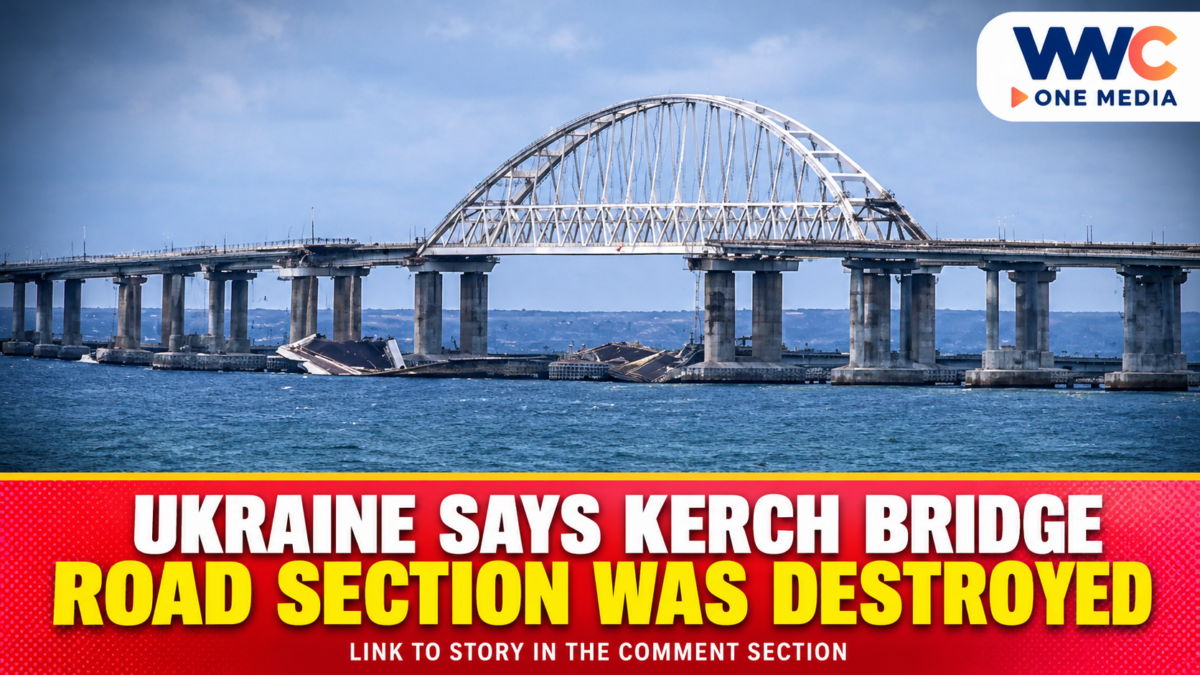
Ukraine’s Security Service says a new operation on Nov. 17 destroyed a major section of the Kerch Bridge, the road-and-rail link connecting Russia with occupied Crimea. The announcement marks a significant development from the earlier reports of traffic interruptions, although the full extent of the structural damage has not been independently established in the official records reviewed.
The Security Service of Ukraine (SSU) said it carried out the operation with other components of the country’s Defence Forces. Its statement said one metal arch and the road span beneath it had been destroyed, while the railway section had also sustained damage.
The announcement adds a new dimension to the bridge disruptions reported earlier in the week. It also raises questions about the crossing’s future availability for civilian travel and transport.
Ukraine describes a month-long operation
In its Nov. 17 statement, the SSU said the operation lasted around a month and involved seven stages.
The agency said Ukrainian forces first worked to neutralise Russian air-defence systems before carrying out direct strikes against the bridge. It identified the SSU’s Alfa Special Operations Centre as the unit responsible for targeting the road section with Palyanytsia drone missiles.
The SSU also listed several Ukrainian-made weapons used during the operation, including Dovbush, Vendetta, Da Vinci, Sich, Ruta, Palyanytsia, FP-1, FP-5 Flamingo and R-360 Neptune.
These details represent Ukraine’s official account of the operation. They do not, by themselves, provide an independent engineering assessment of the bridge’s condition.
What the damage could mean for transport
The Kerch Bridge carries both road and railway traffic across the Kerch Strait. Any prolonged disruption could affect passenger journeys and the movement of goods between Russia and Crimea.
The distinction between the road and railway sections is important. Damage to one part does not automatically mean the entire crossing is unusable, and the operational status of each section requires separate confirmation.
The SSU’s statement said the railway section was also damaged, but did not provide a detailed technical assessment or a timetable for repairs.
For travellers and transport operators, the most useful information will be official notices confirming which services are operating, what restrictions remain and whether alternative routes are available.
A strategic and symbolic target
The bridge has held strategic and political significance since it opened in 2018. Russia built it after taking control of Crimea in 2014, while Ukraine considers the peninsula occupied Ukrainian territory.
The SSU described the latest operation as its fourth strike against the bridge. Its statement referred to earlier incidents in October 2022, July 2023 and June 2025.
The latest announcement also shows how infrastructure remains central to the conflict. Bridges, railway links and other transport facilities can serve civilian needs while also supporting military logistics.
That dual role makes damage assessments particularly important. Claims about military consequences should be distinguished from confirmed information about civilian transport and structural safety.
What happens next
The immediate issue is the bridge’s actual operating condition.
Further technical assessments and transport notices will be needed to establish the extent of the damage, the status of railway services and the likely repair schedule. The SSU’s announcement provides Ukraine’s account of the strike, but does not replace an independent structural inspection.
The earlier WWC report documented the traffic interruptions and initial official claims surrounding the bridge. This update adds Ukraine’s subsequent statement that a road span and metal arch were destroyed.
Until more detailed assessments become available, readers should distinguish between the damage claimed by Ukrainian authorities and independently confirmed information about the bridge’s condition.
The central question is no longer simply whether traffic was temporarily halted. It is how much of the crossing remains usable, and how long any restrictions may last.