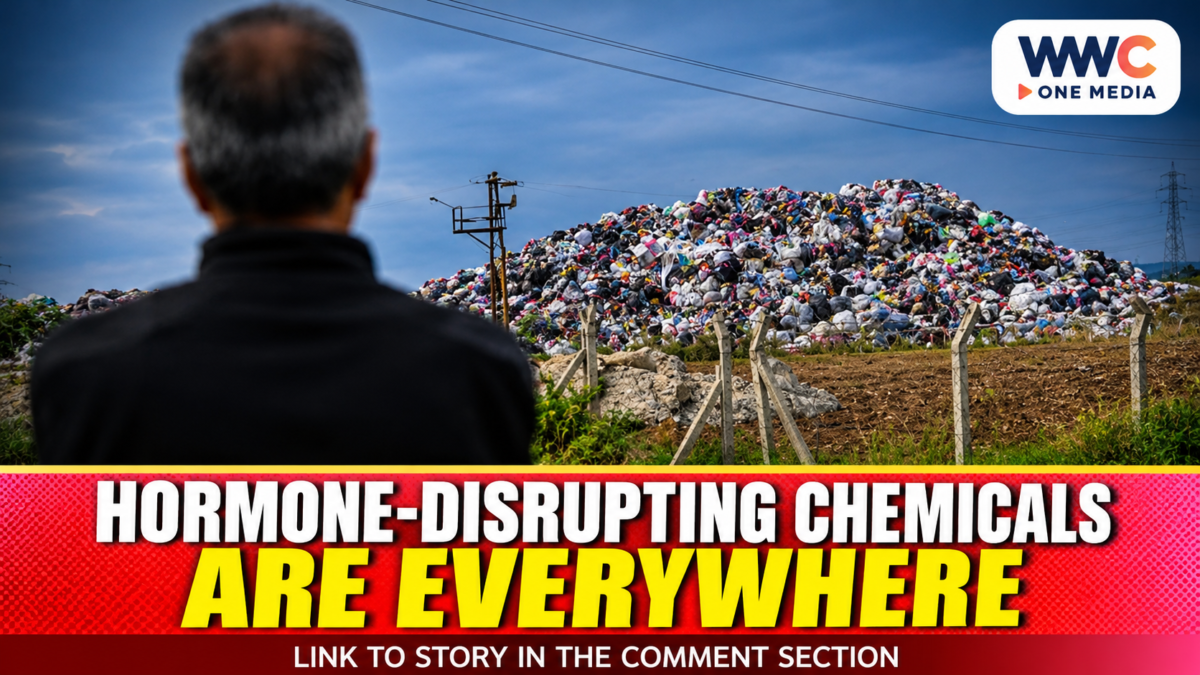
A new scientific assessment released by the United Nations Environment Programme (UNEP) and the World Health Organization (WHO) on Nov. 17, 2026, warns that chemicals capable of interfering with the body’s hormone systems are widespread in everyday products, food, water and the environment. The report estimates that the global health-related costs associated with exposure to these substances exceed US$1.1 trillion annually.
The findings raise an important question for governments, manufacturers and consumers: how can people manage chemical exposure when the vast majority of chemicals registered for production and use have never been evaluated for their potential to disrupt hormones?
The assessment, titled State of the Science of Endocrine-Disrupting Chemicals 2026, is the first major update to the joint UNEP-WHO scientific assessment since 2012. It draws on more than a decade of additional research and identifies significant gaps in chemical testing, exposure monitoring and regulation. WHO CDN+1
What are endocrine-disrupting chemicals?
Endocrine-disrupting chemicals, commonly called EDCs, are substances that can interfere with the body’s hormone systems. Hormones regulate essential functions, including growth, brain development, metabolism and reproduction.
These chemicals are not limited to one product category. The UNEP-WHO report identifies examples in food packaging, kitchenware, cosmetics, personal-care products, toys, textiles, building materials, healthcare equipment and pesticides.
The substances discussed include bisphenols, phthalates, certain PFAS, parabens and some organophosphate pesticides. However, the report makes an important distinction: not every chemical within these broad groups has been assessed or established as an endocrine disruptor. WHO CDN
This distinction matters because consumers often encounter simplified claims suggesting that all plastics, cosmetics or household products contain dangerous chemicals. The scientific assessment does not support treating every product or chemical as equally hazardous.
Instead, it identifies particular substances and exposure pathways that require better testing, monitoring and regulatory attention.
Why the US$1.1-trillion estimate matters
One of the report’s most significant findings is the estimated economic burden associated with endocrine-disrupting chemical exposure.
Global health-related costs have been estimated at more than US$1.1 trillion annually. The assessment explains that the estimate is based on diseases and chemicals for which researchers have established sufficient evidence to calculate attributable costs.
The figure is therefore not a bill that governments or households are directly paying, nor does it represent the total cost of every environmental consequence. It is an estimate of the economic burden associated with health effects linked to exposure.
The report also warns that the calculation is likely conservative because it covers only a subset of diseases and chemicals for which causal attribution has been established. Ecological costs, including biodiversity losses and damage to ecosystem services, are not included in the US$1.1-trillion estimate. WHO CDN
For policymakers, the financial argument is significant. Preventing harmful exposure may require investment in testing, safer product design and stronger enforcement, but the report argues that the costs of inaction are also substantial.
The testing gap is bigger than many people realise
The assessment identifies a major weakness in the global chemical safety system.
More than 350,000 chemicals and chemical mixtures have been registered for production and use worldwide. Yet the vast majority have never been evaluated for their potential to disrupt the endocrine system.
This does not mean that all 350,000 chemicals are dangerous. It means that their potential endocrine-disrupting properties remain largely unevaluated.
The distinction is important: the absence of an assessment should not automatically be interpreted as proof of harm, but neither should it be mistaken for proof of safety.
The report also warns about a practice known as “regrettable substitution”. This occurs when a restricted or problematic chemical is replaced with a structurally similar substance that has not been adequately tested.
In that situation, a product may appear to have become safer without sufficient evidence that the replacement avoids the original concern. WHO CDN
The report therefore calls for stronger testing programmes and greater transparency about the chemicals used in consumer products.
Exposure can begin before birth
The scientific assessment gives particular attention to pregnancy, infancy and childhood because hormone systems play important roles during development.
The joint UNEP-WHO announcement says endocrine-disrupting chemicals have been detected in human blood, breast milk and umbilical cord blood. Exposure can therefore occur before birth, rather than beginning only when a child starts using consumer products.
The report identifies evidence linking exposure with effects across several health areas, including reproductive development, brain development and neurological function, thyroid regulation, metabolism and cardiovascular health.
However, the strength of evidence differs depending on the chemical and the health outcome. Some associations have stronger scientific support than others, while certain areas remain under investigation. UNEP – UN Environment Programme+1
This is why the report does not present every suspected health effect as equally established. It calls for more research while emphasising the importance of reducing avoidable exposure, particularly during sensitive stages of development.
Why testing individual chemicals may not be enough
Another challenge is that people and wildlife are exposed to combinations of chemicals, not necessarily one substance at a time.
The report explains that many existing risk assessments examine chemicals individually. Such assessments may fail to capture effects arising from simultaneous exposure to multiple substances.
Research discussed in the assessment has found that chemicals acting through common biological pathways can produce combined effects that are greater than the effects observed when each substance is evaluated separately.
This creates a difficult regulatory problem. A product or environment may involve several chemicals, each assessed under a different regulatory framework, while their combined exposure is not adequately considered.
The report therefore calls for improved methods to assess mixtures and better coordination between regulatory systems. WHO CDN
The issue also connects chemical safety with waste management. Plastic packaging, discarded products and industrial materials can move through waterways and ecosystems, making prevention and monitoring important beyond the point of sale.
WWC has previously examined the scale of plastic waste through its report on the 19 tonnes collected during Davao Region’s coastal cleanup. That story focused on waste prevention, while the new UNEP-WHO assessment adds another dimension: the chemical composition of products and the possible consequences of exposure.
What the findings mean for the Philippines
The assessment is global and does not establish how much endocrine-disrupting chemical exposure occurs among Filipinos. It does, however, identify a major international monitoring gap, particularly in low- and middle-income countries and occupational settings.
That gap is relevant to the Philippines, where chemical safety intersects with food packaging, manufacturing, agriculture, consumer goods and waste management.
The country already faces challenges in reducing plastic waste and improving the management of discarded materials. WWC has also reported on the government’s push for stronger private-sector participation under the Extended Producer Responsibility framework.
The EPR framework addresses packaging recovery and waste management. Chemical safety requires additional attention to what goes into products in the first place, how substances are assessed and whether alternatives have been properly evaluated.
The UNEP-WHO report recommends stronger national monitoring, better testing capacity, protection for vulnerable populations and improved coordination among environmental, health and trade authorities. It specifically highlights the need for additional support in countries with limited resources. WHO CDN
For consumers, the report is not a reason to assume that every plastic container or personal-care product is unsafe. It is a reminder that product information, credible testing and transparent regulation matter.
A previous WWC report on Thailand’s FDA clarification about PET water bottles and BPA illustrates why chemical claims need context: different plastics and chemical substances should not be treated as interchangeable.
What happens next
The UNEP-WHO assessment was released during the first International Conference of the Global Framework on Chemicals, held in Geneva from Nov. 16 to 20, 2026.
The report calls for governments to improve chemical identification and testing, strengthen exposure monitoring, protect vulnerable groups and account for the health and environmental costs of chemical use.
It also points to the role manufacturers can play by improving product design, disclosing information about chemicals and choosing alternatives supported by credible safety evidence.
The challenge is not simply to remove every chemical from modern products. Many chemicals serve important functions in healthcare, manufacturing, agriculture and everyday life.
The more practical goal is to identify substances that create unacceptable risks, assess alternatives properly and prevent harmful exposure before damage occurs.
For the Philippines and other countries with limited monitoring resources, the findings underline the importance of investing in scientific capacity and transparent chemical regulation.
The biggest unanswered question is how quickly governments and manufacturers will turn the growing scientific evidence into measurable changes in the products people use every day.
Frequently Asked Questions
1. What are endocrine-disrupting chemicals?
They are substances that can interfere with the body’s hormone systems, which regulate functions such as growth, reproduction, metabolism and brain development.
2. Where can endocrine-disrupting chemicals be found?
The UNEP-WHO report identifies examples in food packaging, kitchenware, cosmetics, toys, textiles, healthcare equipment, pesticides, water, air and household products.
3. Do all plastics contain hormone-disrupting chemicals?
No. The report identifies particular chemical substances and product applications. It does not establish that all plastics or plastic products contain endocrine-disrupting chemicals.
4. What does the US$1.1-trillion estimate represent?
It is an estimate of annual global health-related costs associated with endocrine-disrupting chemical exposure. It does not include all environmental costs and is considered potentially conservative.
5. Does the report prove that Filipinos are exposed to these chemicals at the same levels?
No. The assessment is global and does not establish a specific exposure level for the Philippine population. It does highlight the need for better monitoring, especially in low- and middle-income countries.