Want Flowers Indoors All Year? These 5 Houseplants Can Keep Your Home Colorful for Months — But Each Has a Different Care Secret
MANILA, Philippines — November 11, 2026 — Fresh flowers can brighten a room, but their beauty often disappears within days. Flowering houseplants offer a longer-lasting alternative, bringing color, greenery and a garden-like atmosphere indoors for weeks or even months.
The secret, however, is choosing plants that can thrive inside a home—and understanding that not every flowering variety needs the same care.
In a recent Associated Press gardening feature, gardening columnist Jessica Damiano highlighted five flowering houseplants that can add lasting color to indoor spaces: cyclamen, African violets, bromeliads, peace lilies and kalanchoe.
Each offers a different kind of beauty. Some produce delicate flowers in cool conditions, while others display colorful foliage and long-lasting flower structures. Some prefer consistently moist soil, while others can suffer when watered too frequently.
For homeowners, apartment residents and gardening beginners, these plants offer an opportunity to enjoy flowers without constantly replacing cut bouquets.
But there is a catch: keeping them alive and encouraging future blooms depends on matching each plant with the right light, temperature and watering routine.
1. Cyclamen: The Colorful Indoor Flower That Prefers Cooler Rooms
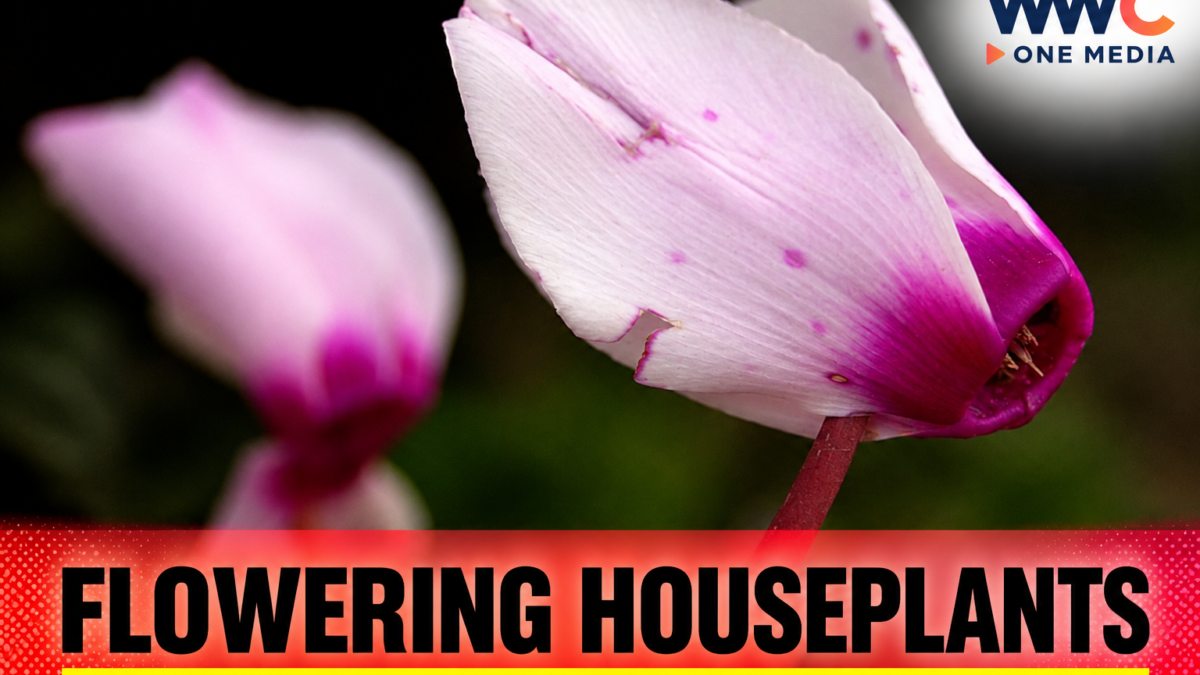
Cyclamen stands out because of its unusual flowers, whose petals curve backward and resemble butterflies.
Available in shades of white, pink, red and purple, the plant can bring a striking splash of color to an indoor space, particularly during cooler months.
Unlike many tropical houseplants, cyclamen prefers cooler conditions. The AP recommends placing it near an east- or north-facing window where it can receive bright, indirect light without being exposed to excessive heat.
A room temperature of approximately 60 to 70 degrees Fahrenheit (15 to 21 degrees Celsius) can help extend its flowering period.
Humidity is also beneficial. A pebble tray with water or a nearby humidifier can help provide additional moisture in dry indoor environments.
The most important watering rule: Avoid allowing water to collect around the plant’s crown, where the stems meet the roots. Excess moisture in that area can encourage rot.
One practical method is bottom-watering. Place the pot in a shallow saucer of water and allow the soil to absorb moisture through its drainage holes. Remove the pot and discard excess water afterward.
Cyclamen also has a seasonal resting period. When its leaves begin turning yellow in late spring, the plant may be entering dormancy. At that point, stop watering and fertilizing according to its seasonal cycle, and keep it in a cool resting location until new growth appears.
The key is recognizing that yellowing leaves do not always mean the plant needs more water.
2. African Violets: Small Flowers That Can Keep Returning
African violets are popular indoor plants because they combine compact growth with colorful flowers.
Their blooms can appear in shades of purple, pink, white and other variations, making them suitable for desks, shelves, windowsills and smaller living spaces.
They are also among the more rewarding choices for people who want a flowering plant that can bloom repeatedly.
According to the University of Missouri Extension, African violets can flower for years when placed in suitable conditions and given consistent care.
Their biggest requirement is the right balance of light and moisture.
African violets generally prefer bright light without prolonged exposure to harsh direct sunlight. An east-facing window can be a suitable location, although the amount of light available will vary depending on the season and the home.
Their soil should remain lightly moist, but never waterlogged.
Cold water splashed directly onto the leaves can cause spotting. Bottom-watering with room-temperature water is therefore a useful approach, provided the pot is removed from standing water after it has absorbed enough moisture.
They also benefit from warmth and moderate humidity.
For beginners, African violets offer an appealing combination: relatively small containers, manageable space requirements and the possibility of repeated flowering.
However, overwatering remains one of the easiest ways to damage them.
3. Bromeliads: Tropical Color With a Different Way of Watering
Bromeliads bring a distinctly tropical appearance indoors.
Their colorful structures can display red, orange, yellow, purple and peach tones, creating a bold focal point even when placed in a simple decorative pot.
What makes bromeliads particularly interesting is how many varieties collect water.
Instead of relying only on water delivered to the soil, many form a central cup where their leaves meet. This reservoir can hold water that the plant absorbs through its leaf structures.
The AP recommends placing bromeliads in bright, indirect light and adding fresh, room-temperature water to the central cup.
The reservoir should be rinsed regularly—about once a week—to prevent stagnant water and buildup.
Bromeliads are also different from many traditional flowering plants because the mother plant generally blooms only once.
After flowering, it produces smaller offshoots commonly called pups. The original plant gradually declines, while the new growth can eventually develop into mature plants.
That means a bromeliad’s flowering cycle is not necessarily the end of the plant’s life in the home.
It can become the beginning of a new generation.
For homeowners who enjoy tropical-looking interiors, bromeliads can provide an attractive display without requiring a conventional flower arrangement.
4. Peace Lilies: Elegant White Blooms for Indoor Spaces
Peace lilies are recognized for their dark green leaves and distinctive white flower structures.
They are frequently used in homes and offices because of their clean appearance and ability to adapt to indoor environments.
Despite their name, peace lilies are not true lilies. They belong to the genus Spathiphyllum, a group of tropical plants valued for their foliage and white spathes.
They generally prefer bright, indirect light, warm conditions and soil that remains slightly moist.
The University of Florida’s Institute of Food and Agricultural Sciences recommends keeping peace lilies in a well-lit location away from direct sunlight. The soil should remain damp without becoming excessively wet.
Allowing the plant to sit in standing water can damage its roots.
Removing faded flower structures also helps maintain the plant’s appearance and encourages continued flowering when growing conditions are suitable.
Peace lilies are particularly attractive for people who want greenery that looks decorative even when the plant is not flowering.
However, there is an important household warning: peace lilies are toxic to cats and dogs. Their calcium oxalate crystals can cause oral irritation, excessive drooling, vomiting and difficulty swallowing if chewed.
Pet owners should keep them out of reach or consider a safer alternative.
5. Kalanchoe: A Flowering Succulent That Does Not Like Too Much Water
Kalanchoe is a practical option for people who prefer compact plants with clusters of colorful flowers.
Its thick, fleshy leaves help distinguish it from many traditional flowering houseplants.
The plant is available in several flower colors, including red, orange, pink, yellow and white.
Unlike cyclamen and peace lilies, kalanchoe is a succulent. That means its watering needs are different.
It prefers well-draining potting mix and should be allowed to dry slightly between waterings.
Keeping its roots constantly wet can encourage root rot.
Kalanchoe also benefits from strong but gentle sunlight. A bright window can provide the light it needs, although harsh afternoon sunlight through glass may damage some plants.
The Associated Press recommends monthly feeding during active growth and notes that cooler nighttime conditions can help prolong the life of its flowers.
Kalanchoe can also flower again, but encouraging another bloom requires more than ordinary watering.
The plant responds to shorter daylight periods, meaning that its exposure to light and darkness can influence flower production.
The University of Missouri Extension explains that kalanchoes need naturally shorter days and longer nights to develop flower buds. Artificial lighting during the dark period can interfere with this process.
One important caution: kalanchoe is toxic to cats and dogs, according to the ASPCA. It should be kept away from pets that might chew its leaves or flowers.
Which Flowering Houseplant Is Best for Your Home?
Choosing the right plant depends on the environment where it will be placed and how much time the owner can devote to maintenance.
Here is a quick comparison of the five varieties:
| Plant | Best growing condition | Main watering consideration |
|---|---|---|
| Cyclamen | Cool room, bright indirect light | Bottom-water and avoid wetting the crown |
| African violet | Bright light, warmth and humidity | Keep soil lightly moist; avoid wet leaves |
| Bromeliad | Bright, indirect light | Refill and rinse the central water cup |
| Peace lily | Bright, indirect light and warmth | Keep soil slightly moist, never soggy |
| Kalanchoe | Bright light and well-draining soil | Allow soil to dry slightly between watering |
There is no single plant that suits every household.
A cooler room may be ideal for cyclamen, while a sunny indoor location may be more suitable for kalanchoe.
African violets can work well in smaller spaces, while bromeliads can create a more dramatic tropical display.
Peace lilies offer elegant foliage and flowers, but households with cats or dogs should consider their toxicity before bringing one home.
Why Indoor Plants Are Becoming Part of Modern Home Design
Houseplants are no longer viewed only as decorative accessories.
They have become part of how people think about comfort, natural materials, personal spaces and the overall atmosphere of a home.
A flowering plant can soften a minimalist interior, add color to a neutral room or make a small apartment feel more connected to nature.
This is particularly relevant in cities where outdoor garden space is limited.
In Manila, for example, residential design increasingly explores how greenery, natural light and outdoor connections can improve the experience of urban living.
WWC One Media previously explored this idea in its feature on Manila’s Cascade House, where sustainability meets serenity in a tropical family home.
The project demonstrates how vegetation, natural light and carefully planned spaces can become part of a home’s overall design rather than simply decorative additions.
The connection between nature and interiors is also reflected in the country’s design industry.
WWC One Media’s coverage of the 2026 Tatler Homes Design Awards and the growing recognition of Philippine design highlights how architects and designers are combining creativity, sustainability and local identity in residential and commercial spaces.
Meanwhile, the Philippine School of Interior Design has explored how everyday Filipino culture can influence modern spaces through its immersive interior design showcase inspired by Filipino pop culture.
These developments reflect a wider interest in making homes feel more personal, comfortable and connected to their surroundings.
For homeowners, adding flowering plants can be one of the simplest ways to introduce that natural element without undertaking a major renovation.
Indoor Gardening Mistakes That Can Stop Houseplants From Blooming
Buying a flowering plant is easy. Keeping it healthy and encouraging it to bloom again requires more attention.
Some of the most common mistakes involve treating every houseplant as if it has identical needs.
1. Giving every plant the same amount of sunlight
Cyclamen prefers cooler conditions and indirect light, while kalanchoe generally needs a brighter location.
A plant placed in the wrong spot may survive for a while but fail to produce new flowers.
2. Watering on a fixed schedule
Water requirements depend on the plant, pot size, soil, temperature and humidity.
Instead of automatically watering every day, check the soil and follow the needs of the specific variety.
3. Leaving pots in standing water
Excess water can damage roots and encourage rot.
Make sure containers have drainage holes and remove excess water from saucers.
4. Ignoring seasonal changes
Some plants naturally slow down or enter dormancy after flowering.
Cyclamen, for example, may require a resting period when its leaves begin to yellow.
5. Forgetting about pets
A beautiful plant is not automatically a safe plant.
Peace lilies and kalanchoe are toxic to cats and dogs. Research a plant’s exact identity and safety before placing it in a home where animals can reach it.
A Practical Reminder for Filipino Homeowners
The five plants featured in the AP report can offer attractive indoor displays, but their care recommendations come largely from temperate-climate gardening guidance.
That matters in the Philippines, where many homes experience warmer temperatures, high humidity and strong sunlight.
A plant that thrives beside a cool window in a temperate country may react differently in a warm Philippine room.
Homeowners should therefore avoid exposing delicate plants to intense afternoon heat, particularly near windows that receive direct sunlight.
Good ventilation, suitable drainage and careful watering are important.
Air-conditioned rooms can also create different conditions from naturally ventilated spaces, especially for plants that prefer humidity.
When purchasing a flowering houseplant, ask the nursery about its growing conditions, the variety’s identity and whether it has already been acclimatized to local conditions.
The goal is not simply to keep a plant alive for a few weeks. It is to create an environment where it can remain healthy after its original flowers fade.
The Bottom Line: A Living Bouquet Needs More Than Beautiful Flowers
Cyclamen, African violets, bromeliads, peace lilies and kalanchoe demonstrate that indoor gardening can offer much more than decorative leaves.
Each plant brings a different kind of color and character into a home, but their long-term success depends on understanding their individual needs.
Some prefer cool conditions. Others need brighter light. Some require careful bottom-watering, while others store water in their leaves or central cups.
The biggest lesson is simple: the best flowering houseplant is not necessarily the prettiest one in the nursery. It is the one that can thrive in the conditions your home can provide.
With the right plant selection, suitable light and careful watering, a home can enjoy a living bouquet long after an ordinary bunch of cut flowers would have faded.