SAN FRANCISCO, CALIFORNIA / MANILA, PHILIPPINES — November 11, 2026 | WWC ONE MEDIA | World News, Crime, Justice and Technology
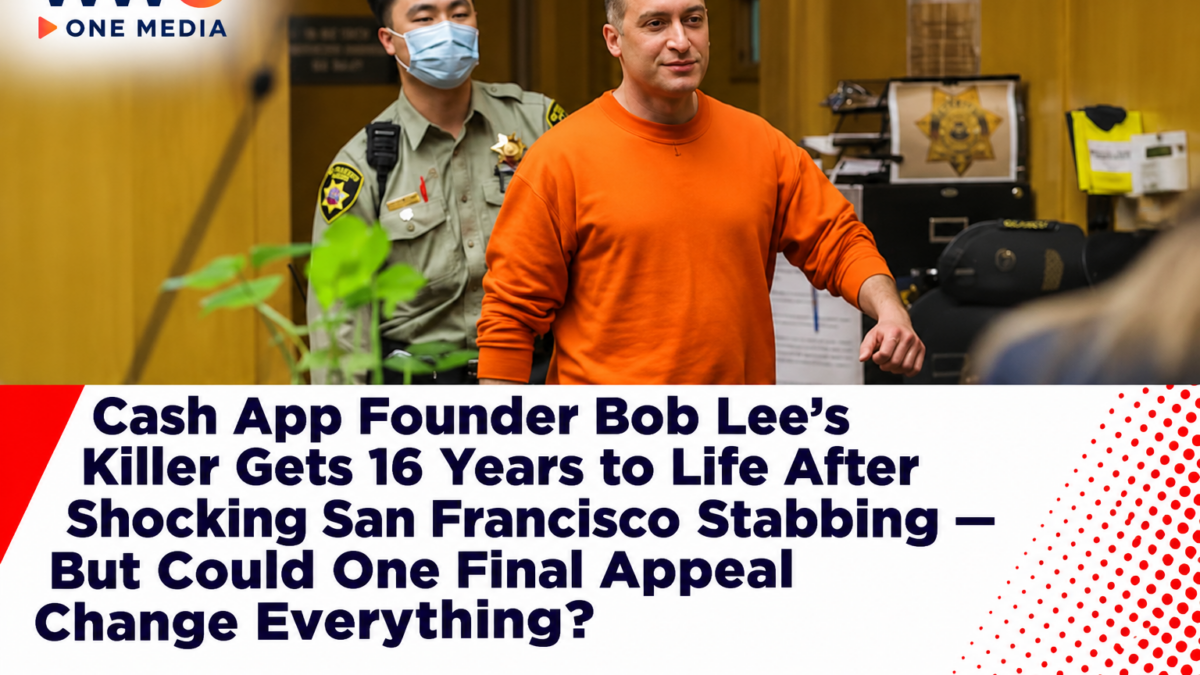
Nearly four years after the killing of Cash App creator Bob Lee shocked Silicon Valley, a San Francisco judge has sentenced technology consultant Nima Momeni to 16 years to life in prison, bringing a long-awaited sentencing decision in one of the technology industry’s most closely followed murder cases.
But the legal battle may not be over.
On November 10, 2026, San Francisco Superior Court Judge Alexandra Gordon rejected Momeni’s request for a new trial before imposing the prison sentence for the April 2023 killing.
The 42-year-old defendant had been convicted of second-degree murder in December 2024 after jurors rejected his claim that he stabbed Lee in self-defense.
According to Bloomberg, the Associated Press, CBS San Francisco and local courtroom reporting, the sentencing hearing included emotional statements from Lee’s family, arguments about whether the original proceedings were fair, and a final appeal for sympathy from Momeni’s relatives.
Lee, 43, helped create Cash App, the widely used digital payments service, and later became chief product officer at cryptocurrency company MobileCoin.
His death initially fueled widespread concerns about violent crime in San Francisco.
Investigators subsequently established that the two men knew each other and that the fatal confrontation followed a personal dispute.
Momeni has now received a potential life sentence. But with his defense team preparing an appeal, will the conviction withstand another round of legal challenges?
Nima Momeni Receives 16 Years to Life for Bob Lee Murder
Judge Gordon imposed a sentence consisting of 15 years to life for second-degree murder, plus an additional year connected to the use of a deadly weapon.
Momeni will receive credit for time already spent in custody.
The sentence does not mean he will automatically be released after 16 years.
Under an indeterminate sentence, any eventual release would depend on California’s applicable parole procedures and other legal requirements.
The punishment follows a lengthy criminal case that began with Momeni’s arrest in April 2023.
On December 17, 2024, a jury convicted him of second-degree murder after a trial involving surveillance video, forensic evidence and sharply conflicting accounts of what happened before Lee was stabbed.
Jurors did not convict him of first-degree murder, which would have required proof of premeditation.
But they rejected the defense’s argument that the killing was legally justified.
The sentencing had been delayed while Momeni pursued motions challenging the conviction.
On November 10, Judge Gordon rejected his latest attempt to secure a new trial.
His attorneys have indicated that they intend to appeal.
What Happened to Cash App Founder Bob Lee on April 4, 2023?
The killing occurred during the early morning hours of April 4, 2023, in San Francisco’s Rincon Hill neighborhood, near the Bay Bridge.
According to trial testimony, Momeni and Lee had spent time at the apartment of Momeni’s sister, Khazar Momeni, before leaving together in a BMW.
Surveillance footage captured the two men near an isolated stretch of roadway.
Prosecutors argued that Momeni drove Lee to the location and attacked him using a kitchen knife.
Lee suffered three stab wounds, including a fatal injury to his heart.
After the confrontation, Lee staggered along the street, desperately seeking assistance.
He placed a 911 emergency call before collapsing.
Emergency responders transported him to a hospital, where he died.
The killing attracted nationwide attention because of Lee’s reputation as a successful technology entrepreneur.
His work had helped transform digital payments in the United States.
But the circumstances surrounding his death also generated questions about the personal relationships and events that preceded the confrontation.
What Prosecutors Said Motivated the Killing
Prosecutors argued that Momeni attacked Lee after becoming angry over an incident involving his sister.
According to testimony, Khazar Momeni had reported that she was drugged and sexually assaulted by an acquaintance whom Lee had introduced her to.
The alleged assault became central to the prosecution’s explanation of the confrontation.
Prosecutors contended that Momeni blamed Lee for exposing his sister to the individual involved and subsequently sought revenge.
The jury heard evidence about telephone conversations, the men’s movements and events at the sister’s apartment.
However, the reported sexual assault was an allegation relevant to the murder trial, not a criminal conviction established against the accused acquaintance in these proceedings.
It is important not to present those allegations as independently proven facts.
The prosecution maintained that Momeni deliberately attacked Lee.
The defense offered a different account.
Momeni Claimed Self-Defense, but Jurors Rejected His Explanation
During the trial, Momeni testified that Lee had attacked him first.
He claimed that Lee was behaving aggressively and that a confrontation escalated into a struggle involving a knife.
Momeni argued that he had acted to protect himself.
His attorneys also challenged the prosecution’s interpretation of the surveillance footage and physical evidence.
But the jury rejected the self-defense argument.
The prosecution presented evidence linking the recovered knife to the confrontation and argued that Momeni’s actions were inconsistent with an innocent attempt to defend himself.
Jurors ultimately found him guilty of second-degree murder.
That conviction established criminal responsibility for Lee’s death while stopping short of finding the premeditation necessary for first-degree murder.
Momeni has continued to dispute the prosecution’s version of events.
His planned appeal means that the case could face further judicial review.
However, the sentence and conviction remain in effect unless altered through the legal process.
Judge Rejects New Trial After Claims of Bias and Legal Errors
Before sentencing, Momeni’s lawyers attempted to overturn the original verdict.
Their arguments included allegations of ineffective legal representation, prosecutorial misconduct, juror issues and judicial bias.
The defense had also raised concerns under California’s Racial Justice Act.
Judge Gordon reviewed the claims and concluded that they did not establish grounds for a new trial.
According to courtroom reporting by Mission Local and the San Francisco Chronicle, the judge addressed the defense’s allegations before issuing the sentence.
The ruling was another major setback for Momeni.
But the denial of a new trial does not prevent his attorneys from pursuing an appeal.
Appellate proceedings generally involve examining whether legal errors occurred and, when applicable, whether those errors affected the outcome.
An appeal is not automatically a second trial.
Nor does announcing an appeal establish that the original proceedings were unlawful.
The conviction remains the governing outcome unless a higher court orders otherwise.
Bob Lee’s Daughter Delivers Emotional Statement in Court
The November 10 hearing placed renewed attention on the human consequences of the killing.
Lee’s daughter, Scout Lee, now 18, addressed the courtroom about losing her father when she was just 14.
She described the lasting emotional damage caused by his death and the future experiences they would never share.
Her testimony emphasized that the loss extended far beyond the widely discussed business achievements of the technology executive.
Lee was also a father whose family continues to live with the consequences of his death.
His brother, Oliver Lee, spoke about the anguish surrounding the trial and the family’s frustration with Momeni’s continued self-defense claims.
Family members said no prison sentence could restore the life that had been taken.
Their statements brought a deeply personal dimension to a case frequently discussed through the lens of technology, wealth and public safety.
Momeni Addresses Family and Expresses Regret
Momeni also spoke during the sentencing hearing.
He acknowledged the suffering experienced by Lee’s family and expressed sympathy for their loss.
However, he continued to maintain that he had acted in self-defense.
His statement was therefore not a confession to the prosecution’s account of the murder.
Momeni’s mother, Mahnaz Tayarani Babai, also addressed the court.
She expressed condolences to Lee’s family while asking the judge to consider her son’s character and life circumstances.
The hearing highlighted the contrasting perspectives of the two families.
Lee’s relatives focused on the consequences of the killing and their demand for accountability.
Momeni’s relatives emphasized their grief and desire for the court to consider his broader circumstances.
The judge nevertheless imposed the prison sentence after rejecting the defendant’s request for a new trial.
Who Was Bob Lee? The Technology Entrepreneur Behind Cash App
Bob Lee was an influential figure in the American financial technology industry.
He was associated with the development of Cash App while working at Square, the payments company now known as Block.
The mobile payments service helped make person-to-person digital transfers widely accessible.
Lee had also worked on Android-related technology and held senior engineering and executive positions during his career.
At the time of his death, he served as chief product officer at MobileCoin, a cryptocurrency-related payments company.
His professional connections extended across Silicon Valley and the broader technology community.
Following his killing, technology executives and former colleagues publicly mourned his death.
His role in developing widely used digital payment services helped make the case a national news story.
But the sentencing hearing was a reminder that his death was not simply a loss for the technology industry.
It was also a devastating event for his children, relatives and friends.
Why Bob Lee’s Murder Became a National Debate About San Francisco Crime
The killing occurred during a period of public concern about crime, homelessness and economic conditions in San Francisco.
High-profile technology figures responded to Lee’s death by criticizing the city’s public safety environment.
Elon Musk was among those who publicly connected the killing to concerns about violent crime.
However, investigators subsequently determined that Lee knew the man accused of killing him.
The case was not treated as a random attack by an unknown street assailant.
Momeni’s arrest shifted attention toward the personal dispute underlying the confrontation.
The distinction became important in discussions about how isolated crimes are interpreted in public debate.
A widely publicized murder can understandably raise fears about public safety.
But an individual case does not, by itself, establish whether violence is increasing or decreasing across an entire city.
Evaluating broader public safety requires reliable crime statistics, consistent reporting practices and attention to long-term trends.
The Bob Lee case became a prominent example of how early assumptions can influence public opinion before investigators establish the circumstances.
Why the Case Took Nearly Four Years to Reach Sentencing
Bob Lee was killed in April 2023.
Momeni was convicted in December 2024.
But sentencing did not occur until November 10, 2026.
The unusually extended timeline reflected a series of post-trial legal challenges.
The defense sought to overturn the conviction and raised concerns about the fairness of the proceedings.
Those issues required judicial consideration before the sentencing process could conclude.
Judge Gordon ultimately rejected the arguments seeking another trial.
The decision cleared the way for the prison sentence.
Even after sentencing, the case may continue through California’s appellate courts.
That distinction is essential when describing the outcome.
The November 10 hearing concluded the current sentencing stage, but it did not necessarily end every possible legal proceeding.
Could Momeni’s Appeal Overturn the Murder Conviction?
Momeni’s attorneys have indicated that they intend to challenge the conviction.
An appeal could focus on alleged errors involving evidence, courtroom procedures, legal representation or constitutional rights.
However, an appellate court does not ordinarily retry the entire factual case simply because the defendant disagrees with the jury.
The defense must identify legally significant grounds for relief.
A successful appeal could potentially lead to a new hearing, a new trial or another remedy depending on the issue involved.
An unsuccessful appeal would leave the conviction and sentence in place.
There is currently no confirmed appellate decision overturning the murder verdict.
For Lee’s family, the possibility of continued litigation means the legal process may remain emotionally difficult.
For Momeni, the appellate process represents another opportunity to challenge the outcome.
For the public, the central confirmed fact remains that a jury convicted him of second-degree murder and a judge has now imposed a sentence of 16 years to life.
What the Sentence Means Under California Law
The punishment imposed on Momeni combines an indeterminate prison term with an additional enhancement for the use of a deadly weapon.
A sentence of 16 years to life establishes a minimum period associated with potential parole eligibility, subject to applicable credits and legal rules.
It does not guarantee release at that point.
Any future decision would depend on the relevant California procedures and consideration of the prisoner’s circumstances.
The judge also ordered credit for time already served.
Separate reporting indicates that the court addressed restitution-related obligations as part of sentencing.
The punishment reflects the severity of the second-degree murder conviction.
But the court did not impose a sentence for first-degree murder because the jury did not return that verdict.
Distinguishing between the two charges is essential for accurate reporting.
The Bottom Line: A Prison Sentence, but Not Necessarily the Final Chapter
More than three years after Bob Lee was fatally stabbed on a San Francisco street, the man convicted of killing him has received a sentence of 16 years to life.
The ruling provides an important milestone for a case that shocked Silicon Valley and became the focus of national debates about crime, personal relationships and the criminal justice system.
The prosecution argued that Momeni attacked Lee after a dispute involving his sister.
Momeni maintained that he acted in self-defense.
A jury rejected that account and found him guilty of second-degree murder.
Judge Gordon has now denied his request for a new trial and imposed the prison sentence.
Lee’s family continues to mourn a father, brother and loved one whose death cannot be undone by a courtroom ruling.
Momeni’s legal team, meanwhile, intends to pursue an appeal.
Nima Momeni has been sentenced to 16 years to life for the killing of Cash App creator Bob Lee. But after years of courtroom battles, rejected self-defense claims and a renewed promise to appeal, will this long-awaited punishment finally bring the case to a close—or could another legal showdown reopen one of Silicon Valley’s most controversial murder trials?