GENEVA, SWITZERLAND / MANILA, PHILIPPINES — November 10, 2026 — The world’s largest food and beverage companies are pushing back against a new World Health Organization proposal that could change how governments evaluate packaged foods, raising the possibility of tougher warning labels, marketing restrictions and taxes on products containing certain added colors, flavors and sweeteners.
The proposed framework marks a significant shift in the global debate over unhealthy diets.
For years, regulators have focused heavily on the amount of sugar, salt and unhealthy fats in food products.
Now, the WHO wants governments to consider not only a product’s nutritional content but also ingredients used to make industrially produced foods more appealing to consumers.
The proposal could eventually influence how countries regulate products such as sugary soft drinks, flavored beverages, packaged snacks and certain instant foods.
But major manufacturers warn that the new approach could penalize products that have been reformulated to improve their nutritional profiles.
At stake is a much larger question: Should governments judge processed foods only by their nutritional content, or should the way manufacturers formulate them also influence regulation?
The debate comes as the WHO estimates that unhealthy diets are associated with approximately 11 million deaths worldwide every year.
With the public consultation scheduled to close on November 27, food manufacturers, health researchers and regulators are preparing for a potentially consequential policy debate.
WHO Proposes a Major Change in How Packaged Foods Are Evaluated
The controversy centers on the WHO’s draft Integrated Food Profiling Model for Regulatory Measures, released for public consultation on November 2, 2026.
The model is designed to help governments identify industrially produced, prepackaged foods that should be consumed in moderation as part of a healthy diet.
Unlike traditional nutrient-profiling systems, the proposed framework combines two considerations.
The first is nutritional composition, including saturated fat, trans fat, sugar and sodium.
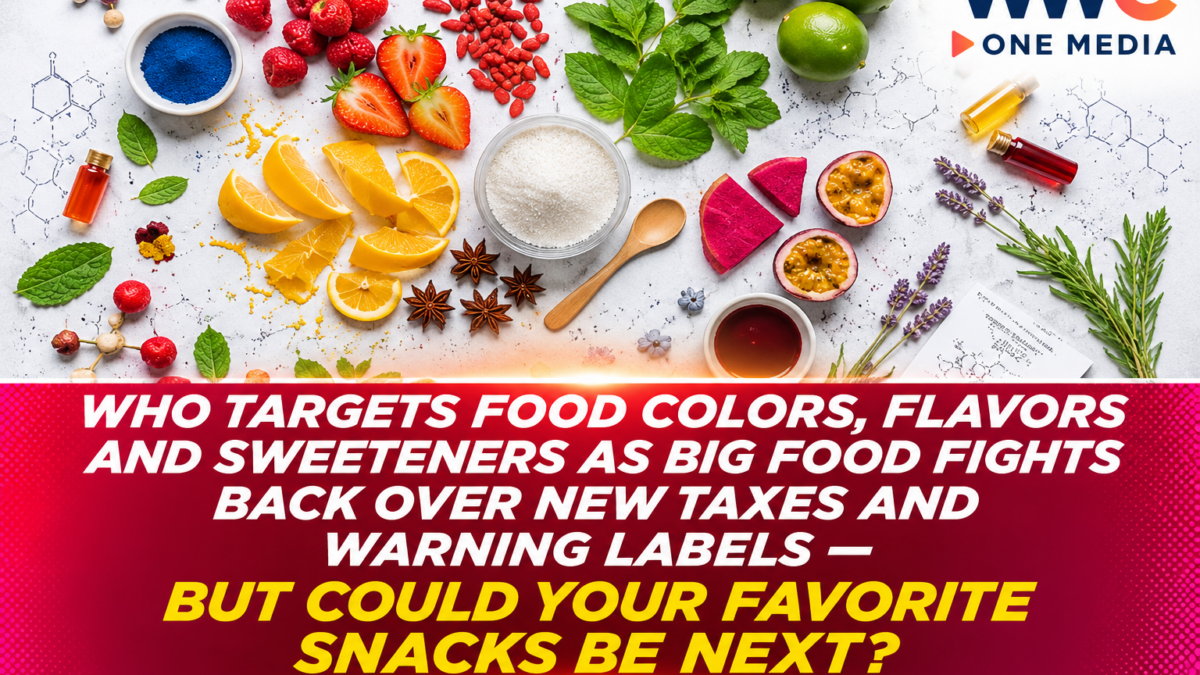
The second concerns specified ingredients used primarily to change a product’s sensory appeal, including added colors, flavors and sweeteners.
A food product could fall within the model’s scope if it exceeds a specified nutritional threshold or contains one of the identified ingredients.
That represents a major development because a product’s classification would no longer depend exclusively on its conventional nutritional profile.
For example, a product with relatively low sugar content could still attract regulatory attention if it contains specified sweeteners or other sensory additives.
However, this would not mean the product was automatically prohibited or scientifically proven harmful.
The WHO expressly states that including these ingredients in the model does not establish that they are unsafe.
Instead, the agency wants governments to consider how industrial formulation may influence food preferences and consumption.
Could Soft Drinks, Instant Noodles and Packaged Snacks Face New Restrictions?
The proposal could become important for manufacturers of several widely consumed food and beverage categories.
Examples include carbonated beverages, flavored drinks, packaged confectionery, certain processed snacks and instant noodle products.
These categories may contain varying combinations of sugar, sodium, fat, flavoring agents, coloring ingredients and sweeteners.
Under the WHO’s framework, governments could use the proposed classification system when considering measures such as:
- Front-of-package nutritional warnings.
- Restrictions on certain food-marketing practices.
- Taxes or other fiscal policies.
- Rules governing food purchased or served by public institutions.
- Additional ingredient and nutritional disclosure requirements.
But none of these measures would automatically take effect if the WHO finalizes the guidance.
The organization does not have the authority to impose a universal packaged-food tax or directly ban these products across its member countries.
National governments would determine whether and how the framework should influence their own regulations.
That distinction is essential.
The WHO is proposing a tool for policymaking, not announcing an immediate worldwide prohibition on food additives.
Global Food Industry Warns of Higher Costs and Regulatory Confusion
The International Food and Beverage Alliance (IFBA), which represents major multinational food and beverage manufacturers, has raised objections to the proposed framework.
The organization argues that assessing sensory additives alongside nutritional content could shift regulatory attention away from established dietary priorities.
IFBA Secretary-General Rocco Renaldi warned that the approach could undermine reformulation efforts designed to improve food products.
The concern is commercially significant.
Food companies have invested in reducing sugar, sodium and certain fats, sometimes replacing ingredients to maintain flavor or improve shelf life.
If a reformulated product remains subject to additional regulatory scrutiny because it contains specified colors, flavors or sweeteners, manufacturers may question whether the new system sufficiently recognizes nutritional improvements.
Companies also fear higher costs associated with changing recipes, updating labels and adapting products to different national standards.
Potential additional taxes and exposure to litigation could create further financial uncertainty.
However, the WHO’s proposal does not itself impose those expenses.
Any actual commercial consequences would depend on regulations adopted by individual governments.
Kraft Heinz CEO Says Food Companies Need a Voice
Kraft Heinz chief executive Steve Cahillane has also entered the debate.
Speaking to Reuters before publication of the November 9 report, Cahillane argued that food manufacturers should be involved in discussions concerning future regulation.
The company’s position reflects a wider industry concern that new standards could affect product development and manufacturing decisions.
For multinational businesses, different regulations across countries can create complications.
A product permitted under one national food-labeling system might require a different label, formulation or marketing approach elsewhere.
Manufacturers would need to evaluate whether complying with multiple standards increases operating costs.
But public-health advocates argue that commercial considerations cannot be the only basis for regulatory decisions.
They contend that governments must also consider the potential contribution of dietary patterns to obesity, cardiovascular disease and other noncommunicable illnesses.
The challenge is developing policies that are scientifically justified, understandable to consumers and practical to implement.
Why the WHO Is Looking Beyond Sugar, Salt and Fat
The WHO’s proposal reflects the increasingly prominent scientific debate surrounding ultra-processed foods.
Ultra-processed foods are generally understood as industrial formulations that may contain substances and additives not commonly used in ordinary home cooking.
Examples can include some packaged snacks, sugary drinks, confectionery and ready-to-eat products.
However, the category is broad.
Not every industrially processed food has the same nutritional composition or health implications.
Some products provide useful nutrients, while others contain high levels of sugar, sodium, saturated fat or calories with limited nutritional benefits.
This is one reason the scientific and regulatory debate remains contentious.
Researchers have identified associations between diets high in certain ultra-processed foods and increased risks of several adverse health outcomes.
But the evidence does not demonstrate that every form of processing or every approved additive causes harm.
The WHO’s new framework attempts to combine nutritional criteria with information about food formulation rather than treating them as completely separate questions.
Public-health researcher Lindsey Smith Taillie of the University of North Carolina has argued that nutrient quality and processing-related characteristics can be considered together.
The issue is therefore not simply whether processed foods are good or bad.
It is whether governments can identify products of concern more accurately by assessing multiple characteristics.
Does the WHO Believe Artificial Sweeteners Are Dangerous?
A particularly sensitive part of the controversy concerns sweeteners.
Artificial and other non-sugar sweeteners are used in numerous beverages and food products to provide sweetness with little or no added sugar.
Their role in nutrition policy has already been debated internationally.
In 2023, the WHO issued guidance advising against the use of non-sugar sweeteners as a long-term strategy for weight control among most people.
However, that guidance was not a toxicological safety assessment of individual sweeteners and did not replace established acceptable-intake limits.
The new 2026 proposal addresses a different regulatory question.
It considers specified sweeteners as potential indicators of industrial formulation intended to increase product appeal.
That should not be confused with a finding that consuming an approved sweetener automatically causes disease.
The distinction matters for consumers choosing between regular and reduced-sugar products.
A beverage containing less added sugar may still differ nutritionally from a full-sugar version, even if both fall within a regulatory model’s scope.
Consumers should evaluate overall dietary patterns, relevant nutritional information and individual health needs rather than assume that every product containing a sweetener is equally harmful.
India’s Food Label Battle Shows What Could Happen Next
The WHO controversy comes amid similar debates in major consumer markets.
India has already faced intense disagreement over proposed front-of-package warning labels.
Regulators, health advocates and multinational food companies have debated whether packaged foods containing high levels of sugar, salt or saturated fat should display prominent warning symbols.
The issue has attracted attention from India’s Supreme Court.
As previously reported by WWC ONE MEDIA in its investigation of India’s proposed food-warning labels and resistance from major manufacturers, the disagreement extends beyond scientific standards to questions of corporate influence and consumer transparency.
Supporters of warning labels argue that people should be able to recognize potentially unhealthy nutritional characteristics without studying complicated tables.
Industry representatives have questioned whether simplified warning symbols provide sufficient context about serving sizes and overall nutritional quality.
India’s experience illustrates the political and commercial challenges governments may encounter when attempting to regulate processed foods.
It also demonstrates that international health recommendations do not automatically translate into uniform national legislation.
Why the Philippines Should Pay Attention
Although the latest WHO proposal does not create new Philippine regulations, its potential influence could eventually become relevant to the country’s food and beverage industry.
The Philippines has a substantial domestic market for packaged snacks, instant noodles, flavored beverages and convenience foods.
Major manufacturers include companies such as Universal Robina Corporation, Monde Nissin, San Miguel Food and Beverage, and multinational beverage producers.
These businesses operate in markets where ingredient costs, nutritional standards, consumer preferences and pricing are important competitive considerations.
Any future Philippine adoption of WHO-inspired food-profiling policies would require regulatory evaluation and consultation.
The Food and Drug Administration, Department of Health, lawmakers and other relevant agencies would need to determine what rules are legally appropriate.
A policy change could potentially influence labeling, advertising or product formulation.
However, there is no verified announcement that the Philippines has adopted the November 2026 WHO draft as a binding national requirement.
The proposal remains an international consultation document.
Philippine Sugar Producers and Beverage Manufacturers Could Face New Questions
Food regulation is closely connected to the economics of sugar and sweetener production.
In the Philippines, major beverage companies have been exploring ways to secure more reliable domestic sugar supplies.
Coca-Cola and Pepsi-associated manufacturers have been identified among companies interested in arrangements that could connect them more directly with sugarcane growers.
In related reporting, WWC ONE MEDIA examined how beverage makers are exploring direct sugar purchases from Filipino farmers.
The proposal reflects ongoing concerns about supply costs, farmgate prices and competition from alternative sweeteners.
The WHO’s draft could add another dimension to future industry discussions if national governments begin revising policies around sweetened drinks.
Manufacturers might need to evaluate how ingredient substitutions affect both nutritional characteristics and regulatory classification.
For sugar producers, beverage reformulation trends can also influence demand.
However, changes to food regulations do not automatically mean companies will stop purchasing sugar or that domestic sugar prices will move in a particular direction.
Those outcomes would depend on market demand, government policy, input costs and manufacturers’ decisions.
PepsiCo’s Challenges Highlight the Pressure Facing Major Food Brands
The controversy also comes as major consumer-goods companies face changing purchasing patterns.
PepsiCo has been dealing with pressure in parts of its North American food and beverage operations.
Consumers have become more selective about prices, product sizes and food choices.
The company has responded by reviewing its operations and working to improve efficiency.
As WWC ONE MEDIA reported on PepsiCo’s plans to cut approximately 1,000 North American positions amid weaker beverage and snack demand, even established food businesses face challenges as consumer preferences and economic conditions change.
The WHO proposal is a separate development and was not identified as the cause of those job reductions.
Nevertheless, the new regulatory debate introduces another issue for companies already managing product innovation, pricing pressures and operational costs.
The Beverage Industry Is Already Changing Its Products
Another emerging trend involves demand for beverages marketed around specific nutritional or functional characteristics.
Companies have introduced drinks emphasizing lower sugar content, hydration or other attributes intended to appeal to changing consumer preferences.
In a separate report, WWC ONE MEDIA examined the return of Poppi’s founders with a new hydration-drink business following PepsiCo’s acquisition of their earlier brand.
That story highlights how manufacturers are competing through ingredient choices, branding and product positioning.
However, products marketed as healthier alternatives still require scrutiny of their actual nutritional content.
Claims about hydration, wellness or reduced sugar do not automatically establish superior overall health outcomes.
The WHO’s proposed approach could encourage a wider discussion about how consumers distinguish genuinely beneficial nutritional changes from marketing-driven product differences.
Could Food Prices Increase if Governments Adopt New Rules?
One of the industry’s concerns is the potential effect on prices.
Manufacturers may face higher costs if they are required to redesign packaging, replace ingredients or change production processes.
Companies could seek to recover some costs through retail prices.
However, the effect would depend on the specific regulations, competitive conditions, supply chains and manufacturers’ pricing decisions.
A warning-label requirement would not necessarily have the same financial impact as a new excise tax.
Likewise, a product reformulation may increase costs in one case but lower them in another.
Consumers could also respond by purchasing different products, changing quantities or choosing less expensive alternatives.
The current WHO proposal contains no mandatory worldwide tax rate and does not quantify how much individual product prices might change.
Any prediction of a specific price increase would therefore be speculative.
What Happens Before the November 27 Deadline?
The WHO opened its public consultation on November 2, 2026.
Governments, researchers, civil society organizations and industry stakeholders can submit comments until November 27.
The consultation is intended to evaluate the proposed model’s scientific criteria, practical application and compatibility with national regulatory systems.
After reviewing submissions, the WHO plans to finalize the publication.
The process does not establish a deadline for governments to implement new food taxes or labeling rules.
Individual countries would still need to decide whether to incorporate the model into their own policies.
Food manufacturers will be watching how the final model addresses concerns about nutritional reformulation and product classification.
Public-health advocates will be assessing whether the framework provides effective tools to reduce consumption of foods associated with poor dietary outcomes.
For consumers, the important question is whether the eventual system will make food choices clearer without creating misleading assumptions about individual ingredients.
The Bigger Picture: A Global Battle Over What Makes Food Healthy
The WHO’s proposed food-profiling model represents a significant development in global nutrition policy.
Instead of evaluating packaged foods exclusively through sugar, salt and fat content, the agency wants to incorporate certain ingredients associated with industrial formulation and consumer appeal.
Supporters believe the approach could help governments develop more comprehensive policies addressing unhealthy diets.
Food manufacturers warn that it could undermine nutritional reformulation and create unnecessary compliance costs.
Both perspectives raise legitimate questions that require careful scientific and regulatory analysis.
The debate is particularly important because consumers encounter food products with widely different nutritional characteristics, even within the same category.
A simple processed-versus-unprocessed label may not tell the entire story.
Neither does the presence of an added color, flavor or sweetener automatically determine whether a product is safe or unhealthy.
The real challenge is developing standards that distinguish nutritional risks accurately while remaining transparent, practical and fair.
With the WHO’s consultation deadline approaching, the global food industry faces a potentially important turning point.
The WHO wants governments to look beyond the nutrition label and examine how packaged foods are formulated. But as multinational food companies resist the proposed changes, will the new rules help consumers make healthier choices—or trigger a costly regulatory battle that could change the products and prices on supermarket shelves worldwide?