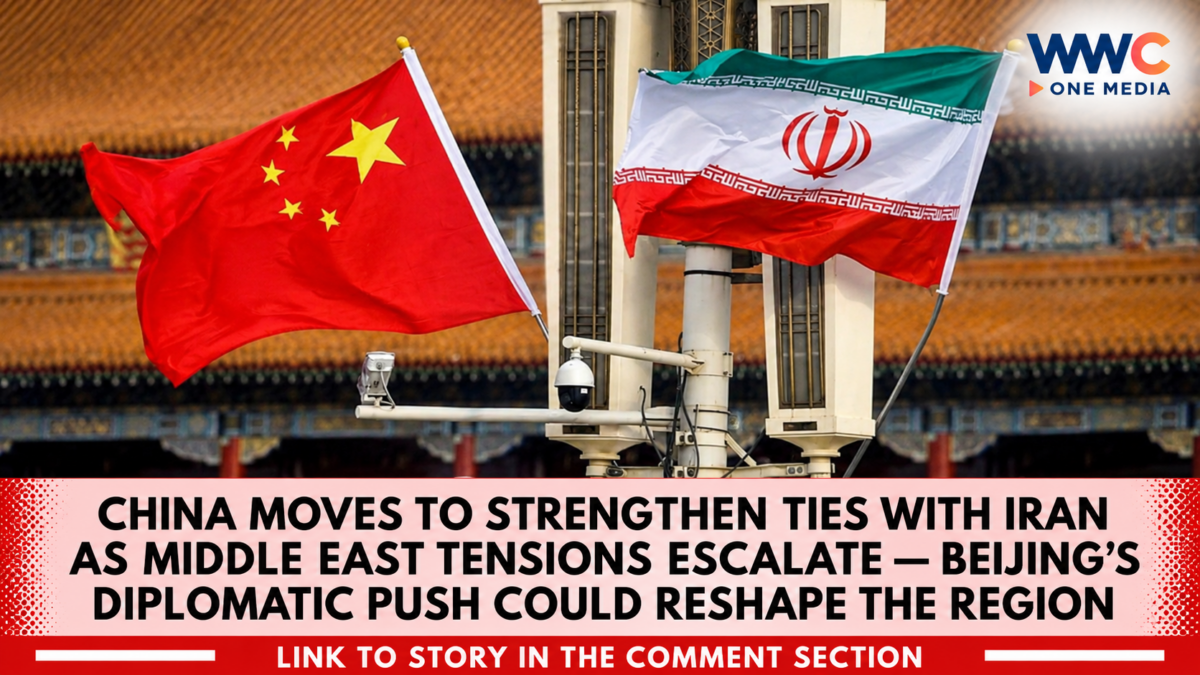
China is stepping up its diplomatic engagement with Iran as tensions across the Middle East threaten regional stability, energy supplies and international trade.
On November 9, 2026, China’s special envoy for Middle East affairs, Zhai Jun, met Ali Bagheri Kani, deputy secretary of Iran’s Supreme National Security Council, during a visit to Tehran. Beijing said it was willing to pursue stronger relations with Iran while urging all sides to prioritise political solutions over further military confrontation.
The meeting is part of a wider diplomatic mission that will also take Zhai to Oman and Saudi Arabia this month. It comes as China seeks to expand its role in efforts to ease the conflict and prevent another escalation that could disrupt global shipping and energy markets.
The diplomatic initiative is significant because China maintains important economic ties with Iran while also having substantial trade and energy interests across the Gulf. Beijing is therefore attempting to strengthen its relationship with Tehran without alienating other Middle Eastern partners.
China Seeks Stronger Ties With Iran as Middle East Crisis Deepens — Beijing’s Diplomatic Move Could Have Global Consequences
China is intensifying its diplomatic engagement with Iran as the Middle East conflict threatens regional security, international shipping and the global energy supply.
On November 9, 2026, China’s special envoy for Middle East affairs, Zhai Jun, met Ali Bagheri Kani, deputy secretary of Iran’s Supreme National Security Council, during a visit to Tehran. Beijing said it was willing to pursue stronger relations with Iran while urging countries involved in the conflict to prioritise negotiations instead of further military confrontation.
The meeting is part of a broader diplomatic mission that will also take Zhai to Oman and Saudi Arabia this month. China’s latest initiative signals that Beijing wants a greater role in efforts to reduce tensions, restore regional stability and protect vital commercial shipping routes.
But China’s growing engagement with Tehran comes with a complicated balancing act. Beijing has important economic and energy relationships with Iran, while maintaining extensive trade and diplomatic ties with Saudi Arabia and other Gulf countries.
The question is whether China can turn its economic influence into meaningful diplomatic progress before the regional crisis escalates further.
China Sends Special Envoy to Iran, Oman and Saudi Arabia
The meeting between Zhai and Bagheri Kani is part of China’s wider effort to encourage political solutions to the Middle East conflict.
According to the Chinese Foreign Ministry’s readout, Zhai said China was willing to develop stronger ties with Iran and called for a rational and pragmatic approach focused on political solutions and the restoration of regional stability.
His visit to Iran is particularly significant because Beijing is also engaging with countries that have different interests in the conflict.
Oman has historically played an important role in facilitating communication between regional and international powers. Saudi Arabia, meanwhile, remains one of China’s major economic partners in the Middle East.
By visiting all three countries, Zhai is positioned to communicate with governments whose cooperation could be important in any wider diplomatic effort.
The initiative follows separate meetings in Beijing on November 2, when Chinese Foreign Minister Wang Yi met Iranian and Saudi national security officials.
Wang urged both sides to pursue dialogue and negotiations rather than return to military confrontation. Chinese President Xi Jinping also met Oman’s Sultan Haitham bin Tariq, with both countries emphasising the importance of regional stability and safe navigation through the Strait of Hormuz.
Reuters reported that China’s diplomatic activity reflects an effort to increase its involvement in regional peace initiatives as tensions threaten energy supplies and international trade.
Why China Wants Stronger Relations With Iran
China’s relationship with Iran is driven by more than diplomacy.
Energy security, trade, regional influence and the protection of international shipping routes are all important considerations for Beijing.
China has been a major buyer of Iranian crude oil, with Reuters reporting that it purchased more than 80 per cent of Iran’s seaborne oil exports in 2025, according to shipping-data firm Kpler.
This relationship gives Beijing an important economic connection to Tehran. However, it also exposes China to the consequences of any prolonged disruption to Iranian oil exports or the shipping routes connecting the Persian Gulf with international markets.
The Strait of Hormuz is especially important.
The waterway connects the Persian Gulf with the Gulf of Oman and the Arabian Sea. Before the current conflict, approximately one-fifth of global petroleum liquids consumption passed through the strait, making it one of the world’s most strategically important energy chokepoints.
A prolonged disruption could affect oil prices, shipping costs, insurance premiums and the availability of energy supplies for major Asian economies.
China therefore has a direct economic interest in preventing the crisis from spreading.
Its diplomatic position is not simply about maintaining friendly relations with Iran. It is also about protecting the trade and energy networks on which China’s economy depends.
Beijing Is Trying to Balance Iran and Saudi Arabia
China’s diplomatic strategy faces a major challenge: it cannot strengthen relations with Iran at the expense of its wider partnerships in the Gulf.
Saudi Arabia is one of China’s most important economic partners in the region, particularly in energy, infrastructure and investment.
The two countries have also expanded diplomatic cooperation since Beijing helped facilitate the restoration of Saudi-Iranian diplomatic relations in 2023.
That agreement was widely viewed as an important diplomatic achievement for China, demonstrating that Beijing could play a role in reducing tensions between two regional rivals.
However, the current crisis is more complicated.
The United States and Israel are also central to the conflict, while the security of Gulf countries and international shipping has become increasingly important.
Reuters analysis published on November 4 noted that China’s influence has limits. Beijing has extensive economic ties with Iran but also substantial commercial interests across the Gulf and a much larger economic relationship with the United States.
China does not have formal defence commitments to Iran that would require it to become directly involved in a military confrontation.
This creates a difficult position for Xi Jinping: Beijing wants to be seen as a diplomatic force for stability without becoming trapped in a conflict that could damage its wider international relationships.
The Strait of Hormuz Is at the Centre of China’s Concerns
The security of the Strait of Hormuz is one of the strongest reasons behind China’s latest diplomatic push.
Any sustained interruption to shipping through the waterway could create serious consequences for countries that depend on imported oil and gas.
Asian economies are particularly exposed because a large share of the energy transported through Hormuz is destined for Asian markets.
China is not the only country concerned. Japan, South Korea, India and Southeast Asian economies also depend on reliable energy shipments from the Middle East.
A disruption could increase the cost of crude oil, fuel, electricity generation, manufacturing and transportation.
For countries already facing inflationary pressure, higher energy prices could create additional difficulties for businesses and households.
China has repeatedly called for safe and normal navigation through the waterway. Its latest diplomatic efforts therefore have a direct connection to the economic interests of countries far beyond the Middle East.
WWC ONE MEDIA previously examined Beijing’s appeal for diplomacy in China Urges Iran and US to Show Restraint and Resume Talks, highlighting China’s concern over the security of Hormuz and the importance of restoring negotiations.
China Wants a Bigger Role in Ending the Conflict, but Its Influence Has Limits
China’s diplomatic ambitions are growing, but becoming a decisive mediator will not be easy.
Beijing has economic leverage because Iran relies heavily on its oil relationship with China. However, economic influence does not automatically translate into the ability to persuade Tehran to accept a particular settlement.
A lasting agreement would also require the involvement of Washington and other regional governments.
The United States remains a central player because of its military presence, sanctions policy and security relationships across the Gulf.
Iran, meanwhile, has its own demands concerning sovereignty, security, sanctions and the future of its regional position.
China can encourage negotiations and offer diplomatic support, but it cannot independently determine the conditions under which the conflict ends.
Reuters’ November 4 analysis, titled China Wants a Seat at the Gulf Table, highlighted this limitation. Beijing may have considerable economic influence over Tehran, but its ability to compel Iran or guarantee a settlement remains uncertain.
The report also noted that Qatar has been leading the latest effort to mediate between Washington and Tehran.
This suggests that China’s strategy may be less about replacing existing mediators and more about ensuring that Beijing has a meaningful voice in any future regional settlement.
China’s 2023 Saudi-Iran Deal Offers a Possible Diplomatic Model
China’s role in the 2023 agreement between Saudi Arabia and Iran provides an important example of its diplomatic ambitions.
The agreement, announced in Beijing, restored diplomatic relations between the two countries after years of hostility.
It demonstrated that China could use its relationships with rival governments to encourage dialogue.
However, the circumstances surrounding the current conflict are considerably more difficult.
The 2023 agreement involved two regional governments that had reasons to restore diplomatic relations. The present crisis involves military confrontation, international sanctions, shipping security and the interests of several major powers.
The United States and Israel are also directly involved, making the diplomatic calculations more complicated.
For Beijing, repeating its 2023 success would require more than hosting meetings. It would need to help create conditions that allow the principal parties to accept negotiations and implement a sustainable agreement.
What China’s Growing Iran Relationship Means for the United States
China’s engagement with Iran also has implications for its relationship with Washington.
The United States has long sought to restrict Iran’s access to international financial networks and limit the country’s oil revenue through sanctions.
China’s continued role as a major buyer of Iranian oil makes it an important factor in Washington’s economic pressure campaign.
Any attempt by the United States to intensify enforcement against Chinese companies or financial institutions involved in Iranian oil transactions could create additional friction between the world’s two largest economies.
That risk is particularly important because Washington and Beijing have their own trade, technology and security disputes.
WWC ONE MEDIA previously explored this issue in Trump Wants to Choke Iran’s Economy — But China Could Turn the Pressure Back on America.
The article examined how attempts to isolate Tehran economically could also put pressure on the broader US-China relationship.
For Beijing, maintaining access to energy supplies while avoiding a direct confrontation with Washington is likely to remain a difficult balancing act.
Iran’s Economic Pressure Adds Urgency to the Diplomatic Effort
Iran is also facing significant economic challenges amid the conflict and international sanctions.
Restrictions affecting oil exports, financial transactions and international trade have placed pressure on the country’s economy.
A prolonged crisis could make the situation more difficult by discouraging investment, increasing transportation costs and disrupting access to essential imports.
The Strait of Hormuz adds another layer of uncertainty because any sustained disruption could affect Iran’s own ability to move energy exports.
WWC ONE MEDIA previously reported on these pressures in Iran’s Economy Is Buckling Under War and Sanctions — But the Strait of Hormuz Could Be the Next Global Shock.
For Iran, diplomatic engagement with China offers an opportunity to maintain an important international relationship while seeking support for negotiations and regional stability.
However, stronger ties with Beijing do not necessarily mean China will provide direct military assistance or guarantee Iran’s security.
The two countries have important strategic interests, but their relationship has limits.
The Bigger Stakes for Asia and the Global Economy
China’s latest diplomatic initiative matters to countries far beyond the Middle East.
Asian economies depend heavily on energy imports, international shipping and stable trade routes. A prolonged conflict could increase the cost of transporting goods, raise fuel prices and place additional pressure on manufacturing industries.
For Southeast Asia, higher global oil prices could affect transport operators, airlines, logistics companies and electricity costs.
The Philippines, which imports a substantial portion of its petroleum requirements, could also face higher fuel expenses if international supply disruptions continue.
The impact would not necessarily be immediate or identical across countries. It would depend on the duration of the disruption, available inventories, alternative suppliers and movements in international oil prices.
Nevertheless, the Strait of Hormuz remains a critical route whose stability matters to the wider global economy.
Can China Turn Diplomacy Into a Breakthrough?
China’s latest engagement with Iran demonstrates that Beijing wants a stronger role in shaping the Middle East’s political future.
The visits by Zhai Jun to Iran, Oman and Saudi Arabia could provide opportunities to encourage dialogue, communicate competing positions and support efforts to prevent renewed military escalation.
But diplomatic meetings alone will not guarantee peace.
Any meaningful breakthrough would require cooperation from Iran, the United States and regional governments, alongside practical agreements on security, sanctions and maritime navigation.
For now, Beijing is attempting to position itself as a diplomatic player with influence on both sides of the regional divide.
Its economic relationship with Iran gives it a valuable connection to Tehran, while its partnerships with Gulf countries provide access to other important regional capitals.
The challenge is whether those relationships can produce concrete results.
As China moves closer diplomatically to Iran while continuing to engage Saudi Arabia and Oman, the stakes extend well beyond bilateral relations.
The future of the Middle East conflict could influence global oil supplies, international shipping costs and the economic outlook for countries across Asia.
China wants a seat at the negotiating table. But whether Beijing can help bring the United States and Iran closer to a lasting settlement remains the biggest test of its growing diplomatic ambitions.