
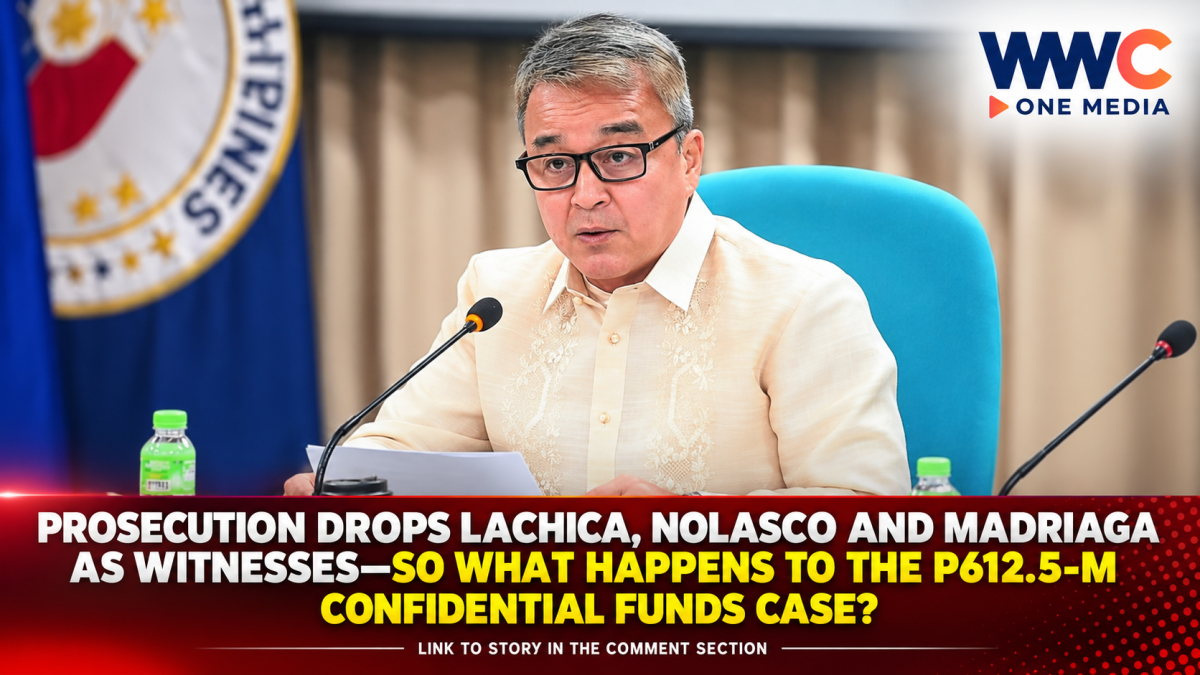
MANILA, Philippines — The House prosecution panel has decided not to call three controversial figures—former Vice Presidential Security and Protection Group (VPSPG) chief Col. Raymund Dante Lachica, former VPSPG deputy commander Col. Dennis Nolasco, and former Duterte aide Ramil Madriaga—as witnesses in Vice President Sara Duterte’s impeachment trial, saying the evidence already presented is sufficient to support its allegations involving confidential funds.
The decision marks a significant shift in the prosecution’s strategy as it moves to complete its presentation on the first article of impeachment, which accuses Duterte of the alleged misuse of ₱612.5 million in confidential funds allocated to the Office of the Vice President (OVP) and the Department of Education (DepEd).
Prosecution spokesperson and adviser Robert Ace Barbers said Friday that Lachica’s testimony is no longer necessary because previous witnesses and documentary evidence have already established what the prosecution needs to prove under Article I.
“Hindi naman na necessary” ang statement ni Lachica, Barbers said, arguing that the prosecution has already presented evidence supporting its allegations.
Why Lachica was considered crucial
Lachica’s name repeatedly surfaced during the impeachment proceedings because former OVP Special Disbursing Officer Gina Acosta testified that she released four ₱125-million tranches, totaling ₱500 million, to Lachica on Duterte’s instructions.
Acosta also acknowledged that Lachica was not the OVP’s special disbursing officer and was not a fidelity-bonded accountable officer, issues the prosecution has linked to its allegation of irregular handling of confidential funds.
The prosecution has argued that the rules governing confidential and intelligence funds require cash advances to be handled by duly designated and bonded accountable officers.
Acosta’s testimony was particularly important because she said she did not personally witness how the money was ultimately spent and instead relied on documents and explanations provided by Lachica for liquidation purposes.
That testimony became one of the reasons prosecutors initially considered calling Lachica to the witness stand.
But the panel now believes it can make its case without him.
From “possible witness” to dropped witness
The prosecution’s position has evolved over the past several weeks.
On Aug. 27, House prosecutors said they were already considering abandoning efforts to subpoena Lachica because they believed his accountability could be established through evidence already before the Senate impeachment court.
By Aug. 29, however, prosecutors were still leaving the door open, saying Lachica could be called if they later determined that his testimony was necessary. GMA News also reported that the defense had listed Lachica as a potential witness, meaning prosecutors could still cross-examine him if he eventually takes the stand.
That possibility has now effectively been set aside, with Barbers saying Friday that Lachica, Nolasco and Madriaga would no longer be summoned by the prosecution.
Madriaga’s allegations won’t be tested by prosecutors
Madriaga was another potentially explosive witness.
The former Duterte aide and self-described “bagman” previously alleged that he was instructed to coordinate with Nolasco and deliver cash to various individuals and locations.
His April testimony before a House committee became part of the broader impeachment record, but his credibility has been heavily contested.
Duterte has disputed Madriaga’s allegations and filed perjury complaints against him.
The prosecution had previously said it was not interested in putting Madriaga on the stand simply because his allegations attracted significant public attention.
Instead, prosecutors said they were concentrating on witnesses who could establish the request, release, handling and liquidation of confidential funds through documentary evidence and official records.
This means the Senate impeachment court may not hear Madriaga directly under the prosecution’s presentation.
Nolasco also left off the prosecution witness list
Nolasco’s name was connected to the confidential funds allocated to DepEd.
Former DepEd Special Disbursing Officer Edward Fajarda previously told lawmakers that confidential funds were released to Nolasco. Former DepEd Undersecretary Michael Poa also testified about the handling of confidential funds during Duterte’s tenure as Education secretary.
The prosecution, however, now believes additional testimony from Nolasco is unnecessary.
Instead, it is relying on the testimony of officials already presented and on audit and financial records.
The ₱612.5-billion? No—₱612.5-million issue at the center of Article I
The first impeachment article concerns alleged misuse of ₱612.5 million, consisting of:
- ₱500 million in confidential funds from the Office of the Vice President; and
- ₱112.5 million from the Department of Education during Duterte’s tenure as Education secretary.
The prosecution has also highlighted questions surrounding the documentation used to liquidate the funds.
Among the issues raised were acknowledgment receipts rather than conventional official receipts, as well as questionable or difficult-to-verify names appearing in documents.
COA findings and notices have also featured prominently in the prosecution’s presentation.
Importantly, these findings and allegations remain matters for the Senate impeachment court to evaluate. The existence of questioned transactions or audit findings does not by itself establish criminal liability or prove every allegation made by the prosecution.
Prosecution says the evidence already points to Duterte
Barbers said the prosecution believes its existing witnesses have already established the connection between the confidential-fund transactions and Duterte as head of the agency.
Former OVP officials Gina Acosta and Lemuel Ortonio have testified about the release and documentation of the funds, while other witnesses and records have been presented to address the handling and liquidation of the money.
The prosecution therefore argues that adding Lachica, Nolasco or Madriaga could simply lengthen proceedings without materially strengthening its case.
This is consistent with the prosecution’s broader effort to present only evidence it considers necessary as the impeachment trial moves forward. GMA News previously reported that prosecutors wanted to avoid unnecessary delays by limiting their presentation to what they considered essential evidence.
What happens next?
The decision comes as the impeachment trial moves beyond the most contentious testimony surrounding the OVP confidential funds.
The Senate impeachment court has already ordered COA employee Bresilio Sabaldan and two other witnesses to testify from Sept. 7 to 9.
Meanwhile, the prosecution is preparing for the next major phase involving allegations of unexplained wealth, with financial records—including bank and tax documents involving Duterte and her husband—now in the prosecution’s possession, according to Philstar.
The prosecution has also been weighing whether to pursue other allegations, including bribery, as it tries to keep the proceedings on track for completion later this year.
For now, however, one thing is clear: three of the most closely watched names in the confidential-funds controversy will not be called by the prosecution.
The ultimate question will be whether the evidence already presented is enough to persuade the senator-judges that the allegations under Article I have been proven to the required standard.
That decision, as Barbers acknowledged, now rests with the Senate impeachment court.
Leave a Reply