MANILA, PHILIPPINES — As Filipino consumers prepare for massive discounts during the upcoming 11.11 and 12.12 online shopping events, TikTok Shop and the Department of Trade and Industry (DTI) are stepping up consumer education to help buyers avoid counterfeit merchandise, misleading product listings and potentially unsafe transactions.
The initiative, promoted through the #TikTokShopSmart campaign during Consumer Welfare Month, emphasizes the need to verify online sellers, examine product details, check safety information and understand available refund and complaint procedures.
The effort comes as TikTok Shop reported rejecting more than 208 million products from being listed globally between July 2025 and July 2026, according to its latest Global Safety Report.
The company says this represented 99% of product listings identified as violating platform policies that were proactively stopped before reaching customers.
Another two million restricted or prohibited products were removed after being published.
The numbers highlight the scale of the platform’s enforcement activity.
But they also reveal the continuing difficulty of protecting buyers in a digital marketplace where product discovery, influencer content and purchasing decisions can happen within seconds.
With millions of listings requiring enforcement, can stronger platform safeguards and government-backed education genuinely protect Filipino consumers—or will deceptive online sellers continue finding ways around the system?
TIKTOK SHOP AND DTI TEAM UP FOR CONSUMER WELFARE MONTH
TikTok Shop is working with the Department of Trade and Industry to promote safer online shopping practices as part of October’s Consumer Welfare Month activities.
The collaboration focuses on helping consumers identify risks and better understand their rights when purchasing products through digital marketplaces.
The platform’s #TikTokShopSmart campaign encourages shoppers to look beyond appealing videos, large discounts and promotional claims.
Consumers are advised to examine a product’s actual description, seller information, reviews and relevant safety documentation before placing an order.
The initiative also emphasizes what shoppers can do if a product arrives damaged, differs from its description or creates another transaction concern.
The latest campaign builds on earlier cooperation between TikTok Shop and DTI involving e-commerce education and seller compliance.
MORE THAN 208 MILLION PRODUCT LISTINGS REJECTED GLOBALLY
TikTok Shop reported that its global systems prevented more than 208 million products from being listed between July 2025 and July 2026.
According to the company, 99% of product listings detected as violating its platform policies were rejected proactively.
Another two million restricted or prohibited products were removed after listing.
These figures are significant because preventing a problematic product from appearing is generally preferable to taking it down after shoppers may already have encountered it.
However, the reported numbers come from the company’s own enforcement measurements.
The company has not supplied a Philippines-specific breakdown in the reports reviewed.
Therefore, it would be misleading to claim that 208 million unsafe products were discovered in the Philippine market.
The figure also should not be equated with 208 million confirmed scams, counterfeit products or affected consumers.
Policy violations can cover different types of prohibited or noncompliant listings.
WHAT DOES THE 99% BLOCKING RATE ACTUALLY MEAN?
TikTok Shop’s reported 99% proactive enforcement rate deserves closer examination.
The figure relates to product listings identified as violating platform rules.
It does not prove that 99% of every unsafe or counterfeit product anywhere on the platform has been detected.
That difference is important.
An enforcement system can be effective at identifying known violations while still missing other problematic products.
New sellers, misleading descriptions, manipulated reviews and changing fraudulent techniques can create additional challenges.
The 99% statistic is therefore best described as the platform’s reported proactive removal rate among detected violative listings.
It should not be presented as a guarantee that shopping on TikTok Shop is 99% risk-free.
SELLER VERIFICATION IS A MAJOR PART OF THE SAFETY STRATEGY
TikTok Shop says seller verification is one of its principal consumer-protection measures.
The process is intended to establish information about merchants before they sell products on the platform.
Under Philippine e-commerce law, online marketplaces have responsibilities involving merchant identification and relevant business information.
These obligations are designed to make online transactions more transparent and support accountability when complaints arise.
But seller verification does not automatically guarantee that every product sold by a verified account is authentic, safe or appropriate for a customer’s needs.
Consumers should still assess the individual product and seller’s record.
PRODUCT COMPLIANCE CHECKS TARGET UNSAFE LISTINGS
The platform also uses product compliance screening and automated detection technology to identify prohibited or potentially noncompliant merchandise.
These measures can help prevent listings that breach platform rules.
For regulated products, additional permits or product information may be required under Philippine laws and applicable regulations.
However, consumers should not assume that a product is government-certified merely because it appears in a marketplace.
Safety requirements depend on the product category.
Shoppers should check applicable certifications, registration information and regulatory advisories when relevant.
This is particularly important for products whose defects could create health, electrical or physical safety risks.
COUNTERFEIT PRODUCTS REMAIN A CONCERN
Counterfeit merchandise is another major focus of TikTok Shop’s consumer protection efforts.
Fake products can mislead buyers about their origin, quality and authenticity.
For brand owners, counterfeiting can also create intellectual property concerns.
TikTok Shop says its safeguards include intellectual property protection measures and automated detection systems.
The platform has previously worked with the Intellectual Property Office of the Philippines to strengthen awareness of intellectual property rules and brand protection.
However, the existence of these initiatives does not establish that counterfeit products have been completely eliminated from the marketplace.
Consumers must continue checking whether sellers are authorized and whether product descriptions are credible.
DTI CONSUMER ASSEMBLY FEATURES J. EM ANG
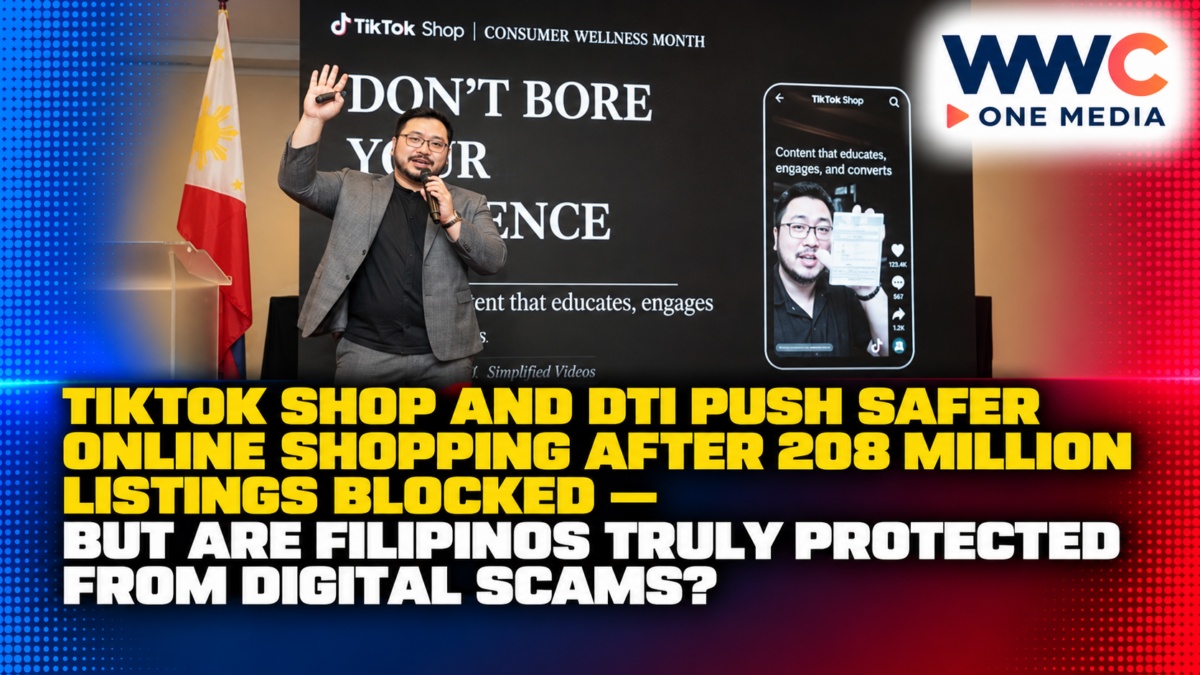
As part of the current campaign, TikTok Shop contributed a session to a DTI-organized assembly of consumer organizations.
The session was led by Filipino business consultant, certified public accountant and content creator J. Em Ang.
It focused on using digital content to communicate product safety information and encourage informed purchasing decisions.
The discussion explored how technical information—including product recalls and safety warnings—can be turned into accessible online messages.
This approach is relevant because consumers may encounter important product information through short-form videos rather than formal notices.
But safety communication must remain accurate.
Oversimplified videos, unverified claims or sensationalized warnings can create confusion rather than help shoppers make informed decisions.
WHY CONTENT CREATORS MATTER IN ONLINE SHOPPING SAFETY
TikTok’s marketplace combines product discovery with entertainment and creator-driven recommendations.
A consumer may learn about a product through a livestream, demonstration or short video.
This model creates commercial opportunities for merchants and creators.
It also increases the importance of clear advertising disclosures and accurate product representations.
A persuasive demonstration does not necessarily prove that a product meets safety standards.
Likewise, a creator’s positive review does not replace the need to check ingredients, technical specifications, certifications or seller credentials.
Consumers should distinguish promotional content from independent evidence.
YVES GONZALEZ EMPHASIZES CONSUMER CONFIDENCE
TikTok Shop Philippines head of public policy Yves Gonzalez said the company is working to strengthen safeguards throughout the online shopping process.
These include product listing controls, seller compliance requirements and post-purchase support.
Gonzalez also emphasized that consumers need accessible information to understand product details and identify available remedies.
The company’s position recognizes that marketplace safety involves both prevention and response.
Stopping problematic listings is important.
But shoppers must also know what to do when a transaction fails.
The effectiveness of this approach ultimately depends on whether buyers can access and successfully use those safeguards when needed.
PHILIPPINE LAW PROVIDES ONLINE CONSUMER PROTECTIONS
The latest campaign operates alongside existing Philippine consumer-protection legislation.
Republic Act No. 11967, known as the Internet Transactions Act of 2023, establishes responsibilities for online merchants, e-retailers, digital platforms and e-marketplaces.
The law requires relevant businesses to provide accurate information and maintain consumer redress mechanisms.
It also addresses seller identification, product descriptions, data privacy and the handling of complaints.
These protections matter because customers may not have the opportunity to inspect an item physically before buying it online.
However, the law’s scope and legal remedies depend on the type of transaction and applicable conditions.
Not every consumer-to-consumer arrangement is covered in the same way as a business-to-consumer purchase.
WHAT IF THE ITEM IS FAKE, DEFECTIVE OR NOT AS ADVERTISED?
Under the Internet Transactions Act, consumers may be entitled to remedies when goods are defective, malfunctioning, lost without their fault or fail to conform to applicable product descriptions and warranties.
Depending on the circumstances, available remedies may include repair, replacement or refund.
The law also establishes a process for using an online platform’s internal complaint mechanism.
In general, a consumer should first raise the concern through that mechanism.
If the complaint remains unresolved after seven calendar days, the internal process is deemed exhausted for purposes of the law.
However, consumers should not interpret this as a universal promise that every refund must be issued within seven days.
Actual refund and dispute procedures depend on the applicable law, circumstances and platform policies.
TIKTOK SHOP HAS UPDATED SELLER ENFORCEMENT IN OCTOBER
A related development gives buyers and merchants additional context.
TikTok Shop’s Philippine Seller Center published updated policy guidance effective October 15, 2026, concerning false displays of product information.
The policy addresses significant differences between listed products and what customers actually receive.
Examples include incorrect descriptions involving product type, quality, material, quantity, size or functionality.
Under the announced enforcement approach, sellers may face deductions of up to 20 Account Health Rating points for qualifying violations.
Affected listings may also be suspended or deactivated.
The policy underscores the importance of accurate product images and descriptions.
However, this enforcement update is a separate seller-policy measure and should not be confused with a new government regulation issued through the October consumer education event.
AI-GENERATED PRODUCT IMAGES ALSO REQUIRE CARE
TikTok Shop’s current seller guidance reminds merchants to review AI-generated images before publishing product listings.
Sellers are instructed to check that visual representations accurately reflect product characteristics.
These include dimensions, colors, shapes, labeling and other relevant details.
This matters because digital images may make products appear different from what a customer eventually receives.
An attractive AI-generated promotional image should not misrepresent the physical item being sold.
For shoppers, the lesson is straightforward: compare the listing’s images, written specifications and actual buyer feedback.
When the product’s appearance or functionality is unclear, seek additional information before purchasing.
THE UPCOMING 11.11 AND 12.12 SALES RAISE THE STAKES
Major promotional periods can encourage consumers to make rapid purchasing decisions.
The approaching November 11 and December 12 shopping events are expected to feature substantial online marketing activity.
Discounts, vouchers and time-limited offers can make products appear particularly attractive.
But price reductions should not distract consumers from basic verification.
A low advertised price may be genuine, but shoppers should still examine seller information, product specifications and transaction terms.
Buyers should also compare the total cost after delivery charges and any applicable fees.
The latest #TikTokShopSmart campaign is particularly relevant because consumers may face pressure to complete purchases before promotional timers expire.
HOW FILIPINO SHOPPERS CAN REDUCE ONLINE SHOPPING RISKS
The DTI’s official e-commerce guidance provides practical safety recommendations.
Before purchasing, shoppers should check whether the seller has credible business information and contact details.
Reviews may provide helpful context, although buyers should watch for suspicious or repetitive feedback.
Consumers can request clearer product images or explanations when information is incomplete.
They should also understand the applicable cancellation, return and refund policies before completing a transaction.
Sensitive information—including passwords, PINs and login credentials—should never be provided to sellers.
Shoppers should use authorized and trusted payment channels rather than following suspicious payment instructions.
These habits do not eliminate all risks, but they can reduce exposure to avoidable problems.
HOW TO FILE A COMPLAINT WITH DTI
Consumers experiencing unresolved transaction problems can seek assistance from the Department of Trade and Industry.
The DTI’s official e-commerce guidance identifies its Fair Trade Enforcement Bureau as a complaint channel.
The agency also maintains the Consumer Care portal at consumercare.dti.gov.ph.
Before filing a complaint, consumers should preserve relevant evidence.
This may include screenshots of the original listing, receipts, messages with the seller, photographs of the delivered product and records of the refund request.
Consumers should ordinarily first use the marketplace’s internal dispute process.
If the issue remains unresolved, they may pursue the appropriate government complaint procedure.
The availability and outcome of legal remedies depend on the facts and applicable rules.
WHAT OTHER NEWS OUTLETS CONFIRM
InsiderPH reported the TikTok Shop–DTI campaign on October 27, emphasizing seller verification, product screening and consumer awareness.
MARKETECH APAC independently published coverage confirming the #TikTokShopSmart campaign and its focus on the approaching mega sales.
Context.ph reported the collaboration on October 28, including the global enforcement figures and the consumer assembly session.
Marketing-Interactive also documented the initiative and TikTok Shop’s reported Global Safety Report statistics.
Adobo Magazine covered the campaign’s combination of platform safeguards and buyer education.
These publications corroborate the announcement.
However, the enforcement figures originate with TikTok Shop’s Global Safety Report.
The coverage does not provide an independent Philippines-specific audit of rejected listings or establish that online shopping fraud has been eliminated.
THE CAMPAIGN BUILDS ON EARLIER DTI COOPERATION
The October initiative is not the first time TikTok Shop has worked with the DTI.
Earlier in 2026, the two parties collaborated on seller education involving the Internet Transactions Act.
The January announcement described webinars, short videos and educational materials intended to help merchants understand their obligations under Philippine e-commerce law.
TikTok Shop has also partnered with DTI and Converge on its Unlad Lokal initiative, providing e-commerce training for micro, small and medium enterprises in Cebu.
These programs focus on different audiences.
Seller compliance initiatives help businesses understand their responsibilities.
Consumer education initiatives help buyers recognize risks and seek assistance.
Both are relevant to improving trust in the digital marketplace.
WHY SAFER ONLINE SHOPPING ALSO BENEFITS SMALL BUSINESSES
Consumer protection is not only a concern for buyers.
Legitimate small businesses can suffer when customers lose confidence because of counterfeit products, misleading listings or dishonest merchants.
A marketplace with clearer rules may help credible sellers distinguish themselves.
Seller verification and product compliance requirements can also create more consistent expectations.
However, enforcement systems can impose additional administrative demands on smaller merchants.
The challenge for platforms is to maintain consumer protection without creating unnecessary barriers for legitimate entrepreneurs.
Accurate product descriptions, transparent policies and accessible dispute mechanisms benefit both sides of the transaction.
THE BIGGER QUESTION: CAN TIKTOK SHOP MAKE DIGITAL SHOPPING SAFER?
TikTok Shop’s collaboration with the DTI reflects the growing importance of consumer protection as online marketplaces become part of everyday commerce.
The platform reports substantial enforcement activity, including more than 208 million product listings rejected globally before publication.
Its #TikTokShopSmart campaign aims to improve buyer awareness ahead of major promotional events.
Meanwhile, Philippine law establishes important obligations for merchants and e-commerce platforms.
But the presence of rules and automated systems does not mean that every risky transaction will be identified in advance.
Consumers must remain vigilant, while platforms must continue improving their detection, enforcement and dispute-resolution practices.
The real test will be whether these safeguards produce measurable reductions in harmful transactions and provide effective remedies when consumers encounter problems.
And as Filipino shoppers prepare for 11.11 and 12.12 promotions, one question remains:
Will TikTok Shop’s massive product-screening effort and DTI-backed education campaign make online shopping genuinely safer—or will counterfeit sellers and deceptive listings continue finding new ways to reach unsuspecting buyers?