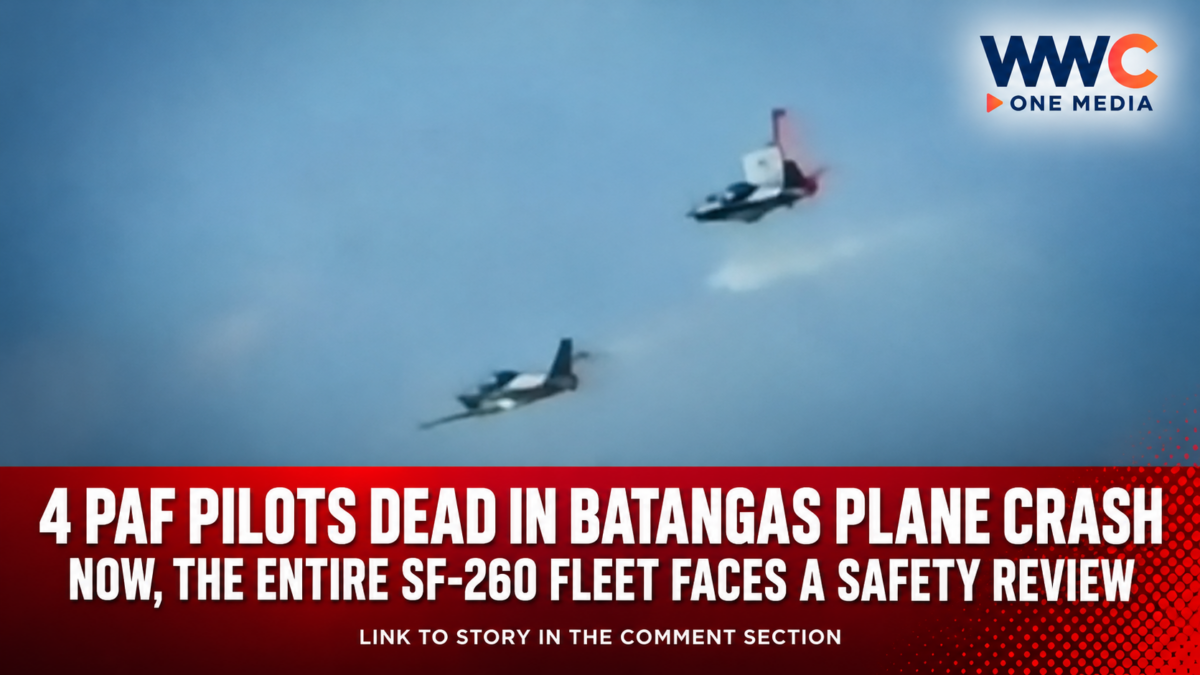
LIPA CITY, Batangas, Philippines — Four Philippine Air Force (PAF) pilots have died following a devastating training-flight accident at Fernando Air Base in Batangas, prompting the temporary grounding of SF-260 aircraft while authorities investigate what went wrong.
The incident occurred at approximately 3:51 p.m. on Friday, October 23, 2026, involving two SF-260 trainer aircraft operating in the vicinity of the military air base in Lipa City.
The Philippine Air Force confirmed that both aircraft were involved in the incident. Subsequent reports from the Associated Press and the Daily Tribune reported that the planes collided in midair before crashing within the air base.
The four pilots aboard the two aircraft were killed. No additional casualties were reported on the ground, according to military statements cited by news organizations.
The tragedy has raised urgent questions about the circumstances surrounding the flight, the safety of military training operations, and the findings that investigators will eventually release.
What happened during the Batangas training flight?
According to reports, the two aircraft were conducting a training flight when the accident occurred on Friday afternoon.
PAF spokesperson Col. Alvin Jay Capinguian said immediate response measures were activated following the incident. Response personnel were deployed to secure the affected area and conduct initial assessments.
The Air Force initially described the event as an aircraft incident while confirming that two SF-260 planes were involved. Subsequent reporting established that all four pilots had died.
Although news reports described the incident as a midair collision, the complete sequence of events leading to the crash remains subject to investigation. Authorities have not established a definitive cause in the reports reviewed for this article.
Investigators will need to determine what happened before the aircraft went down and whether any mechanical, operational, environmental, or other factors contributed to the accident.
Sources: Associated Press, Daily Tribune, ABS-CBN News.
Why were SF-260 aircraft grounded?
One of the most consequential developments following the crash was the temporary grounding of the Philippine Air Force’s SF-260 aircraft.
The measure is intended to keep the affected aircraft type out of operation while authorities investigate the incident and assess safety concerns. The grounding does not, by itself, establish that the aircraft model has a design defect or that a mechanical failure caused the crash.
The SF-260 is a light aircraft used for military pilot training. These aircraft play a role in developing the foundational flying skills required before pilots progress to more advanced platforms.
The investigation will be important in determining what inspections, operational reviews, or other corrective measures may be necessary before affected aircraft can return to service.
The precise timeline for lifting the grounding and the conditions for resuming flights should be confirmed through subsequent official announcements.
Sources: Reuters, Associated Press, Daily Tribune.
The questions investigators must answer
The loss of four pilots makes a thorough investigation essential. Several issues will require careful examination:
- The cause of the crash: Investigators must reconstruct the aircraft movements and determine what led to the reported collision and subsequent crashes.
- Aircraft condition: Maintenance records, technical inspections, and available evidence will help establish whether mechanical problems played any role.
- Training procedures: Flight plans, communications, coordination, and operational circumstances may be examined as part of the investigation.
- Safety measures: Authorities will need to assess whether existing safeguards were followed and whether additional measures are warranted.
- Fleet-wide implications: The grounding provides an opportunity to assess the condition of other SF-260 aircraft and determine what is required before operations resume.
These remain investigative questions rather than established findings. No specific explanation for the crash should be treated as confirmed until authorities release supporting evidence.
A difficult setback for military aviation
The incident is a serious loss for the Philippine Air Force, not only because four pilots died but also because training aircraft are an important part of preparing future military aviators.
Reuters reported that the Philippines has faced longstanding challenges in modernizing its armed forces amid financial constraints and competing security demands.
The SF-260 aircraft have also figured in previous fatal military aviation accidents. Reuters’ October 24 report noted that two pilots were killed in another SF-260 training-aircraft crash in May 2026.
While previous accidents provide context for examining military aviation safety, they do not establish a common cause or demonstrate that the latest crash resulted from the same circumstances.
Each incident requires its own evidence-based investigation.
Air Force mourns the fallen pilots
In statements cited by the Daily Tribune, the Philippine Air Force expressed condolences over the deaths and said it was coordinating with the bereaved families to provide assistance.
The service also appealed for respect for the families’ privacy as they deal with the loss.
Beyond the investigation and the grounding of the aircraft, the deaths represent a profound loss for the pilots’ loved ones and the wider military community.
What happens next?
The immediate priorities are to establish the full circumstances of the accident, complete the necessary investigation, and determine what safety measures should follow.
The findings may help clarify whether the incident involved aircraft-specific issues, operational circumstances, or other contributing factors. Any changes to maintenance procedures, training practices, or fleet operations will depend on the evidence and official conclusions.
For now, the central questions remain: What caused the two aircraft to go down, and what must be done to prevent another tragedy?
The answers will depend on the investigation—not speculation.