
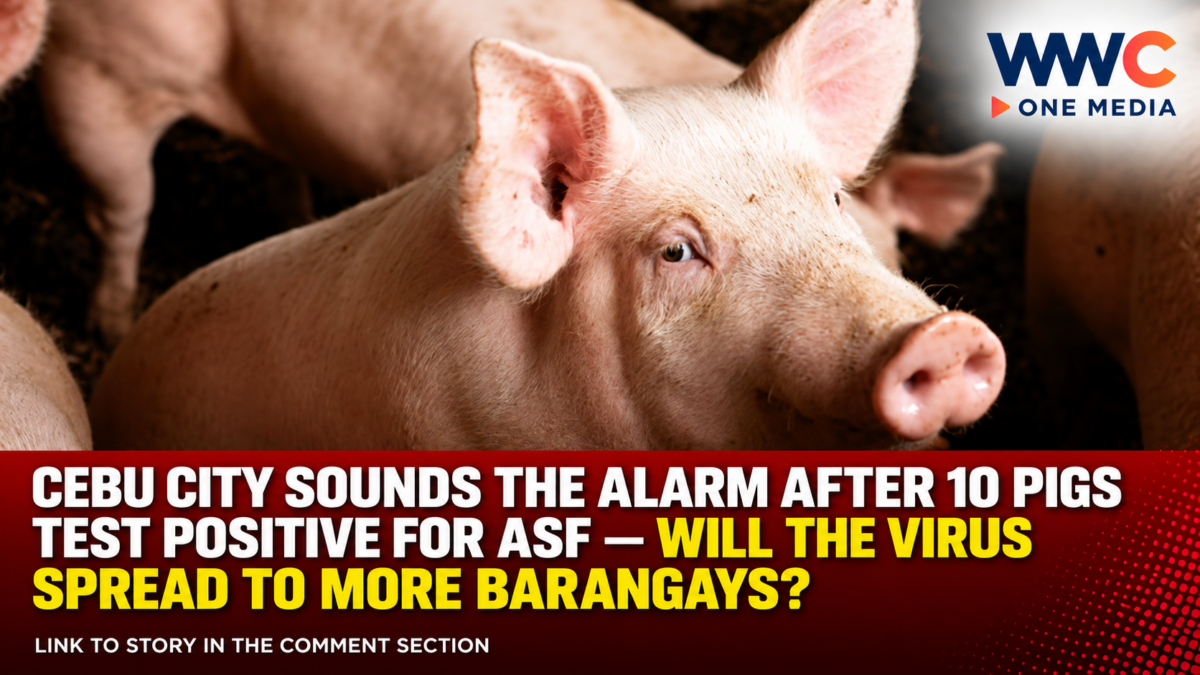
Cebu City authorities have intensified efforts to contain African swine fever after 10 hogs in the Sapangdaku area tested positive for the virus, prompting stricter movement controls and the deployment of police personnel at a checkpoint.
Dr. Jessica Maribojoc, officer-in-charge of the Cebu City Department of Veterinary Medicine and Fisheries (DVMF), said the checkpoint was established to prevent potentially infected hogs from being transported to other barangays. All 10 hogs initially confirmed positive had already died, while additional samples collected on October 19 were still awaiting results at the time of the October 21–22 reports.
Checkpoint targets hog movement as city traces possible exposure
The city veterinary office is tracing hog raisers within a 500-meter radius of the affected area to determine whether other animals may have been exposed. Some nearby raisers had already submitted pigs for testing, according to reports.
Authorities are also coordinating with police to enforce restrictions on the movement of live hogs and help prevent the disease from spreading to nearby communities.
Hogs transported from neighboring Barangay Toong must undergo veterinary testing and secure documentation confirming negative ASF results before they can enter Sapangdaku. Animals without the required clearance will not be allowed to proceed.
Could fiesta gatherings have contributed to the outbreak?
Veterinary officials are investigating the possible movement of pork products between neighboring communities during fiestas held in August and September.
According to SunStar Cebu, authorities are considering whether residents attending celebrations in Barangays Toong and Sapangdaku may have inadvertently carried contaminated pork products between the communities.
However, officials have emphasized that this remains a possible explanation, not a confirmed source of infection. The investigation must establish how the virus reached the affected hogs.
Why officials are watching nearby mountain barangays
The situation has drawn attention to other mountain communities, including Cambinocot and Lusaran, where backyard hog raising is common. Veterinary officials have warned that a sudden increase in pig deaths in these areas would be a reason for greater concern.
Maribojoc has said the situation was not yet alarming because authorities were controlling hog movement. However, the pending laboratory results and continuing surveillance remain important to determine whether the infection has spread beyond the initially affected animals.
Cebu City previously reported ASF cases in Barangay Quiot in August and Barangay Toong in September. The new detections represent another challenge for local veterinary teams working to keep the virus contained.
Ginatilan outbreak declared contained, but surveillance continues
In a separate development, Cebu provincial veterinary officials reported that all 60 blood samples collected from pigs in 12 initially unaffected barangays of Ginatilan tested negative for ASF.
Provincial Veterinarian Mary Rose Vincoy said the results supported the declaration that the outbreak in the municipality had been contained. The initial cases had been detected in Barangays Cagsing and Calabawan in September.
The negative results are encouraging, but continued monitoring and preventive measures remain important to guard against further transmission.
Cebu’s hog industry faces continued pressure
The outbreak also highlights the importance of protecting Cebu’s livestock sector, which SunStar Cebu reported is valued at approximately ₱20 billion.
Cebu Governor Pamela Baricuatro has maintained restrictions on the entry of live hogs and pork products from Negros and other ASF-affected areas under provincial executive orders. Officials have also discussed strengthening local pig production, including supply for Cebu’s lechon industry.
The challenge is to protect local hog raisers and the pork supply while ensuring that animal movement and meat distribution comply with veterinary safeguards.
What hog raisers should do
Veterinary officials are urging backyard raisers to strengthen farm biosecurity and report unusual illness or sudden pig deaths immediately.
Recommended precautions include:
- Install disinfectant footbaths at entrances to pigpens.
- Change clothes and footwear before entering animal areas.
- Keep feeds covered and prevent possible contamination.
- Follow official testing and livestock movement restrictions.
- Coordinate with local veterinary personnel before transporting hogs.
African swine fever is highly contagious among pigs and can cause severe losses in affected herds. ASF does not infect humans, but outbreaks can seriously damage farmers’ livelihoods and disrupt the livestock supply chain.
What happens next?
The next important development is the outcome of additional laboratory testing and the findings of the city’s contact-tracing and surveillance efforts. Those results will help officials determine whether the cases remain limited or require broader containment measures.
For now, the checkpoint is intended to prevent potentially infected hogs from moving into other communities while veterinary authorities continue investigating the outbreak.
The key question is whether the additional tests will confirm that the infection has been contained—or reveal a wider problem for Cebu City’s hog-raising communities.










