SINGAPORE, October 23, 2026 — Singapore’s legal profession is entering a pivotal leadership transition after a fiercely contested Law Society of Singapore (LawSoc) election brought prominent lawyers Jimmy Yim and Samuel Chacko onto its 2027 council, following months of controversy involving workplace bullying allegations, governance concerns and questions over the independence of the Bar.
The October 22 vote came at a particularly sensitive moment for the professional body, with police investigations still ongoing into matters raised by an internal audit committee report.
Seven of the society’s 15 elected council seats were contested, and the results delivered a mix of returning representatives and new members.
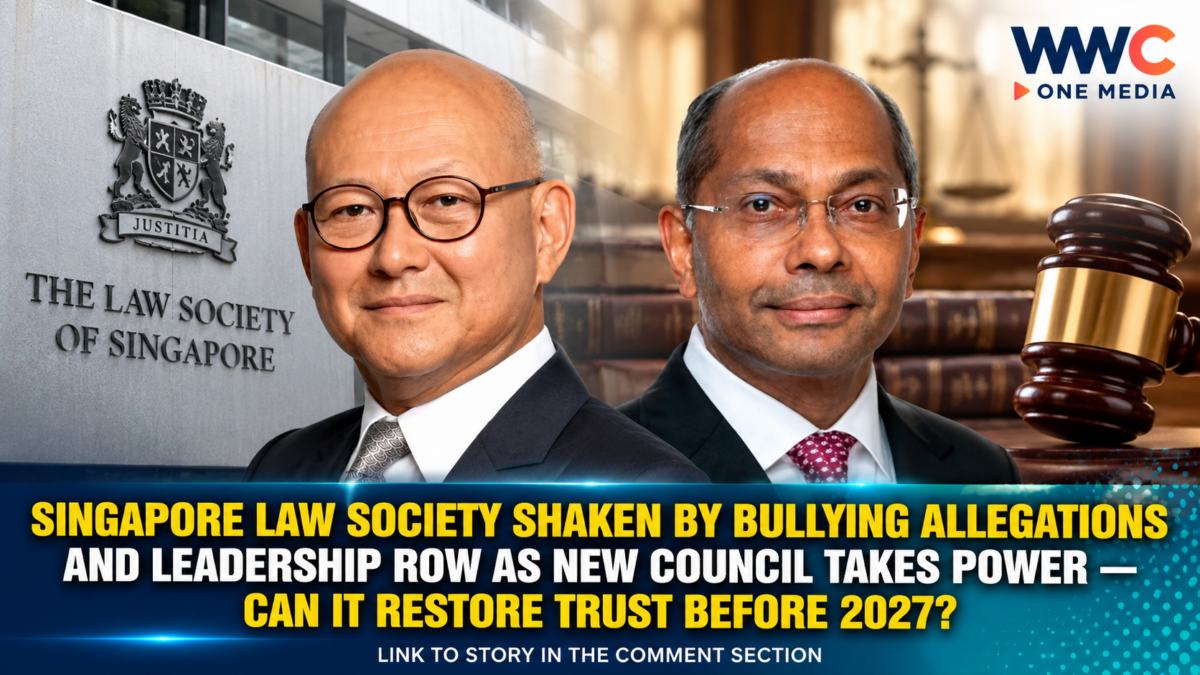
Senior Counsel Jimmy Yim, chairman of Drew & Napier, emerged as the leading candidate in the senior category with 1,296 votes, marking his return to the council after approximately two decades.
Samuel Chacko, a director at Legis Point and former LawSoc vice-president, also secured re-election with 976 votes.
But neither of the two prominent candidate groups achieved a clean sweep, highlighting a competitive election in which lawyers backed a range of candidates rather than overwhelmingly supporting a single slate.
Seven Seats Decided in Closely Watched Election
The four successful senior-category candidates were Jimmy Yim, Samuel Chacko, Remy Choo Zheng Xi of RCLT Law and Debby Lim, a senior partner at Dentons Rodyk.
Choo received 849 votes, while Lim secured 719.
Thaddaeus Aaron Tan won the sole contested middle-category seat, while Foo Hsien Weng and Siddartha Bodi claimed the two junior-category positions.
Four individuals elected in the October 22 vote were not serving on the outgoing council: Yim, Lim, Foo and Bodi. Yim and Lim, however, had served on the council in earlier years.
The results mean the council will enter 2027 with both experienced leadership figures and representatives elected during a period of unusually intense scrutiny.
Workplace Bullying Allegations and Governance Concerns Loom Over LawSoc
The election unfolded against the backdrop of a contentious internal investigation into LawSoc’s workplace practices and governance.
According to The Straits Times, the society’s audit committee report examined matters allegedly occurring between 2022 and 2025, including inappropriate workplace conduct, shortcomings in grievance and whistleblowing procedures, weaknesses in oversight and concerns involving administrative and financial controls.
Law Minister Edwin Tong has described the findings as revealing significant failings in the organisation’s leadership, culture and governance.
However, the allegations and potential offences remain subject to investigation. The publication of an audit committee’s findings does not itself establish individual criminal liability.
The report also became a central issue in the election campaign.
In August, Yim submitted a petition supported by more than 100 LawSoc members calling for the full audit report to be made available to members.
The society subsequently withheld further circulation of the report following police instructions as investigations continued.
The controversy has raised important questions about transparency, accountability and how the professional organisation responds to complaints from its own employees and members.
Disputed Presidency Raises Questions About Independence of Singapore’s Bar
The organisation’s internal difficulties extended beyond workplace allegations.
In November 2025, Dinesh Singh Dhillon was selected by the council to serve as LawSoc president for 2026 after defeating Samuel Chacko in an internal leadership contest.
Dhillon’s appointment attracted objections from some lawyers because he had entered the council through appointment by the Law Minister, rather than through election by practising lawyers.
The dispute prompted concerns about the perceived independence of the professional body.
At an extraordinary general meeting in December 2025, members approved a resolution supporting the principle that the society’s president should come from its elected council representatives.
Dhillon subsequently stepped aside from the presidency, and Senior Counsel Tan Cheng Han assumed the position for 2026, with Dhillon serving as a vice-president.
The episode placed the relationship between elected professional representation and government-appointed council members under closer scrutiny.
Rival Campaigns Highlight Demands for Reform
The 2027 council election stood out for its organised campaigning.
Yim ran alongside Mohamed Ibrahim Mohamed Yakub and Kay Pang, with the group visiting more than 100 law firms and establishing an election website to promote its platform.
Their campaign emphasised improving the Law Society’s performance, representation and accountability.
Chacko separately campaigned alongside four other lawyers, including Debby Lim.
His priorities included professional training, fair recovery of legal-service costs and protecting the independence of the Bar.
Although both Yim and Chacko won their individual contests, several candidates associated with their respective groups were unsuccessful.
That mixed result suggests the incoming council will need to build support across different sections of the profession rather than rely on the mandate of a single campaign group.
Why the Election Matters Beyond Singapore’s Lawyers
The Law Society is Singapore’s statutory representative body for the legal profession, with approximately 6,500 members.
Its council oversees the society’s affairs and plays an important role in professional representation, legal-sector policy discussions and institutional governance.
Under the Legal Profession Act, the Law Minister may appoint up to three council members in addition to the elected representatives. The council may also co-opt additional members.
The distinction between elected and appointed representatives has become especially significant following the earlier dispute over the presidency.
The society’s governance challenges therefore have implications beyond an internal organisational contest.
Public confidence in the legal profession depends in part on the institutions representing lawyers demonstrating transparency, professional independence and credible accountability.
What Happens Next? Leadership Decision Looms Before January 2027
With the council election concluded, attention now turns to the selection of the organisation’s office bearers.
The council must choose a president, two vice-presidents and a treasurer by January 1, 2027.
The incoming leadership will inherit unresolved questions surrounding the internal investigation, employee welfare, governance reform and the institution’s professional independence.
The election has given members an opportunity to reshape their representation, but the final impact will depend on the new council’s actions.
For Singapore’s legal profession, the biggest question is no longer simply who won the election. It is whether the next leadership team can rebuild confidence in an institution still confronting serious internal challenges.
The council’s leadership selection and its response to the outstanding governance issues will be closely watched as 2027 approaches.