KYIV, UKRAINE — October 23, 2026 — Hopes for a breakthrough in the Russia–Ukraine war are facing another serious test after Russian missiles struck Ukrainian cities shortly after high-level talks between Russian President Vladimir Putin and US special envoy Steve Witkoff.
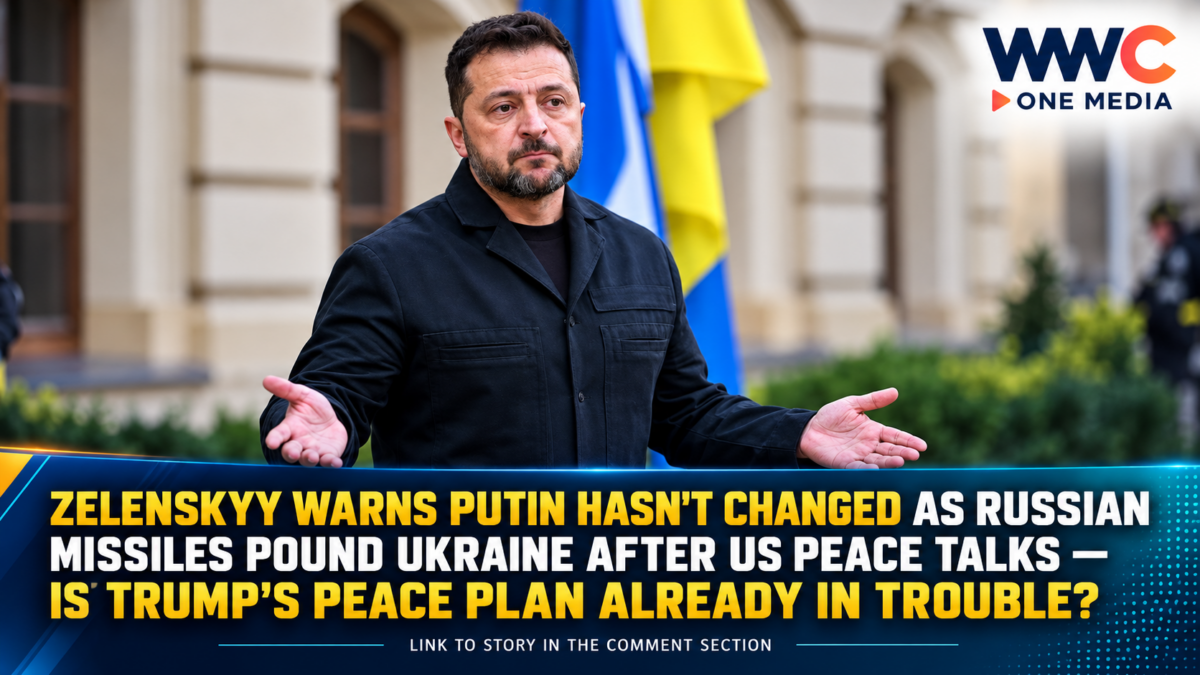
Ukrainian President Volodymyr Zelenskyy accused Moscow of demonstrating that its position on the conflict remains unchanged, despite renewed diplomatic efforts led by US President Donald Trump’s administration.
The timing has raised a troubling question: Can Washington negotiate an end to Europe’s deadliest conflict in generations while Russian and Ukrainian forces continue launching devastating attacks?
Deadly Attacks Rock Ukraine After Putin–Witkoff Meeting
On October 22, Russian forces carried out missile and drone attacks across approximately 12 Ukrainian regions, including the capital, Kyiv.
The strikes killed at least two people and injured more than 30 others in Kyiv, according to initial reports from Ukrainian authorities. Residential buildings, energy facilities, commercial establishments and a monastery sustained damage.
In the eastern city of Lozova, an attack on a crowded market killed two women, aged 50 and 60, and wounded several other people.
Ukrainian authorities reported damage to civilian areas as air raid sirens sounded overnight and into the following day.
The attacks came shortly after Witkoff concluded hours of discussions with Putin in Saint Petersburg about possible renewed negotiations to end the war.
For Zelenskyy, the sequence of events reinforced his argument that diplomatic statements from Moscow have yet to translate into meaningful restraint on the battlefield.
Zelenskyy Says Kremlin’s Position Remains Unchanged
Zelenskyy said Russia’s latest attacks began almost immediately after the diplomatic discussions.
He argued that the bombardment showed Moscow had not significantly altered its approach to the conflict, despite expressing a willingness to return to negotiations.
The Ukrainian leader also questioned favorable descriptions of Putin made by Trump’s envoy following the meeting.
Kyiv has repeatedly warned that negotiations without enforceable security guarantees could allow Russia to regroup militarily and launch further attacks.
The latest bombardment has intensified those concerns as Ukrainian cities prepare for another winter of possible disruptions to electricity, heating and essential infrastructure.
Trump Sees Progress, but Major Peace Obstacles Remain
Despite the continuing violence, President Trump has expressed optimism about the possibility of reaching a negotiated settlement.
Washington has sought to bring Russia and Ukraine back to trilateral talks after earlier rounds failed to produce a comprehensive agreement.
The Kremlin has indicated that it could resume discussions next month, although Russian officials have criticized proposals developed by Ukraine and its European partners.
Putin has signaled that negotiations should concentrate on the security architecture of a final settlement rather than a temporary ceasefire.
The central disagreements remain formidable.
Russia wants Ukraine to withdraw from remaining Ukrainian-controlled territory in the eastern Donetsk region and accept major restrictions affecting its military and security relationships.
Ukraine rejects those conditions, arguing that accepting them would weaken its sovereignty and expose the country to future Russian aggression.
These incompatible positions have repeatedly prevented diplomatic momentum from producing a lasting agreement.
Ukraine Demands More Air Defenses as Winter Approaches
The bombardment has renewed Kyiv’s urgent appeals for advanced Western air-defense systems, particularly American-made Patriot interceptors capable of countering ballistic missile threats.
Zelenskyy warned that slower deliveries of defensive equipment could leave Ukrainian cities increasingly vulnerable.
Meanwhile, NATO has said Ukraine may purchase weapons through the alliance’s central procurement agency on a case-by-case basis.
The approaching winter adds another layer of urgency.
Attacks against electricity infrastructure can disrupt heating, water supplies, hospitals and other essential services during freezing conditions.
Ukrainian officials fear that further strikes could place substantial pressure on civilians already enduring years of warfare.
Drone Warfare Escalates on Both Sides
The latest developments also highlight how the war has expanded beyond traditional battlefield engagements.
While Russia launched missiles toward Ukrainian cities, Ukraine carried out a large-scale drone operation targeting Russian territory.
Russian authorities reported hundreds of incoming drones and claimed that air defenses intercepted large numbers of them, including drones directed toward the Moscow region.
Two people were reportedly injured in the Moscow region.
The competing strikes underline the increasingly complex challenge facing peace negotiators: both sides continue military operations even while discussing a possible diplomatic framework.
Claims about intercepted drones and battlefield damage can be difficult to independently verify during active operations.
Civilian Safety Becomes an Increasing Concern
Ukraine has also accused Russia of using cluster munitions in attacks affecting civilian areas.
Cluster munitions scatter smaller explosive devices over a wide area, creating risks of indiscriminate harm, particularly in populated locations.
Human Rights Watch has previously raised concerns about the increased use of such weapons and warned that certain deployments could constitute war crimes.
Responsibility for individual attacks and potential violations requires careful investigation.
In eastern Ukraine, officials have ordered families with children to evacuate Kramatorsk and neighboring Sloviansk amid growing threats to civilian safety.
These developments illustrate the continuing human cost of a conflict that began with Russia’s full-scale invasion in February 2022.
Could US–Russia Diplomacy Reshape Ukraine’s Future?
The renewed talks come amid debate about Washington’s approach to Moscow.
Recent US policy moves involving Russian sanctions and diesel trade have drawn concern from Ukrainian and European observers who fear that reduced economic pressure could weaken Kyiv’s negotiating position.
Questions have also emerged about possible high-level discussions involving Trump, Putin and Chinese President Xi Jinping.
For European governments, the concern is not merely whether a ceasefire can be reached, but whether any settlement would preserve Ukraine’s ability to defend itself.
A deal negotiated without Ukrainian participation or credible security guarantees could prove politically difficult to implement and potentially unstable.
Witkoff has characterized his talks with Putin as constructive while acknowledging that substantial diplomatic work remains.
What Happens Next?
Three developments could determine whether peace negotiations gain momentum or face another setback.
First, renewed trilateral negotiations: Russia, Ukraine and the United States must determine whether they can agree on an agenda addressing territory, security guarantees and the conditions for ending hostilities.
Second, military developments: Continued missile strikes, drone attacks and fighting in eastern Ukraine could erode trust and complicate the diplomatic process.
Third, Western support: Decisions on air-defense deliveries, economic sanctions and security commitments may influence the negotiating positions of both Kyiv and Moscow.
For Zelenskyy, the latest attacks have reinforced his argument that Russia’s intentions should be judged by its military actions, not diplomatic messaging alone.
For Trump, the challenge is converting renewed negotiations into an agreement both parties can accept.
And for millions of Ukrainians enduring another season of uncertainty, the most important question remains unanswered:
Will the next round of diplomacy finally bring a path toward peace — or will the fighting continue while world leaders negotiate?