KUALA LUMPUR, MALAYSIA — What began as a celebration of Indonesia’s football success has become a public relations controversy for Indonesian personal-care brand Kahf.
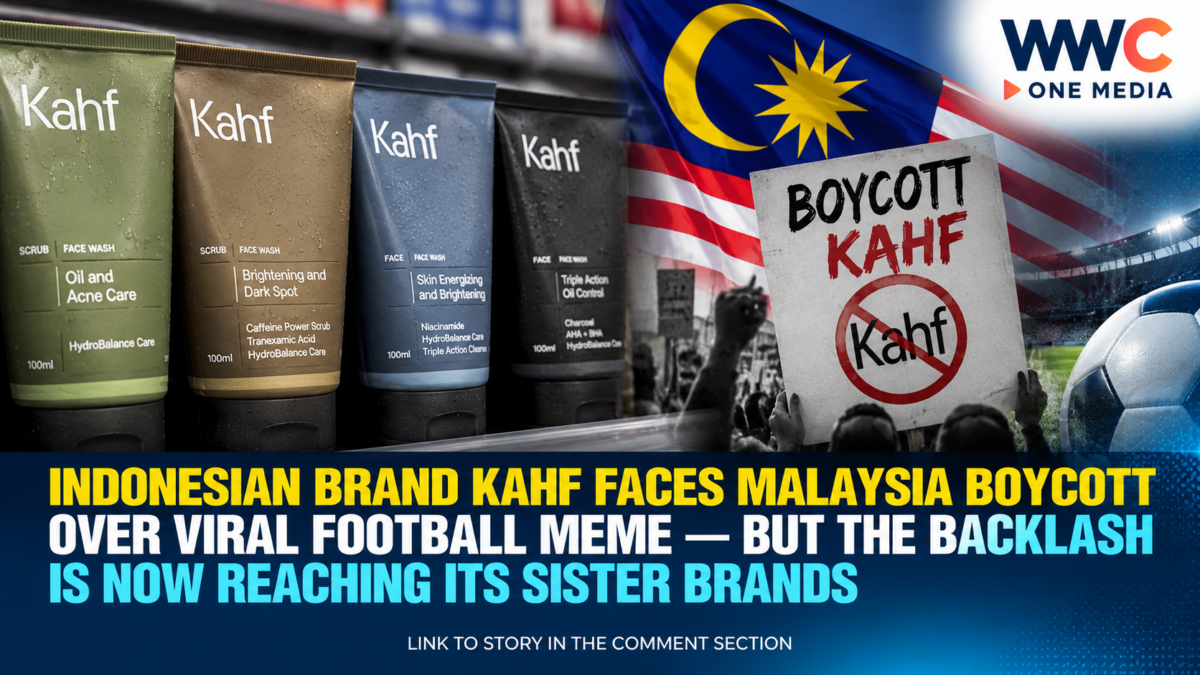
The company has faced boycott calls from Malaysian consumers after publishing a football-themed meme that appeared to place Indonesia above its Southeast Asian neighbours.
The post followed Indonesia’s victory over Thailand in the inaugural FIFA ASEAN Cup final on October 5, 2026, at Jakarta’s Gelora Bung Karno Stadium.
Kahf shared an image on Threads bearing the Indonesian phrase hati-hati beda level, meaning roughly be careful, different levels.
The visual placed Indonesia’s flag above those of other countries, including Malaysia, Singapore and Thailand.
Although apparently intended as playful football rivalry, the post was interpreted by some Malaysian consumers as belittling their country.
Anger spread across social media, leading to calls for a boycott under the hashtag #BoikotKahf.
Kahf subsequently removed the post and apologised. But the controversy did not immediately subside.
Malaysian Consumers Begin Discarding Kahf Products
The backlash quickly moved beyond criticism of the original meme.
According to Channel NewsAsia’s October 22 report, consumers shared videos on Threads, Facebook and TikTok showing Kahf products being thrown into rubbish bins.
Others encouraged shoppers to stop purchasing the company’s skincare, fragrance and grooming products.
Kahf is sold through Malaysian beauty and health retailers as well as online shopping platforms, giving the dispute commercial relevance beyond the company’s Indonesian home market.
Some boycott calls also extended to Wardah, a sister brand under parent company ParagonCorp.
Wardah is known for its halal-certified cosmetics and skincare products.
However, an important distinction remains: viral videos and boycott calls demonstrate consumer anger, but they do not establish the total financial damage to Kahf or ParagonCorp.
No independently verified sales-loss figure for the Kahf controversy was provided in the reporting reviewed.
Kahf Issues Public Apology, Promises to Rebuild Trust
On October 7, two days after the controversial post appeared, Kahf published an apology on Threads.
The company acknowledged that the content did not reflect its commitment to mutual respect between Indonesia, Malaysia and other markets.
Kahf accepted responsibility for the mistake and indicated that rebuilding customer confidence would require meaningful action.
The company also emphasised the longstanding cultural and social relationship between Malaysian and Indonesian communities.
But some consumers remained dissatisfied.
Malaysian social media users questioned whether the apology adequately addressed the perceived disrespect.
One longtime Kahf customer shared a video discarding products after saying the incident had damaged his trust in the brand.
The reaction shows how quickly a company can lose consumer goodwill when its marketing becomes entangled with national identity.
CNA
+1
Key Events in the Kahf Boycott Controversy
October 5, 2026 — Indonesia wins the ASEAN Cup
Indonesia defeats Thailand on penalties. Kahf publishes the football-themed meme.
October 7 — Kahf apologises
The brand removes the post and acknowledges criticism from consumers.
October 9–12 — Boycott calls gain attention
Malaysian news outlets report consumer anger, #BoikotKahf and calls to avoid the brand.
October 22 — Wider impact examined
CNA reports on the implications for ParagonCorp, brand ambassadors and companies operating across ASEAN.
Celebrity Ambassadors Respond Differently
The controversy also put Kahf’s Malaysian brand ambassadors under public scrutiny.
Malaysian Muay Thai fighter Johan Ghazali encouraged consumers to move forward after Kahf apologised.
His comments drew criticism from users who believed the dispute deserved a stronger response.
Actor and singer Alif Satar took a different approach.
While acknowledging the apology, he emphasised the need for tangible efforts to restore trust and encouraged mutual respect.
Their responses illustrate how corporate controversies can also affect athletes, entertainers and other public figures associated with a brand.
Ambassadors may have no role in creating a disputed campaign but still face expectations to respond because they represent the company publicly.
Why Indonesia–Malaysia Rivalry Made the Meme More Sensitive
Indonesia and Malaysia share deep cultural, linguistic and economic connections.
They also have a history of intense football rivalry, particularly when national teams compete in regional tournaments.
That rivalry is not inherently hostile. Sports competitions routinely inspire jokes, memes and competitive exchanges.
However, the same humour can provoke a different response when it comes from an official commercial account rather than an individual football supporter.
Kahf’s products are sold to consumers across Southeast Asia. Its marketing therefore reaches audiences who may interpret national comparisons differently.
The controversy unfolded during heightened regional tensions over transboundary haze, as fires in Indonesia affected air quality in neighbouring countries.
Malaysian political analyst Oh Ei Sun told CNA that such disputes can become more heated when other regional frustrations are already present.
The haze dispute and the football meme were separate issues, but their timing may have amplified the online argument.
Why a Single Social Media Post Can Affect an Entire Brand Portfolio
The situation raises a commercial concern for ParagonCorp.
Kahf is only one of the company’s consumer brands.
When some online users began calling for a boycott of Wardah as well, the controversy moved from the reputation of a single product line toward the wider parent company.
For regional businesses, this creates a challenge: different brands may serve different markets, but consumers can connect them through their common ownership.
That makes corporate reputation management increasingly important.
Even when the original disputed content concerns only one brand, another brand within the same group can become part of the public discussion.
Still, there is no verified evidence in the sources reviewed that all ParagonCorp brands have suffered widespread sales declines.
The calls to boycott sister brands are documented; the scale of any commercial impact remains uncertain.
Marketing Experts Warn Against Insult-Based Social Media Strategies
Brands increasingly use informal language, viral memes and competitive humour to appear relatable online.
Such tactics can attract attention and engagement.
However, communications specialists say they also carry reputational risks when the message targets national identity.
Benjamin Loh, a media and communications lecturer at Monash University Malaysia, told CNA that companies face greater scrutiny when they adopt the informal communication styles of ordinary internet users.
He warned that humour based on insulting others can alienate potential customers.
Meanwhile, Syed Mohammed Idid of the Public Relations Practitioners Society of Malaysia stressed the importance of cultural awareness for businesses expanding across national borders.
The broader marketing lesson is not that brands must avoid humour.
It is that a message welcomed by customers in one country may be viewed as offensive by customers in another.
Businesses operating across ASEAN must therefore assess campaigns through the perspectives of multiple audiences, not only their domestic supporters.
Could Kahf’s Boycott Cause Long-Term Financial Damage?
The long-term commercial consequences remain uncertain.
Sunway University economist Yeah Kim Leng told CNA that many consumer boycotts driven by social media controversy lose momentum over time, particularly when customers continue valuing a product’s quality and affordability.
But not all boycotts follow the same pattern. Campaigns connected to deeply held political or ethical concerns can have longer-lasting effects.
The Kahf controversy may therefore depend on how consumers respond to the company’s apology, its future marketing and its efforts to rebuild trust.
Indonesia’s Trade Minister Budi Santoso also downplayed the wider economic implications, saying the boycott calls had not affected bilateral trade relations between Indonesia and Malaysia.
Why This Matters for ASEAN Businesses and Philippine Brands
The controversy offers practical lessons for companies expanding from one Southeast Asian country into another.
A social media strategy that attracts attention domestically can create problems overseas if the message appears to ridicule another nationality.
For Philippine businesses entering regional markets, the same principle applies. Brand campaigns should account for local cultural sensitivities, especially when referencing national sports rivalries, political disputes or historical tensions.
The central lesson is that a viral post is not necessarily a successful marketing campaign.
The bottom line: Kahf has apologised for its football meme, but some Malaysian consumers continue calling for a boycott. The controversy has widened to include sister brands and celebrity ambassadors, although the actual financial impact remains unverified.