
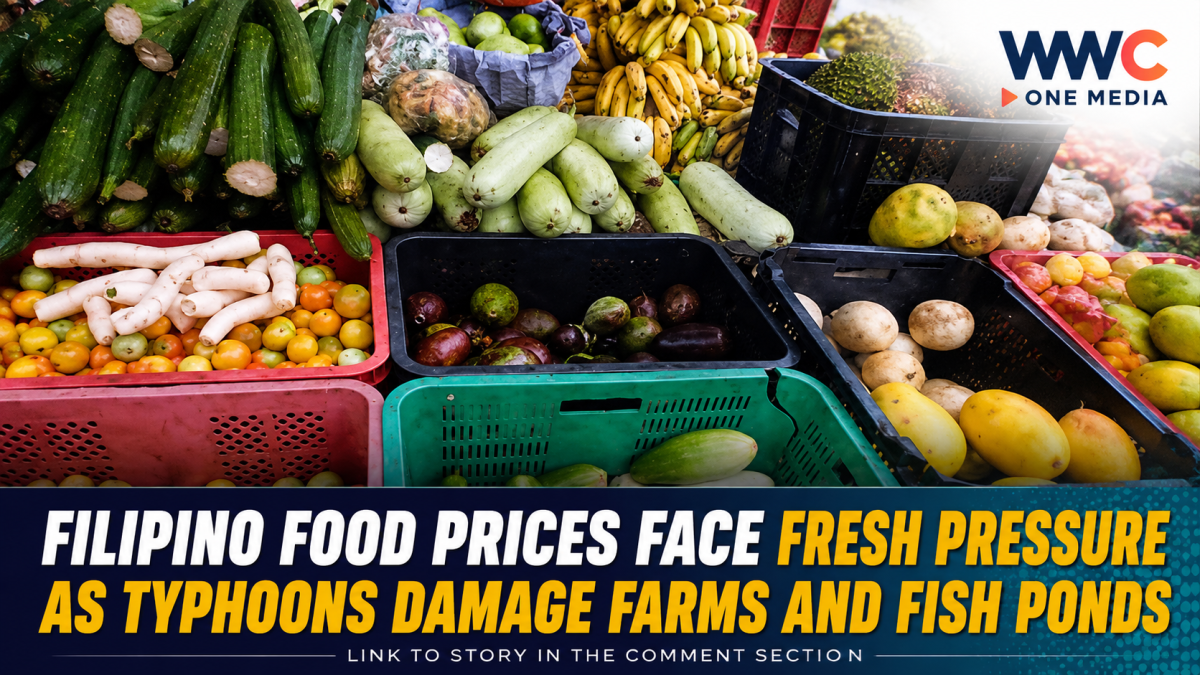
MANILA, Philippines — Filipino consumers could face temporary increases in the prices of vegetables and fish after recent typhoons and intensified southwest monsoon rains disrupted agricultural production, fishing activities and the movement of goods to markets.
The Department of Agriculture (DA) said Friday, September 4, that it is closely monitoring retail prices as flooding and continued rains threaten supplies of high-value crops and fishery products.
Agriculture Secretary Francisco Tiu Laurel Jr. warned that the immediate concern is not a nationwide shortage, but the possibility that weather-related disruptions could create temporary price pressures in commodities particularly vulnerable to flooding and supply interruptions.
“The bigger near-term concern is food inflation in high-value crops and fishery products,” Tiu Laurel said, citing damage to farms and fish ponds and disruptions in the flow of goods to markets.
Billions of pesos in agricultural losses
The warning comes as the country continues to assess the damage caused by recent weather disturbances.
According to the DA’s Disaster Risk Reduction and Management Operations Center, losses in high-value crops had reached 4,869 hectares across eight regions as of Thursday.
Those losses represented about 22,415 metric tons of production worth P1.03 billion.
The fisheries sector has also sustained substantial damage. Losses involving fisheries production, fishing boats and gear, tanks, fish-pond dikes and other facilities were estimated at P412.84 million, according to the DA figures reported by the Philippine News Agency.
Earlier assessments showed the overall agricultural damage from the enhanced southwest monsoon, or habagat, and recent tropical cyclones had already reached billions of pesos, with damage reported across areas including the Cordillera Administrative Region, Ilocos Region, Cagayan Valley, Central Luzon, CALABARZON, MIMAROPA, Bicol and Western Visayas.
For consumers, the concern is straightforward: when farms are flooded and fishing activity is disrupted, fewer products can reach public markets. Transportation problems can further increase the cost of getting food from producing areas to consumers.
Food inflation has actually eased—but the picture is uneven
The latest warning comes despite a notable improvement in the country’s overall food inflation picture.
The Philippine Statistics Authority reported that headline inflation slowed to 6.1% in August from 6.2% in July, while food inflation eased to 4.6% from 5.3%.
Vegetable prices provided some relief.
Inflation for vegetables, tubers, plantains, cooking bananas and pulses swung to a 3.4% decline in August, compared with an 8.4% increase in July, according to the DA’s assessment of the latest inflation data.
Fish inflation also slowed, falling to 6.6% from 7.8%.
But that does not mean food-price pressures have disappeared.
Rice inflation accelerated to 19.4% in August from 17.1% in July, highlighting how different food categories can move in very different directions even when overall inflation moderates.
Why the next few weeks matter
The latest developments highlight the fragile relationship between weather and food prices in the Philippines.
Vegetable production can be hit quickly by flooding, while rough seas and storms can prevent fishing boats from operating. Roads and logistics routes can also become difficult to use, slowing deliveries and increasing freight costs.
Tiu Laurel also pointed to higher fuel prices as another source of pressure because more expensive fuel raises transportation and freight costs.
The weaker peso and continuing habagat rains are also complicating the government’s efforts to stabilize food prices, he said.
The experience of previous storms shows how quickly supply disruptions can affect specific commodities. In 2025, for example, the DA reported that successive weather disturbances pushed vegetable and fish prices higher after flooding affected vegetable farms and heavy rains disrupted fishing activities.
Rice supply remains a different story
Despite the damage to agriculture, the DA said the country currently has sufficient rice stocks.
Tiu Laurel attributed the supply situation to harvests and the front-loading of imports ahead of the expected effects of El Niño.
The rice sector nevertheless recorded the largest reported agricultural losses so far, with about 59,872 metric tons of losses valued at P1.90 billion.
The DA said that volume represents only about 0.30% of the country’s annual rice production target of 20.29 million metric tons, suggesting that the weather-related losses have not, at this stage, created a threat to national rice supply.
That distinction is important for consumers: agricultural damage does not automatically translate into a nationwide shortage. The impact depends on how much production was lost, where it was lost, how quickly farms and fisheries recover, and whether supplies from unaffected areas can compensate.
What consumers should watch next
The DA’s price-monitoring system is tracking retail movements in major food commodities, with daily and weekly price data available for 2026.
For consumers, the most important warning signs over the coming weeks will be sustained increases in vegetables and fish rather than isolated price movements immediately following bad weather.
The government is also expected to continue interventions aimed at helping affected farmers and fishers recover and keeping agricultural products moving toward markets.
For now, the latest data offer a mixed picture: overall food inflation has eased, vegetable and fish inflation have slowed, and rice supplies remain adequate—but fresh weather damage could reverse some of that progress in vulnerable food categories.




Leave a Reply