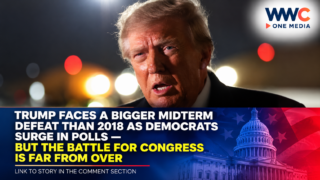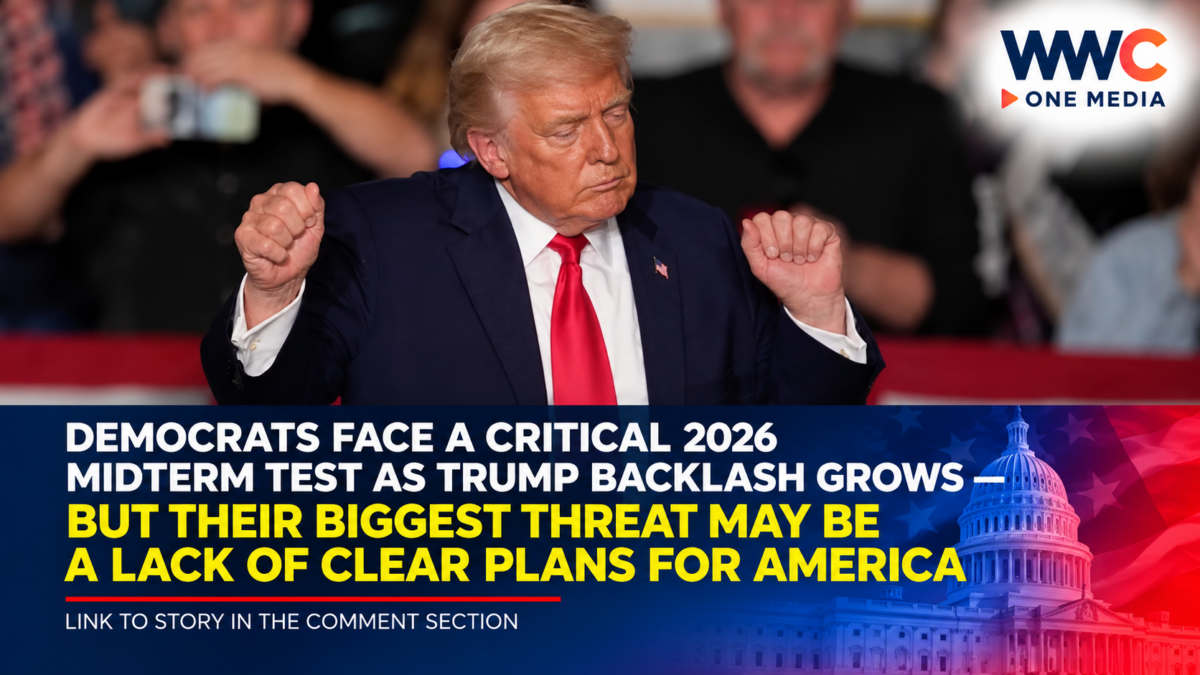
WASHINGTON, UNITED STATES — October 14, 2026 — The Democratic Party is approaching a potentially decisive midterm election with growing opportunities to challenge President Donald Trump’s Republican majority in Congress, but a central question is emerging in the final weeks of the campaign: Can Democrats offer Americans a convincing plan for governing, rather than relying mainly on opposition to Trump?
With Election Day scheduled for November 3, Democrats are seeking to capitalize on dissatisfaction over the cost of living, healthcare expenses, tariffs and the administration’s handling of the conflict involving Iran.
Yet political analysts and commentators are increasingly questioning whether the party has communicated a sufficiently detailed and unified policy agenda.
A Bloomberg Opinion column published October 14 frames the challenge as a choice between substantive plans and political drama.
The debate comes as House Democratic leader Hakeem Jeffries outlines priorities for the first 100 days if his party regains the majority.
The developing agenda includes efforts to reduce healthcare costs, address tariffs, expand congressional oversight and respond to Americans’ financial concerns.
But Democrats also face disagreements over the direction of the party, the role of progressive lawmakers and how aggressively Congress should investigate the Trump administration.
The bigger question is whether the party can turn electoral momentum into a practical governing program that satisfies voters looking for answers beyond partisan confrontation.
Democrats See Opportunity as Republicans Face a Difficult Election
The political environment has become increasingly challenging for Republicans.
Recent election reporting suggests dissatisfaction over inflation, energy prices and foreign policy is affecting some voters who previously supported Trump.
Reuters reported October 14 that working-class voters in Ohio are reconsidering aspects of their support for the president and the Republican Party.
Some expressed frustration over economic conditions, job security and the continuing conflict involving Iran.
However, the interviews also showed that many voters remain strongly supportive of Republican positions on immigration, social issues and other priorities.
These findings illustrate the complexity of the election.
Dissatisfaction with the president does not automatically translate into support for Democratic candidates.
Some voters may switch parties, while others may abstain or ultimately remain loyal to Republicans.
For Democrats, attracting voters who are disappointed with Trump but unconvinced by the opposition could be particularly important.
House Democrats Prepare a First 100-Day Agenda
The Democratic Party is not entering the election without policy proposals.
According to an Associated Press report published October 14, House Democrats are preparing an ambitious legislative program for their first 100 days if they regain control of the chamber.
Jeffries has identified several priorities involving healthcare affordability, trade policy and oversight of the executive branch.
Among the proposed actions are efforts to restore Affordable Care Act tax credits, reverse Republican-backed Medicaid reductions and challenge tariffs introduced during Trump’s presidency.
Democrats also intend to pursue congressional votes related to the Iran conflict.
The agenda reflects a strategy of combining immediate economic concerns with scrutiny of the administration.
However, the proposals remain campaign and legislative priorities, not measures that have already become law.
Even if Democrats win control of the House, their ability to enact legislation will depend on the Senate, presidential approval and the specific balance of power after the election.
That distinction is important because controlling one chamber does not provide unrestricted authority to reverse existing federal policies.
Affordability Becomes the Party’s Main Economic Message
One of the strongest themes emerging from Democratic campaign activity is affordability.
Healthcare, housing, groceries, energy and borrowing costs are central concerns for many American households.
Democratic leaders argue that the federal government should place greater emphasis on reducing financial pressure on working families.
The party has criticized Trump’s tariffs, arguing that import duties can increase costs for American businesses and consumers.
Republicans dispute that assessment and maintain that tariffs can protect domestic industries, strengthen negotiating leverage and encourage investment in American manufacturing.
The economic effects vary depending on the products involved, market conditions and how businesses respond to the duties.
Democrats are also emphasizing healthcare costs.
Their proposal to restore Affordable Care Act tax credits is intended to reduce insurance premiums for eligible households.
However, extending subsidies would also have federal budget implications that lawmakers would need to address.
The challenge is developing proposals that voters find credible while explaining how they would be financed and implemented.
Healthcare Could Become a Defining Midterm Issue
Healthcare is emerging as a particularly important policy battleground.
Democrats have criticized Republican changes to Medicaid and the expiration or reduction of federal health insurance assistance.
They argue that these developments could increase costs or reduce access for vulnerable households.
Republicans defend their approach as part of a broader effort to control federal spending, reduce improper payments and improve the sustainability of government programs.
The disagreement involves both financial priorities and the role of government in healthcare.
For voters, however, the immediate questions are often more practical.
How much will health insurance cost?
Will existing coverage remain available?
Can families afford medical treatment and prescription drugs?
A clear legislative agenda would need to address those concerns with specific proposals rather than relying exclusively on criticism of the opposing party.
Healthcare could therefore provide Democrats with an opportunity to demonstrate what their congressional majority would actually pursue.
Tariffs and the Iran Conflict Complicate the Economic Debate
Trade and foreign policy are also shaping the midterm campaign.
Trump’s administration has used tariffs as a central instrument of economic policy.
Supporters argue that the measures strengthen American manufacturing and create leverage in negotiations with foreign governments.
Critics warn that tariffs may raise input costs, increase consumer prices and expose businesses to retaliatory measures.
At the same time, the conflict involving Iran has contributed to uncertainty in international energy markets.
Higher oil prices can affect gasoline, transportation and industrial production costs.
Democrats are seeking to connect those pressures to their broader argument about affordability and federal policy priorities.
But opposition to tariffs or military operations is not necessarily sufficient to explain what an alternative administration or congressional majority would do.
Voters may want to know which tariffs would be changed, what trade arrangements would replace them and how national security interests would be protected.
The same challenge applies to foreign policy.
Criticizing the conduct of a conflict is different from presenting a workable approach to diplomacy, defense and regional stability.
Congressional Investigations Could Create a Political Dilemma
If Democrats regain control of the House, they would acquire significant oversight powers.
Committee leaders could initiate investigations, request documents and hold hearings examining federal agencies and administration decisions.
Democratic leaders have indicated that corruption allegations and questions involving executive accountability would become important oversight priorities.
Supporters argue that such investigations are a necessary constitutional responsibility of Congress.
They contend that lawmakers should examine whether public officials have acted lawfully and whether government resources have been used appropriately.
Republicans, however, argue that extensive investigations could become politically motivated and distract Congress from legislation affecting ordinary Americans.
This creates a strategic dilemma for Democrats.
Oversight can play an important role in accountability, but prolonged partisan disputes may frustrate voters looking for progress on everyday economic problems.
The question is not whether Congress should investigate legitimate concerns.
It is how lawmakers balance investigations with their responsibilities to legislate, review spending and address public priorities.
Bloomberg Opinion Raises the Question of Substance Versus Drama
The Bloomberg Opinion column’s central theme reflects a broader debate about the Democratic Party’s political identity.
Opposition parties often benefit when voters become dissatisfied with a sitting president.
But winning an election and maintaining a governing coalition involve different challenges.
A party can successfully criticize an administration without establishing agreement on what should replace its policies.
For Democrats, those disagreements involve healthcare, taxes, regulation, immigration, climate policy and the scope of federal spending.
The party includes centrists representing competitive districts and progressives seeking more extensive economic and social reforms.
Both groups share an interest in challenging Republican control.
However, they may disagree over which proposals should receive priority and how ambitious those policies should be.
The risk is that internal disputes could make it harder to communicate a coherent governing program.
On the other hand, ideological diversity can also produce compromise and policy innovation when lawmakers identify areas of agreement.
The challenge is translating broad political goals into specific decisions voters can evaluate.
Jeffries Faces the Challenge of Uniting Different Democratic Factions
Hakeem Jeffries would be positioned to become House speaker if Democrats win enough seats.
But leading the chamber could require managing competing expectations within his own party.
Moderate Democrats may prioritize policies that appeal to suburban voters, independents and fiscally cautious constituents.
Progressive lawmakers may push for more sweeping changes to healthcare, labor policy, taxation and economic regulation.
According to the Associated Press, Jeffries has established bipartisan working groups addressing issues including housing, healthcare and utilities.
These efforts are intended to develop legislative proposals that can attract broader support.
However, the effectiveness of those groups will depend on whether they produce workable plans and whether congressional leaders can secure the votes needed to advance them.
A narrow Democratic majority could increase the influence of individual lawmakers and make internal disagreements more consequential.
Republicans have pointed to the party’s ideological differences as evidence that a Democratic House majority could struggle to govern.
Democrats counter that they can unite around affordability and accountability despite disagreements over particular policies.
Republicans Present a Competing Governing Vision
The election is not simply a referendum on Democratic strategy.
Republicans are defending their record and presenting their own priorities for the next Congress.
The party emphasizes lower taxes, tighter immigration enforcement, reduced regulation and policies intended to encourage domestic investment.
Republican leaders argue that limiting government spending and supporting businesses can help strengthen economic growth.
They also warn that Democratic proposals could increase federal expenditure, expand regulation and raise taxes.
Democrats dispute those claims and argue that Republican fiscal choices have shifted costs toward ordinary households.
These competing arguments give voters different approaches to economic policy.
The challenge for both parties is demonstrating how their proposals would affect household finances, employment, healthcare and public services.
Neither party’s promises should be treated as guaranteed outcomes.
Their feasibility depends on the economic environment, available funding and the legislative process.
Campaign Spending Shows How Competitive the Election Has Become
The struggle for control of Congress is intensifying as political organizations redirect advertising and campaign resources.
The Associated Press reported October 14 that Republican-aligned groups were shifting funds away from some highly competitive House districts.
The Congressional Leadership Fund has adjusted its strategy in states including Iowa, New Jersey, Ohio and Michigan.
Democratic organizations are simultaneously seeking to expand the number of competitive races.
The Democratic Congressional Campaign Committee is pursuing additional fundraising to support candidates in districts that previously appeared less favorable.
The changes indicate that party strategists are responding to new polling, fundraising and voter-turnout assessments.
However, campaign spending decisions should not be mistaken for official election forecasts.
Organizations may redirect resources for numerous reasons, including changing candidate performance and the cost of advertising in different markets.
The final results will depend on actual votes rather than campaign spending alone.
Why Winning the House Would Not Guarantee Democratic Policy Victories
Control of the House would give Democrats important powers, but it would not automatically allow them to implement their entire agenda.
The Senate must generally approve legislation before it reaches the president.
Trump would also retain the authority to veto bills unless Congress could assemble the constitutionally required supermajorities to override him.
This means a Democratic House majority could block or amend some Republican proposals while struggling to enact its own priorities.
The party might achieve greater influence through budget negotiations, committee investigations and agreements with moderate Republicans.
But sweeping policy changes would be difficult without broader political cooperation.
The outcome of Senate elections will therefore matter considerably.
A divided Congress could produce compromise in some areas and legislative deadlock in others.
For voters, understanding these limits is essential when evaluating campaign promises.
What This Means for the 2028 Presidential Election
The 2026 midterms will also influence the political environment leading into the 2028 presidential contest.
A strong Democratic performance could elevate new party leaders and shape debates over the party’s future direction.
A disappointing result could trigger renewed questions about campaign strategy, leadership and policy priorities.
Former Vice President Kamala Harris remains politically active and is supporting Democratic candidates.
The Associated Press reported October 14 that Harris plans additional campaign appearances later this month, while her decision about a possible 2028 presidential run remains unresolved.
Other Democratic figures are also likely to influence the party’s longer-term debate.
But the midterm election is primarily about the composition of Congress and other offices contested in November.
The presidential implications remain secondary and uncertain.
The Bigger Question: Can Democrats Turn Opposition Into Governance?
The final weeks of the campaign are likely to feature intense debates about Trump, the economy and the direction of the country.
Democrats have opportunities to appeal to voters dissatisfied with current policies.
Republicans are attempting to defend their governing record while warning about the consequences of a Democratic majority.
The broader question is whether either party can provide convincing answers to the economic and institutional challenges facing the United States.
For Democrats, the test extends beyond defeating Republican candidates.
It involves explaining which policies they would prioritize, how they would pay for them and what they could realistically accomplish in a divided federal government.
For Republicans, the challenge is demonstrating that their existing policies are producing results voters consider satisfactory.
The final judgment belongs to the electorate on November 3.
Democrats may benefit from growing frustration with Donald Trump’s presidency, but the more consequential question is whether they can persuade Americans that their party offers a credible plan for lowering costs, governing Congress and delivering results after the campaign drama ends.