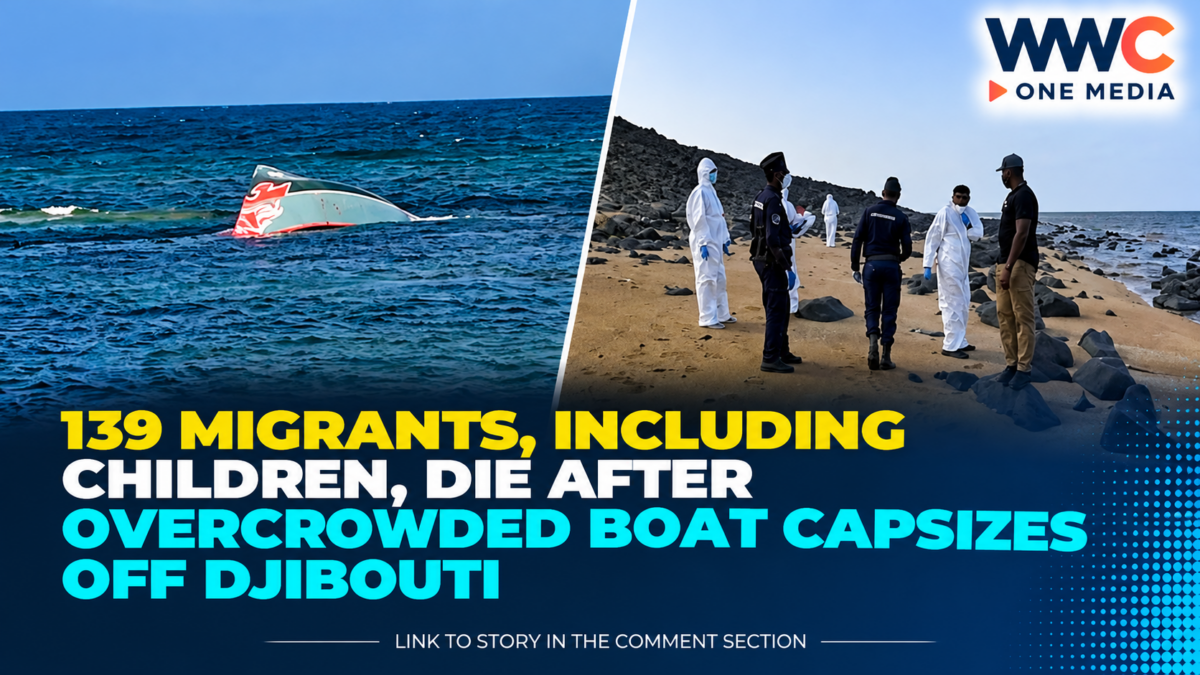
At least 139 migrants, including 15 children, have died after an overcrowded boat carrying more than 300 people capsized off the coast of Djibouti while travelling towards Yemen, according to the United Nations’ International Organization for Migration (IOM).
The tragedy occurred during the night of October 8 to 9, near Guhere, north of the port town of Obock. The vessel was carrying approximately 305 people, many of them Ethiopian nationals hoping to reach wealthier Gulf countries through Yemen.
The IOM reported that around 82 people survived, while another 84 remained missing. Search-and-rescue operations continued as authorities worked to locate those unaccounted for.
Overcrowded Boat Sank Shortly After Departure
According to the IOM, survivors described the boat beginning to sink backwards shortly after they boarded. The vessel capsized near the Djiboutian coast, leaving hundreds of people in danger.
The agency said the reported death toll had been revised as more information and bodies became available. An earlier count of 109 deaths and 116 missing was updated to at least 139 dead and 84 missing.
The official number of deaths may not reflect the full scale of the tragedy. Some victims were reportedly buried by fellow migrants before their identities could be verified by authorities.
Alexandre Coissac, the IOM’s chief of mission in Djibouti, described the incident as a devastating loss of life and said agency teams were working alongside local authorities to provide emergency assistance.
Survivors Receive Medical Assistance as Search Continues
Djiboutian authorities have continued search-and-rescue efforts, while survivors have been receiving medical care and other assistance.
The IOM has also been supporting affected migrants, including those receiving help at a migrant centre in Obock. The agency warned that people who undertake the crossing face serious risks, including dangerous sea conditions, trafficking and possible arrest after reaching their destination.
With dozens of people still missing, the final death toll remains uncertain.
Why Migrants Continue Taking the Dangerous Route
The journey from the Horn of Africa across the Bab al-Mandab Strait to Yemen is known as part of the Eastern Migration Route. Migrants often hope to travel onwards to Gulf countries in search of work and better economic opportunities.
However, the route exposes travellers to severe dangers, including overcrowded vessels, human trafficking and instability in the region.
The IOM has reported that people continue to leave Ethiopia because of difficult living conditions, drought, insecurity and conflict. Some migrants have also reported fleeing forced recruitment by armed groups.
The continuing fighting in parts of Ethiopia has added to concerns about the safety of people attempting to leave the country.
Yemen’s Conflict Adds to the Risks
The disaster comes as Yemen continues to experience renewed fighting and displacement. Despite the danger, migrants continue to cross into the country in hopes of eventually reaching other destinations in the Gulf.
The situation has created additional pressure on migration routes and humanitarian services in the region. The IOM has reported a sharp rise in displacement linked to the conflict in Yemen, while thousands of people have also travelled by sea from Yemen to Djibouti.
The agency has warned that people on the move are increasingly exposed to overlapping crises, from conflict and poverty to climate-related hardship.
UN Agency Calls for Safer Migration Options
The IOM has described the shipwreck as one of the deadliest recorded on the route and called for stronger support for rescue operations and emergency assistance.
The agency has also urged governments and donors to expand safe and legal migration pathways, arguing that people should not have to risk their lives on overcrowded boats to seek safety or economic opportunities.
The disaster underscores the continuing humanitarian toll of dangerous migration journeys across the Red Sea region. As rescue efforts continue, families are left waiting for news of loved ones, while many victims may never be formally identified.