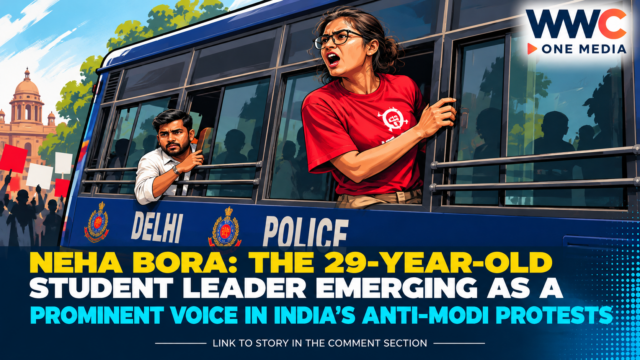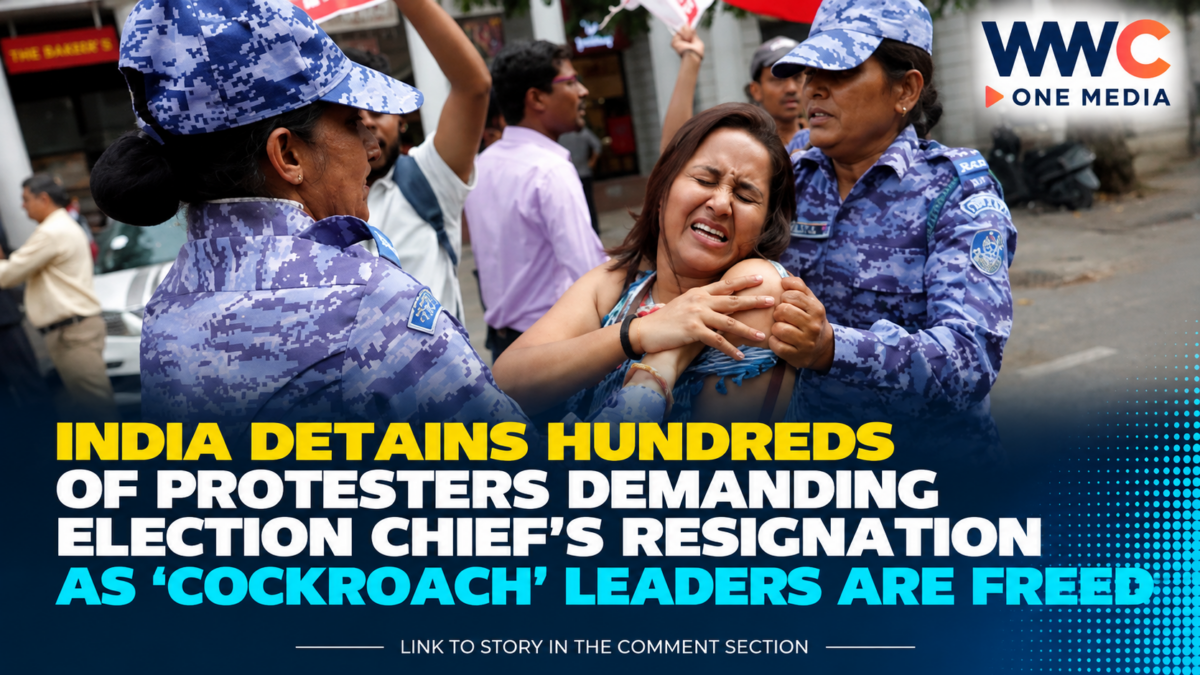
Indian authorities detained hundreds of protesters in New Delhi for a second consecutive day as demonstrations intensified over a controversial revision of voter lists, while a court ordered the release of three leaders from the youth movement known as the Cockroach Janta Party (CJP).
The protests, held on Sunday, October 11, followed a major security crackdown in the Indian capital that saw demonstrators, opposition politicians, journalists and lawyers detained. The movement is demanding the resignation of Chief Election Commissioner Gyanesh Kumar, accusing the election authorities of overseeing voter-list changes that critics say could benefit Prime Minister Narendra Modi’s ruling Bharatiya Janata Party (BJP).
The latest developments have intensified concerns about political freedoms, electoral transparency and the right to peaceful protest in the world’s largest democracy.
Court Orders Release of ‘Cockroach’ Movement Leaders
CJP founder Abhijeet Dipke and senior leaders Saurav Das and Ashutosh Ranka were detained when their plane arrived in Delhi from Mumbai on Saturday, as the group prepared to organise a major demonstration.
A court subsequently ordered their release on the condition that they undertake to maintain public peace, according to the movement.
The group celebrated Dipke’s release with the slogan “Cockroaches never die”, signalling its intention to continue campaigning despite the arrests.
The CJP has emerged as a prominent youth protest movement in recent months, mobilising supporters around issues including unemployment, public services and alleged restrictions on democratic rights.
Its name stems from controversy surrounding remarks by a senior Indian judicial figure referring to unemployed young people as “cockroaches”, which prompted widespread backlash and helped galvanise the movement.
Why Are Protesters Demanding the Election Chief’s Resignation?
At the centre of the dispute is a revision of India’s electoral rolls that has reportedly removed more than 130 million names.
Critics argue that the changes could disproportionately affect opposition supporters and minority communities, raising questions about whether eligible citizens risk losing their right to vote.
The protesters are demanding Kumar’s resignation and greater transparency over how names are being added to or removed from voter lists.
India’s Election Commission and the government have rejected allegations of political manipulation. Authorities say the revision is intended to remove duplicate or ineligible entries and improve the accuracy of voter records.
The central question remains whether the process has adequate safeguards to ensure that eligible voters are not wrongly excluded.
Police Detain Protesters, Journalists and Opposition Figures
Security operations continued across Delhi on Sunday as demonstrators attempted to gather in the capital.
Police detained hundreds of protesters, including young activists and members of student organisations affiliated with left-wing political groups. Small demonstrations were also reported in Mumbai, Kolkata, Panaji and Pune.
Several journalists covering the protests were reportedly detained despite carrying press identification. Opposition lawmaker John Brittas was also briefly detained, while footage circulated online showing him being helped from a police bus.
The All India Students’ Association alleged that some detained protesters were assaulted inside police vehicles. Reuters said it could not independently verify those allegations, and Delhi Police did not immediately respond to questions about the reported incidents.
The scale of the detentions has drawn further attention to how authorities are handling demonstrations over the electoral changes.
Delhi Faces Heavy Security Restrictions
Before the demonstrations, authorities deployed thousands of police and paramilitary personnel to prevent a large gathering.
Restrictions included the closure of dozens of metro stations and markets, suspended mobile internet services in parts of central Delhi, road barricades and increased checks on vehicles entering the city.
The measures disrupted movement across parts of the capital and made it more difficult for protesters to assemble at Jantar Mantar, a designated protest location.
The security operation followed earlier demonstrations in several Indian cities, as the dispute over voter-list revisions developed into a broader political confrontation.
A Growing Test for India’s Democratic Institutions
The protests present a challenge for the Modi government as opposition groups question the transparency of the electoral process and the handling of dissent.
For demonstrators, the dispute concerns more than administrative changes to voter records: it is about ensuring that eligible citizens retain their voting rights and that election authorities operate independently.
For the government and the Election Commission, the stated objective is to maintain accurate voter lists and prevent ineligible registrations.
The controversy is likely to continue as opposition leaders seek legal scrutiny and protesters promise further action.
With the CJP’s senior leaders now released but demonstrations continuing, attention will turn to whether authorities can address concerns over voter-list revisions while protecting the right to peaceful assembly.
Ultimately, the credibility of the process will depend on transparent procedures, effective avenues for appeals and clear evidence that every eligible voter can exercise their democratic rights.