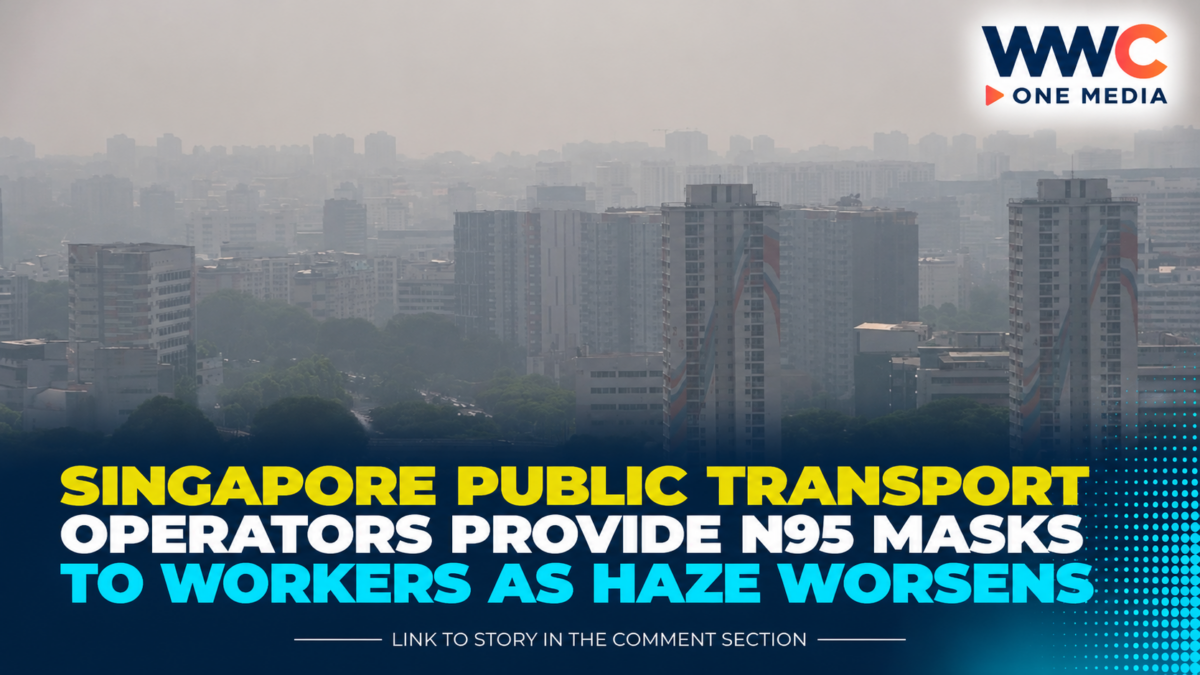
Singapore’s four public transport operators are making N95 masks available to bus and rail workers as haze continues to affect air quality across the island, with authorities urging employers to take precautions to protect staff who spend long hours outdoors.
The National Transport Workers’ Union (NTWU) announced the move in a Facebook post on Monday (Oct 12), naming SMRT, SBS Transit, Tower Transit and Go-Ahead Singapore as the operators providing masks to their workers.
The initiative comes as Singapore experiences worsening haze linked to fires in parts of Indonesia, raising concerns about prolonged exposure to fine airborne particles among workers whose duties require them to remain outside.
Why public transport workers need extra protection
Bus captains, station staff and rail maintenance personnel can spend extended periods working along roads, at transport interchanges and beside railway tracks.
These duties may expose them to polluted air for longer periods than commuters who spend only a short time outdoors travelling between home, work and transport facilities.
NTWU thanked the four operators for working with the union to prioritise workers’ health and safety. It also encouraged employees to monitor air quality, wear N95 masks where appropriate, stay hydrated, take breaks when possible and look out for their colleagues.
Workers who have yet to collect their masks were advised to check with their supervisors or colleagues.
What are authorities advising employers to do?
Singapore’s Government Haze Task Force has urged employers to reduce exposure to haze, particularly for workers who are more vulnerable to its effects.
When the 24-hour Pollutant Standards Index (PSI) reaches the very unhealthy range of 201 to 300, prolonged or strenuous outdoor work should be avoided. If such work cannot be avoided, employers are strongly urged to provide suitable masks, including N95 respirators.
Employers can also reduce exposure by rotating job assignments, using mechanical aids, scheduling indoor rest breaks and ensuring workers have sufficient water.
Older employees, pregnant women and people with chronic heart or lung conditions may require additional precautions.
How dangerous is the haze?
Haze contains fine particles, including PM2.5, that can penetrate deep into the lungs. Exposure may irritate the respiratory system and aggravate existing heart and lung conditions.
The risk depends on pollution levels, the duration of exposure and a person’s health.
N95 masks can reduce exposure to fine particles when fitted properly, but they are not generally necessary for short outdoor journeys or when indoors, according to Singapore’s National Environment Agency (NEA).
People should monitor official air-quality advisories and reduce strenuous outdoor activity when pollution levels rise.
Singapore steps up haze preparedness
The move by public transport operators is part of wider efforts to protect people as the regional haze situation develops.
Singapore’s Haze Task Force has prepared additional measures for the possibility that the 24-hour PSI exceeds 200, including distributing N95 masks to eligible vulnerable residents and setting up air-conditioned haze shelters at selected community facilities.
Authorities have also advised schools, healthcare institutions, employers and sports organisers to adjust activities according to air quality and the health risks involved.
With regional fires continuing to affect conditions, public transport workers and other outdoor employees are being encouraged to take precautions while maintaining essential services.
The latest measures highlight the challenge of keeping Singapore moving while protecting the people who work outdoors to keep its transport network running.