WASHINGTON — President Donald Trump is set to award some of the most powerful figures in global technology the United States’ highest honors for science and technological achievement, turning a White House ceremony into a highly visible statement about the industries Washington believes will define America’s next economic era.
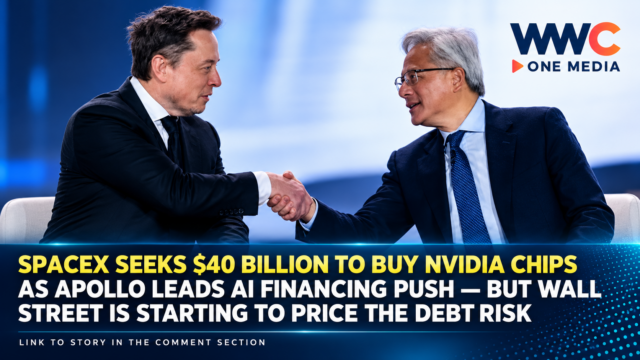
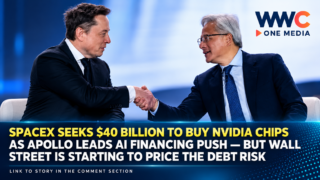
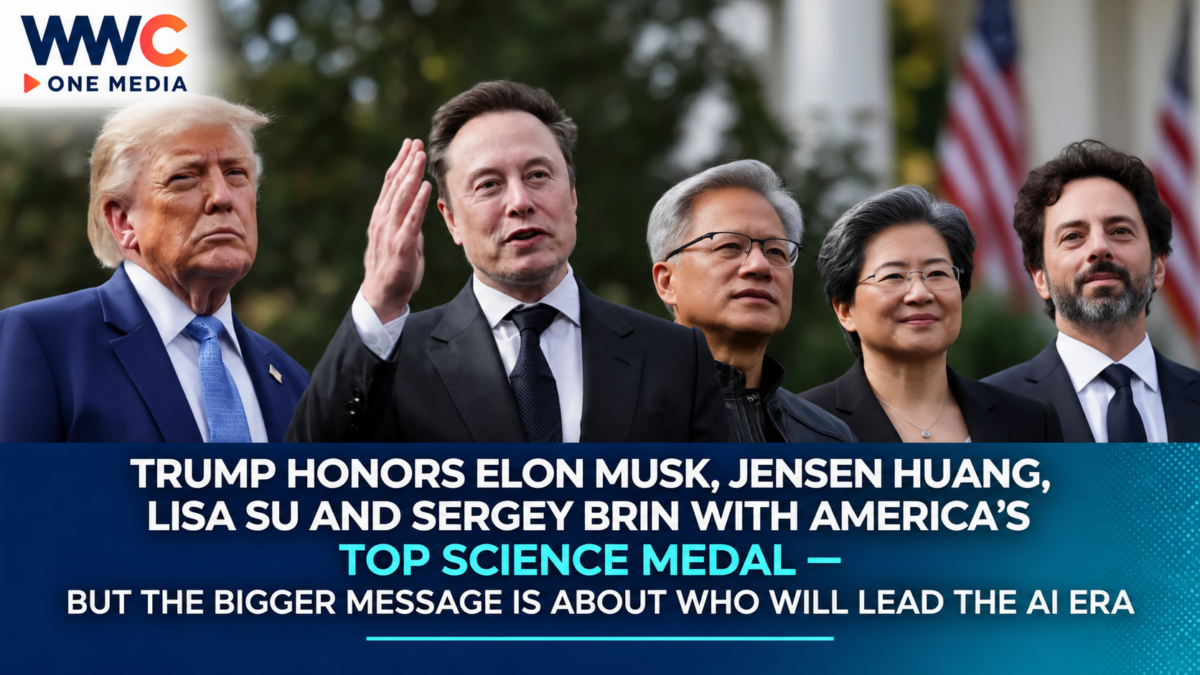
Elon Musk, Google co-founder Sergey Brin, Nvidia CEO Jensen Huang and AMD CEO Lisa Su are scheduled to receive the National Medal of Science during the White House’s “Science: A New Golden Age Summit” on October 8. Michael Dell, founder and CEO of Dell Technologies, and Microsoft CEO Satya Nadella are set to receive the National Medal of Technology and Innovation.
The honors are among the most prestigious awards the U.S. government can bestow on scientists, engineers and innovators.
The National Medal of Science, created by Congress in 1959, is the country’s highest recognition for scientists and engineers whose work has made exceptional contributions to knowledge and the nation.
The National Medal of Technology and Innovation is the nation’s highest honor for technological achievement and recognizes innovations that have strengthened America’s competitiveness, quality of life and economic well-being.
But the significance of this year’s recipients goes well beyond ceremonial prestige.
The list is dominated by leaders in artificial intelligence, semiconductors, cloud computing, aerospace and advanced computing—the same industries now at the center of America’s technological competition with China and the global race to control AI infrastructure.
Musk Returns to the White House for the National Medal of Science
The most closely watched recipient is Elon Musk.
Musk leads SpaceX and Tesla and has also played a major role in artificial intelligence, satellite communications, robotics and reusable rocket technology.
The White House plans to award him the National Medal of Science alongside Brin, Huang and Su.
For Musk, the honor recognizes a career built around several industries that were once considered technically or commercially difficult.
SpaceX changed the economics of space launch through reusable rockets.
Starlink created one of the world’s largest satellite communications networks.
Tesla helped accelerate the global shift toward electric vehicles.
And Musk has increasingly positioned artificial intelligence and robotics as central parts of his long-term technology ambitions.
His inclusion also carries political significance.
Musk has had a highly visible and sometimes complicated relationship with Trump, but the award reflects the administration’s view of his technological contributions separately from political disagreements.
Jensen Huang Represents the AI Chip Boom
Nvidia CEO Jensen Huang is another high-profile science medal recipient.
His company has become one of the most important businesses in the AI economy because its graphics processors are widely used to train and operate advanced artificial-intelligence systems.
The AI boom has transformed Nvidia from a specialist graphics-chip company into a core supplier of computing infrastructure used by cloud giants, startups and governments.
Huang’s recognition comes at a moment when access to advanced chips has become an economic and national-security issue.
Washington increasingly treats semiconductors as strategic infrastructure rather than ordinary commercial products.
Nvidia sits directly at the center of that shift.
Lisa Su Helped Rebuild AMD Into a Semiconductor Powerhouse
AMD CEO Lisa Su will also receive the National Medal of Science.
Her inclusion reflects one of the most successful corporate turnarounds in modern semiconductor history.
When Su became AMD’s chief executive, the company was far weaker than many of its rivals.
Under her leadership, AMD rebuilt its product portfolio around advanced CPUs and GPUs and became a serious competitor to Intel while expanding into data centers and artificial intelligence.
AMD is now also competing with Nvidia in AI accelerators.
That makes Su’s recognition especially relevant to the broader U.S. strategy of maintaining multiple strong domestic semiconductor companies rather than depending on a single supplier.
Sergey Brin Represents the Foundations of the Internet Economy
Google co-founder Sergey Brin is the fourth National Medal of Science recipient.
Brin helped build Google from a university research project into one of the world’s most influential technology companies.
Google’s search technology reshaped how people access information, while Alphabet later expanded into cloud computing, artificial intelligence, autonomous vehicles and advanced research.
Brin has also become increasingly involved again in AI development as Google competes with OpenAI, Anthropic and others.
His award highlights the longer technological arc behind today’s AI boom.
Before large language models became the defining technology race, companies such as Google built the data, computing and machine-learning infrastructure that made modern AI possible.
Michael Dell and Satya Nadella Receive the Technology Medal
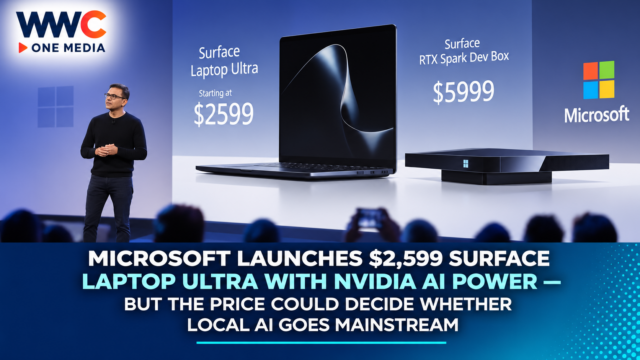
Michael Dell and Satya Nadella will receive a different honor: the National Medal of Technology and Innovation.
That medal is specifically designed to recognize technological achievement and contributions to American competitiveness.
Dell built Dell Technologies into one of the world’s largest computer and enterprise-infrastructure companies.
In the AI era, Dell has gained renewed relevance because hyperscale data centers and corporate AI deployments require enormous numbers of servers, storage systems and networking components.
The company has increasingly marketed AI infrastructure built around Nvidia hardware and Microsoft software.
Nadella Transformed Microsoft Around Cloud and AI
Satya Nadella’s inclusion reflects Microsoft’s transformation over the past decade.
When he became CEO in 2014, Microsoft was still heavily associated with Windows and traditional PC software.
Nadella shifted the company toward cloud computing through Azure and later made artificial intelligence a central corporate strategy.
Microsoft became one of the earliest large technology companies to invest heavily in OpenAI and rapidly integrated generative AI into Office, Windows, GitHub, Azure and other products.
The company now sits at the intersection of cloud computing, enterprise software and AI infrastructure.
That makes Nadella one of the most important business leaders in the current technology cycle.
This Is Trump’s First Time Presenting the Awards
The ceremony is notable for another reason.
It marks the first time Trump has presented the National Medal of Science or National Medal of Technology and Innovation across either of his presidencies, according to reporting on the event.
That gives the selection added symbolic weight.
Rather than honoring primarily academic researchers, the most prominent names this year come from companies that directly shape major commercial technology platforms.
That does not mean academic science is being excluded from U.S. science policy.
But it does highlight the administration’s emphasis on translating research into economic and industrial power.
The Summit Is About Much More Than Medals
The awards ceremony is only one part of the White House event.
The “Science: A New Golden Age Summit” is also expected to showcase the administration’s plan to reshape how the federal government funds scientific research.
White House science adviser Michael Kratsios has been promoting a new framework that calls for changing how federal research dollars are distributed and evaluated.
The administration argues that the current system relies too heavily on traditional academic structures and incremental grantmaking.
Its proposed approach includes more flexible funding mechanisms, longer-horizon grants and support for unconventional research projects.
Washington Wants Science Funding to Behave More Like Investment
One of the most striking parts of the administration’s science strategy is its language around capital allocation.
The White House says federal agencies should treat research funding more intentionally, similar to how serious investors build portfolios.
The administration wants funding agencies to experiment with fast grants, prize competitions, long-horizon grants and mechanisms that allow reviewers to support risky ideas even when they lack broad consensus.
The federal government currently distributes roughly $200 billion annually in research and development funding, according to the White House framework.
That means even small changes in allocation could significantly influence which scientific fields receive support.
AI Is Central to the New Science Agenda
Artificial intelligence is embedded throughout the administration’s science strategy.
The White House has increasingly described advanced AI systems as tools capable of accelerating scientific discovery, automating experiments and helping researchers process enormous amounts of data.
Earlier this month, the United States and 16 other countries endorsed the Kyoto Vision for a Golden Age of Science, which specifically emphasized the use of advanced AI systems in scientific research.
The document argues that AI could enable autonomous experimentation and unlock entirely new lines of scientific inquiry.
That framing helps explain why so many of the medal recipients are closely tied to artificial intelligence.
Nvidia, AMD, Microsoft and Google Are All AI Infrastructure Players
The recipient list can almost be read as a map of the AI supply chain.
Nvidia supplies high-end accelerators.
AMD provides competing chips.
Microsoft operates one of the world’s largest cloud-computing platforms.
Google develops its own AI models and infrastructure.
Dell supplies servers and enterprise hardware.
Musk controls companies involved in AI, robotics, satellite networks and data infrastructure.
Seen together, the selections reflect a view that U.S. scientific leadership increasingly depends on the private sector’s ability to scale technology quickly.
The Awards Also Highlight America’s Semiconductor Strategy
Semiconductors are especially important.
Both Jensen Huang and Lisa Su lead U.S.-based chip companies at a time when Washington is trying to reduce dependence on foreign technology supply chains.
Advanced chips are required for AI systems, military technology, cloud computing, automobiles and industrial equipment.
The U.S. designs many of the world’s most advanced chips but still depends heavily on overseas manufacturing, particularly Taiwan.
That vulnerability has made semiconductor leadership a central national-security issue.
Recognizing both Nvidia and AMD sends a signal that chip design and computing leadership remain strategic national priorities.
Michael Dell Represents the Less Glamorous Side of AI
AI discussions often focus on models and chips.
But those chips must be installed inside physical infrastructure.
Dell Technologies has benefited from this less glamorous but essential layer of the boom.
AI servers require sophisticated power systems, networking, memory and cooling.
Companies building private AI systems also need enterprise infrastructure that can operate outside hyperscale cloud platforms.
That has given companies such as Dell a renewed growth opportunity.
Its inclusion alongside Nvidia and Microsoft reflects the fact that AI is not simply a software story.
It is an industrial infrastructure story.
The Ceremony Comes as AI Risks Are Becoming Harder to Ignore
The celebration of AI leadership comes at the same time that concern about the technology is increasing.
Reuters reported this week that investors, policymakers and scientists are becoming more vocal about financial bubbles, autonomous AI risks and potential misuse of advanced systems.
At conferences in Singapore, experts warned that AI systems could create new security risks and that massive infrastructure spending may not ultimately generate expected returns.
The Trump administration has generally preferred voluntary safeguards rather than aggressive federal regulation, arguing that excessive rules could weaken U.S. competitiveness.
That creates a clear policy tension.
Washington wants AI development to move faster.
But public concern about the technology is also growing.
Trump’s Strategy Prioritizes Innovation Over Heavy Regulation
The administration has repeatedly emphasized that the United States must stay ahead of China in artificial intelligence.
Its approach generally favors rapid deployment, private-sector investment and lighter federal restrictions.
Critics argue that voluntary safeguards may not be sufficient for systems with potentially large social or security consequences.
Supporters counter that overly strict regulation could push innovation abroad.
The medal ceremony reinforces the second view.
The honorees are people who built enormous companies by moving quickly, scaling aggressively and commercializing new technology.
Science Policy Is Becoming Economic Policy
Another important message from the summit is that science is no longer being treated only as an academic issue.
Research policy is increasingly linked to:
economic growth;
national security;
industrial competitiveness;
energy;
space exploration;
and artificial intelligence.
This represents a broader shift in how governments think about science.
Countries now compete not only on military strength or natural resources but also on computing power, semiconductor design and AI capabilities.
The White House summit reflects that worldview.
Private Companies Are Becoming More Important to National Strategy
Most of the recipients lead private or publicly traded companies.
That matters because much of America’s technological capacity now exists outside government laboratories.
SpaceX launches government satellites.
Microsoft and Google operate cloud systems used by federal agencies.
Nvidia and AMD supply chips needed by research institutions.
Dell provides computing infrastructure.
This creates unusually close relationships between Washington and major technology companies.
The benefits are obvious: government can access cutting-edge technology without building everything internally.
But the arrangement also creates risks around concentration, procurement and corporate influence.
Musk’s Award Will Attract the Most Attention
Among all the recipients, Musk is likely to dominate headlines.
His companies span rockets, satellites, electric vehicles, artificial intelligence and robotics.
Few technology executives have comparable reach.
But Musk is also one of the most politically polarizing business figures in the United States.
That means some observers will interpret his medal primarily through politics.
The award, however, is formally intended to recognize scientific and engineering contributions rather than political alignment.
The National Medal of Science is evaluated through a process involving a presidential committee of scientists and engineers, with criteria including impact, innovation and contributions to the nation.
These Awards Are Career Honors, Not Prizes for One Product
Another important distinction is that the medals recognize cumulative achievement.
The National Medal of Science is not intended to reward a single discovery.
NSF says nominees are evaluated based on the impact of their body of work, their contributions to their field and their long-term service to science and the nation.
Likewise, the technology medal recognizes lasting technological contributions to U.S. competitiveness and quality of life.
That makes the awards more comparable to lifetime achievement honors than quarterly performance awards.
The Missing Names Are Also Interesting
The recipient list also raises questions about who is not included.
Two of the most prominent current AI leaders—OpenAI CEO Sam Altman and Anthropic CEO Dario Amodei—are not among the announced recipients.
That should not be interpreted as a formal judgment against them.
Award cycles involve nominations, review timelines and eligibility criteria.
But their absence is notable because their companies are central to the generative-AI revolution.
The current list instead leans toward leaders whose contributions span longer careers in computing, semiconductors, internet infrastructure and engineering.
The Bigger Message Is About Industrial Power
The six most prominent recipients collectively control companies that sit near the center of modern economic infrastructure.
Musk: rockets, satellites and AI.
Huang: AI accelerators.
Su: CPUs and GPUs.
Brin: search, cloud and AI.
Nadella: enterprise software and cloud computing.
Dell: servers and computing infrastructure.
This is not a random collection of technology executives.
Together, they represent many of the layers required to build and deploy advanced computing systems.
That is why the ceremony can be viewed as a statement about industrial strategy as much as scientific recognition.
Washington Is Signaling Who It Thinks Matters in the Next Technology Cycle
Presidential medals do not determine which companies win in the market.
They do not guarantee that AI spending will generate attractive returns.
And they do not eliminate concerns about technology regulation or concentration of corporate power.
But symbolic recognition matters.
Governments use awards, speeches and summits to signal priorities.
By giving America’s highest science and technology honors to leaders of SpaceX, Nvidia, AMD, Google, Dell and Microsoft at the same summit where the White House is promoting a new research strategy, the administration is making those priorities unusually clear.
The United States wants to lead in AI, semiconductors, space, cloud computing and advanced scientific infrastructure.
And it increasingly sees private technology companies as essential partners in that effort.
The bigger question is whether celebrating America’s most powerful technology leaders will translate into broader scientific breakthroughs—or deepen the country’s dependence on a small group of companies already controlling much of the infrastructure behind the next technological era.