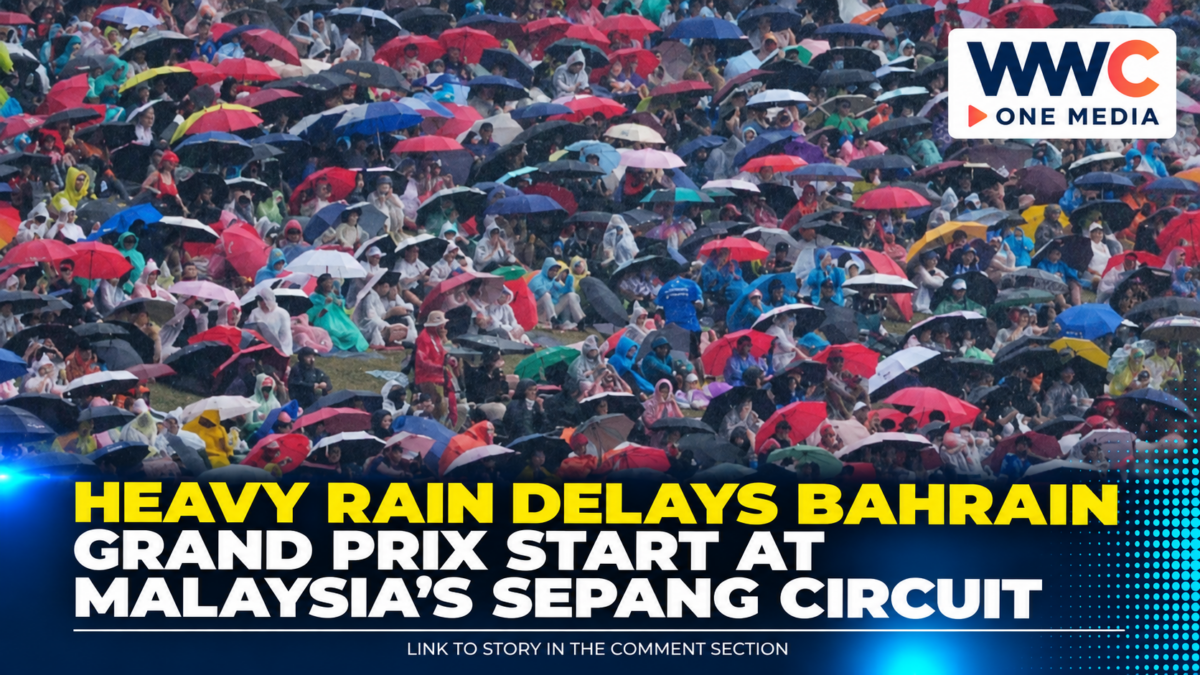
Heavy rain and thunderstorms delayed the start of Formula 1’s Bahrain Grand Prix on Oct. 4, forcing the relocated race to be held under difficult conditions at Malaysia’s Sepang International Circuit.
The race was originally scheduled to begin at 3pm local time, but heavy rainfall shortly before the start left significant standing water around the track. Race officials delayed proceedings while marshals and track crews worked to clear the worst-affected sections.
The unusual race weekend came after the Bahrain Grand Prix was moved from its normal venue because of the conflict in the Middle East. Malaysia stepped in to host the event at Sepang, marking Formula 1’s return to the circuit for the first time since 2017.
The weather added another layer of uncertainty to an already unusual weekend. Sepang is known for tropical conditions and sudden downpours, and the rain arrived shortly before the scheduled start after qualifying had taken place in dry conditions.
Race officials first delayed the formation lap by about 40 minutes. An exploratory lap by the medical car found enough standing water on the circuit to make conditions unsuitable for the cars to begin racing safely.
As the rain eased, drivers eventually headed onto the circuit behind the safety car. However, the problems did not end there. Several cars experienced difficulties during the formation lap, forcing officials to suspend the start procedure again.
Pole-sitter Max Verstappen reported acceleration problems with his Red Bull, while Ferrari’s Lewis Hamilton also encountered a software-related issue that briefly left his car moving slowly on track. The FIA later said an unexpected combination of low engine speed, poor grip and wet-weather energy-management settings had caused an issue affecting several cars.
The changing weather also created major strategic questions for teams. Some drivers opted for intermediate tyres suited to wet conditions, while others gambled on slick tyres as the circuit began drying rapidly.
Hamilton, who started from the front row alongside Verstappen, described the track conditions as extremely slippery during the early stages. Drivers had to manage rapidly changing grip levels while also dealing with spray and standing water in parts of the circuit.
Verstappen had secured pole position ahead of Hamilton, with Mercedes championship leader Kimi Antonelli starting third after a grid penalty affected Red Bull teammate Isack Hadjar. George Russell, Antonelli’s closest title challenger at the time, started seventh.
The rain eventually eased enough for the race to proceed, but the wet start produced a highly unpredictable opening. Hadjar, who had qualified third before being dropped five places on the grid, aquaplaned during the formation lap and went into the gravel. Verstappen and Hamilton also encountered difficulties before the race finally got underway.
Once racing began, tyre strategy became central to the contest. Drivers who started on intermediate tyres were able to benefit when the track conditions improved, while several competitors who chose slick tyres initially struggled for grip.
The race also featured several safety-car periods, adding further complications as teams attempted to time their tyre changes. The rapidly drying circuit eventually favoured drivers able to transition from wet-weather compounds to slick tyres at the right moment.
Verstappen ultimately recovered from a slow start and moved back into contention. He passed Mercedes drivers Antonelli and Russell as the race developed and went on to take his first victory of the 2026 Formula 1 season. Antonelli finished second, while Hamilton recovered from his difficult opening to take third.
The result marked Verstappen’s first F1 win of the year and Red Bull’s first victory of the 2026 campaign. It also gave Verstappen another win at Sepang, where he previously triumphed in the 2017 Malaysian Grand Prix.
Hamilton’s recovery was particularly notable after he dropped down the order early in the race because Ferrari had started him on slick tyres. He eventually fought his way back to third, with Ferrari teammate Charles Leclerc finishing fourth.
The race also had major implications for the championship standings. Russell retired late in the race after appearing to suffer a power-unit problem, allowing Antonelli to extend his advantage over his Mercedes teammate.
For Malaysia, the event represented an unexpected return to the Formula 1 calendar. The country agreed to host the Bahrain race after the original venue became unavailable because of the regional conflict, bringing teams and international fans back to Sepang nearly a decade after Malaysia’s last scheduled Grand Prix.
The weekend had already presented logistical challenges for spectators, with large crowds reporting congestion and problems involving shuttle transportation around the circuit during Friday’s sessions. The heavy rain on race day added another complication to an event that was already unusual because of its relocation.
Despite the delays and difficult weather, the Bahrain Grand Prix eventually went ahead at Sepang. What began with thunderstorms, standing water and repeated interruptions ended with Verstappen taking the chequered flag, Antonelli strengthening his championship position and Hamilton completing a late recovery to the podium.