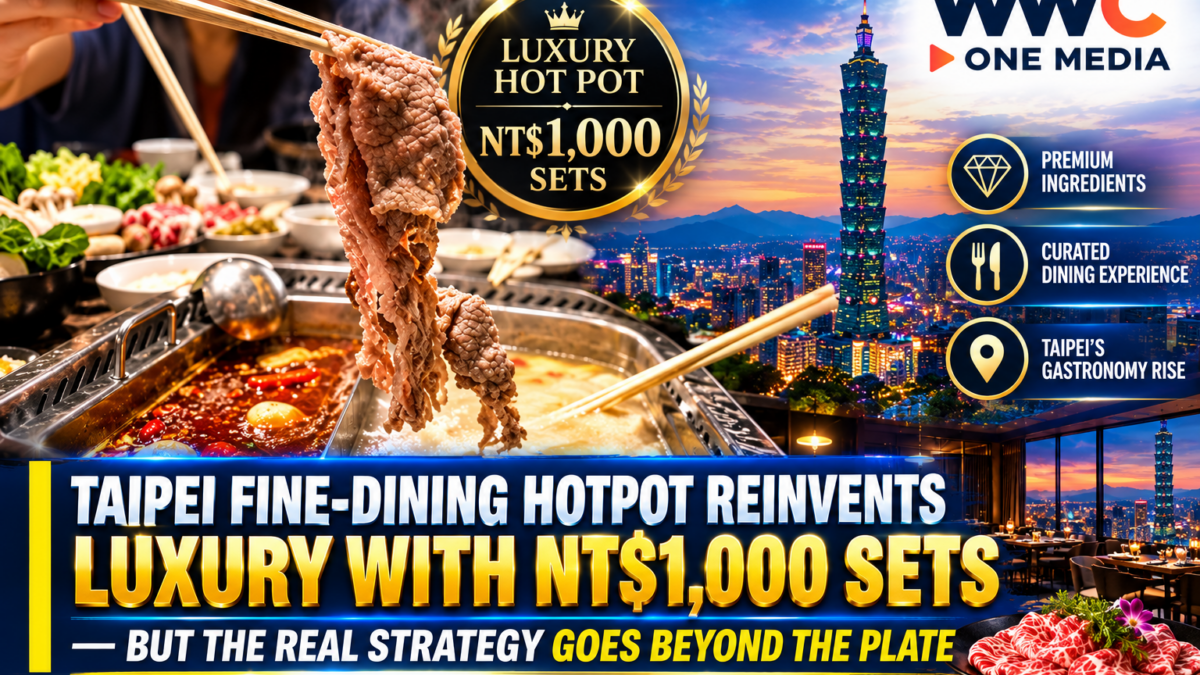
TAIPEI, Taiwan — Taipei’s fine-dining scene is getting a new kind of luxury makeover as hotpot restaurant Ming Yuet shifts away from high-priced tasting menus and introduces a more accessible “light luxury” dining concept.
Located inside Noke Mall in Taipei’s Dazhi district, Ming Yuet has attracted corporate executives and celebrities since opening. Its new menu features premium ingredients including wild live lobster, Miyazaki A5 Wagyu beef and prime U.S. short ribs, but in smaller, more balanced portions designed to bring down the overall price.
The new approach comes as restaurants face ongoing labor challenges. According to Operational Director Wang Zhen-yu, the menu was initially redesigned to simplify kitchen and service operations amid staff shortages.
But the response from customers revealed something bigger: diners were interested in having premium ingredients without committing to the higher prices traditionally associated with fine dining.
Premium Hotpot for Around NT$1,000
Under Ming Yuet’s new pricing model, customers can dine for around NT$1,000 (US$31).
The restaurant says the strategy is not simply about cutting costs. Instead, it is attempting to preserve ingredient quality while making the dining experience more accessible.
Among the offerings are premium seafood and meats, alongside Cantonese-style wok dishes such as Typhoon Shelter 5L king crab legs and wok-seared Australian Wagyu with hot peppers.
The Supply Chain Behind the Lower Prices
Ming Yuet is also changing how it sources seafood.
Wang said he spent more than six months establishing direct purchasing agreements with hand-line fishermen in Taitung and Penghu, allowing the restaurant to bypass seafood auction markets and some middlemen.
Wild seafood, including Penghu squid and coral grouper, is processed immediately at the restaurant’s dedicated flash-freezing facility in Penghu.
For seasonal products such as Pingtung Pacific bluefin tuna, Ming Yuet purchases whole fish and reserves premium cuts for its hotpot offerings.
The approach gives the restaurant greater control over sourcing while supporting its effort to offer high-end ingredients at a lower menu price.
A Dining Space Designed by Kengo Kuma
The food isn’t the only part of Ming Yuet’s luxury appeal.
Its interior was designed by renowned Japanese architect Kengo Kuma and is described as his only restaurant design project in Taiwan.
The restaurant’s 10-meter-high dining room draws inspiration from coastal sea caves, using warm timber latticework to filter natural light and create a distinctive architectural atmosphere.
That combination of high-end ingredients, architecture and a more approachable price point forms the centerpiece of Ming Yuet’s new “light luxury” concept.
Ming Yuet Eyes Expansion Across Taiwan
The Dazhi restaurant is also being positioned as more than a single dining destination.
Ming Yuet plans to use the location as an operational and training base before potentially expanding into major commercial districts in northern, central and southern Taiwan.
That means the restaurant’s latest menu experiment could ultimately become a blueprint for a wider expansion strategy.
For now, Ming Yuet is betting that diners want the experience associated with luxury restaurants—but without necessarily paying traditional luxury prices.
And with premium seafood, A5 Wagyu and high-end architecture still on the table, the next question is whether this lighter version of luxury dining can become a lasting trend in Taiwan’s competitive restaurant market.
WWC ONE MEDIA G,A