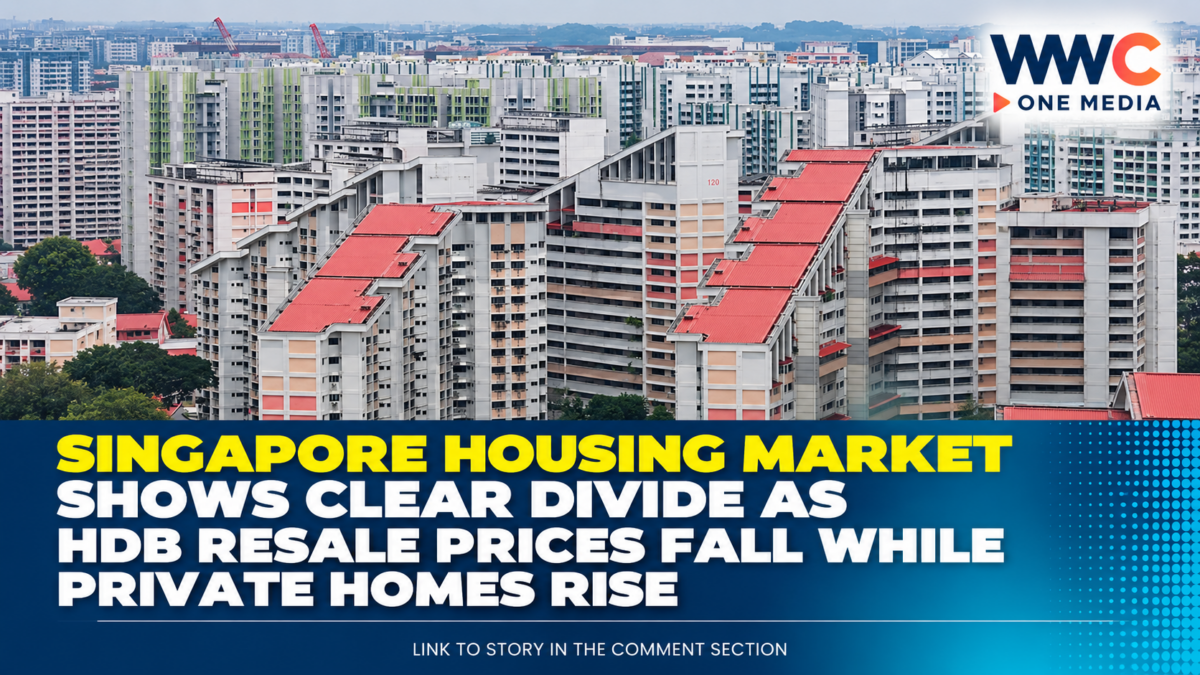
Singapore’s residential property market is showing a growing divide between public and private housing, with HDB resale prices continuing to soften while private home prices recorded another increase.
Flash estimates released on October 1 showed that private residential property prices rose 1.4 per cent in the third quarter of 2026, accelerating from the 0.5 per cent increase recorded in the second quarter. At the same time, HDB resale prices declined another 0.2 per cent.
The latest figures mark the second consecutive quarter of decline for the HDB resale market. Prices had already fallen 0.1 per cent in the first quarter and another 0.3 per cent in the second quarter, indicating that the market has moved into a period of softer price growth after several years of increases.
The private housing market, meanwhile, picked up pace in the third quarter. Landed private properties recorded a 2.8 per cent increase, compared with 2.5 per cent in the previous quarter.
The Outside Central Region, which covers many suburban areas, recorded the strongest private property price growth at 2.2 per cent. Prices in the Rest of Central Region edged up 0.2 per cent, while the Core Central Region also recorded growth.
The contrasting performance comes as Singapore’s HDB resale market receives additional housing supply. About 13,500 flats are expected to reach their five-year Minimum Occupation Period in 2026, allowing more units to enter the resale market.
HDB has also been increasing the supply of new flats, with around 50,000 BTO units planned for launch between 2025 and 2027. The additional supply is expected to give buyers more choices and reduce some of the pressure that previously pushed resale prices higher.
Another major change came in July, when the government removed the 15-month waiting period for private property owners who want to purchase eligible, non-subsidised HDB resale flats without an HDB housing loan.
The policy change gives former private homeowners greater flexibility to move into larger resale flats after selling their private properties. Analysts have said this could bring additional demand, particularly for five-room and larger flats, although the growing supply of resale units may help absorb that demand.
The softer HDB market is also reflected in transaction activity. Resale transactions fell 10.2 per cent year-on-year in the first half of 2026, while analysts reported longer selling periods and fewer enquiries for some resale flats.
For private housing, the stronger third-quarter performance suggests continued demand despite broader economic uncertainties. The increase was particularly noticeable in suburban and landed properties, where prices accelerated compared with the previous quarter.
The diverging trends mean Singapore’s housing market is no longer moving uniformly. HDB resale buyers are gaining more options as supply expands and prices moderate, while private residential properties continue to record price increases, particularly in selected segments.
With more HDB flats expected to enter the resale market over the coming years and additional BTO projects being launched, the balance between supply and demand will remain a key factor shaping Singapore’s residential property market. At the same time, private home prices will continue to be influenced by buyer demand, land costs and the availability of new developments.