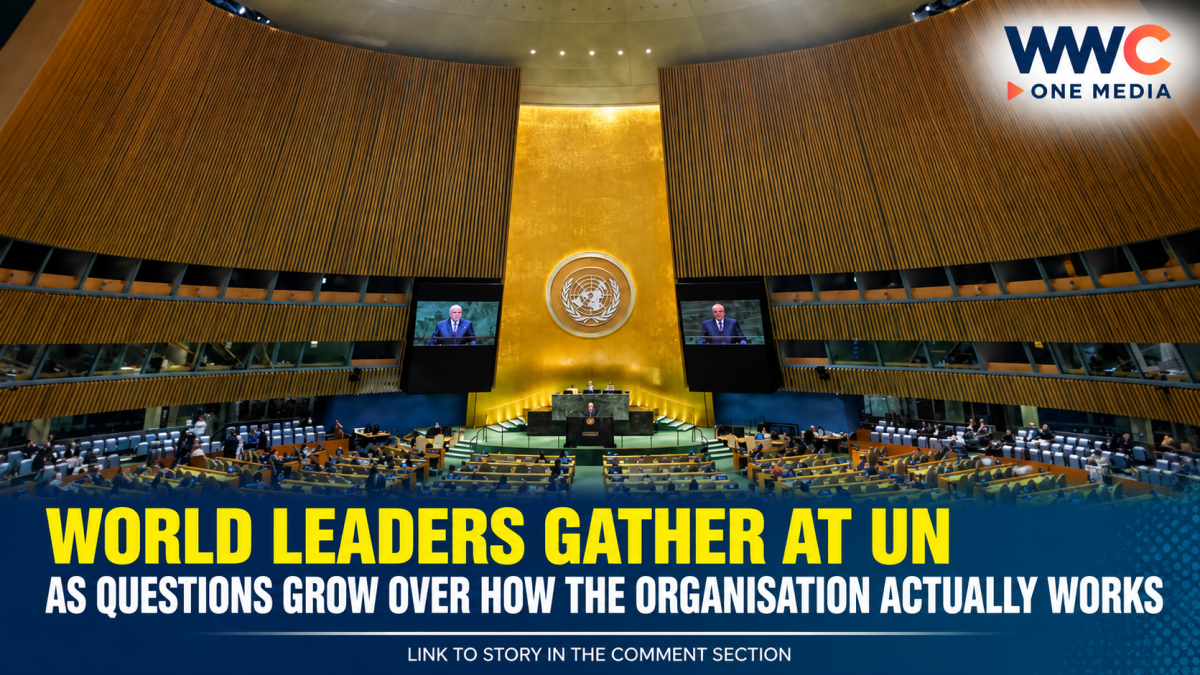
World leaders regularly gather at the United Nations to debate wars, climate change, development and other global challenges, but the organisation’s structure can make it difficult to understand who actually has the power to act.
The United Nations was created after World War II with the goal of preventing another global conflict and giving countries a forum for cooperation. Today, it has 193 member states, each represented in the General Assembly.
The General Assembly is the UN’s largest political body, where all member states have a vote. Countries use the forum to debate international issues and adopt resolutions, but most General Assembly resolutions are recommendations rather than legally binding orders.
The Security Council has a different role. It has 15 members, including five permanent members — China, France, Russia, the United Kingdom and the United States — that hold veto power. The council can adopt legally binding decisions, impose sanctions and authorise peacekeeping missions or the use of force in certain circumstances.
That veto system is one of the central reasons the UN can struggle to act when major powers disagree. A substantive Security Council resolution can be blocked by any one of the five permanent members, even when a majority of other countries support it.
The UN also has specialised agencies and programmes dealing with issues ranging from health and food security to refugees, aviation and international development. Bodies such as the World Health Organization and the UN Refugee Agency operate within the broader UN system but have their own mandates and structures.
The UN Secretary-General serves as the organisation’s chief administrative official and its highest-profile diplomatic figure. The secretary-general can raise issues, encourage negotiations and use the office’s diplomatic influence, but does not have the authority to order sovereign countries to follow UN policies.
Funding is another important part of how the organisation functions. Member states contribute to the UN’s regular budget and peacekeeping operations according to agreed formulas. Countries also provide voluntary funding for many humanitarian and development programmes.
The system means the UN is neither a world government nor an institution that can automatically enforce every resolution. Its effectiveness depends heavily on cooperation among member states, particularly the major powers represented on the Security Council.
That can produce a gap between the expectations placed on the organisation and the authority it actually possesses. World leaders can make speeches, negotiate agreements and vote on resolutions, but implementation ultimately depends on national governments and the willingness of countries to cooperate.
The annual gathering of leaders therefore serves two purposes: it provides a global platform for countries to present their positions, while also giving governments an opportunity to negotiate issues that cannot easily be addressed through bilateral diplomacy alone.