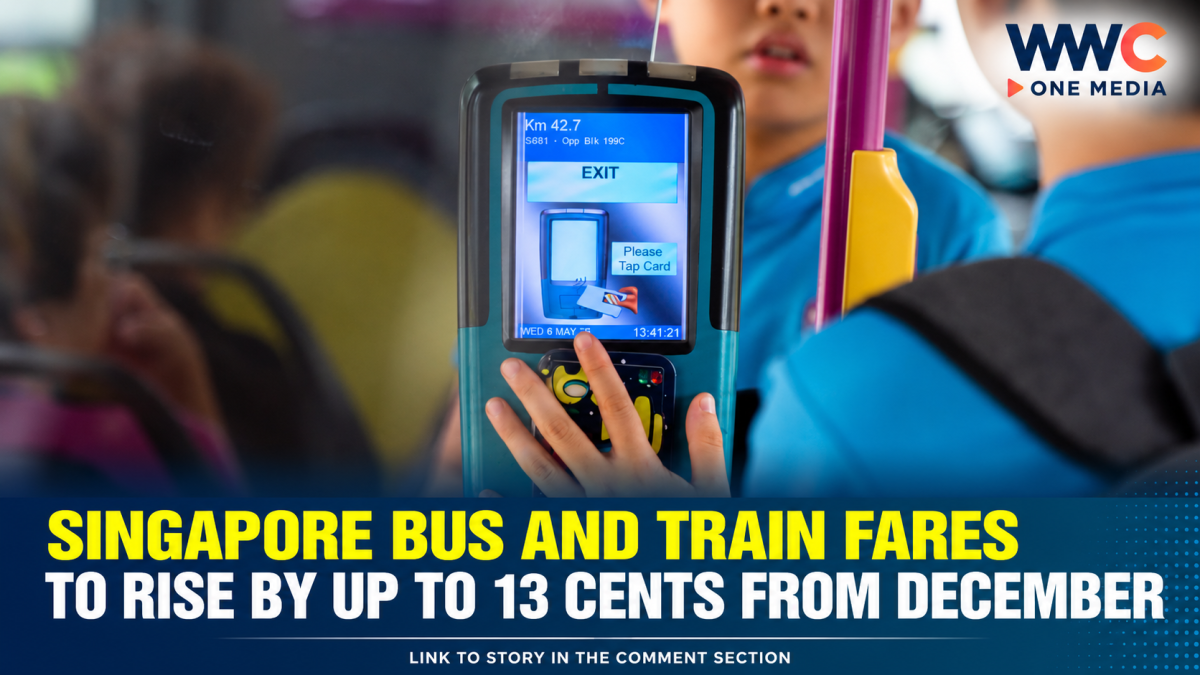
Singapore commuters will pay more for bus and train rides from Dec. 26, with public transport fares increasing by 7% under the latest annual fare review.
Adult commuters paying by card will see fares rise by 12 cents for journeys of up to 3.2 kilometres and by 13 cents for longer trips. The new baseline adult card fare for shorter journeys will be S$1.40.
Students, senior citizens and commuters with disabilities will face a five-cent increase per journey. For those who pay in cash, adult fares will rise by 20 cents, while concessionary fares will increase by 10 cents. Cash payments account for less than 1% of public transport journeys.
The Public Transport Council said the 7% adjustment is below the maximum allowable increase of 14.7%. The fare formula produced a 5.3% adjustment, while the remaining increase comes from part of the 9.4% adjustment deferred from previous years.
Higher energy prices between July 2025 and June 2026 were identified as the main factor behind the increase. Public transport is particularly sensitive to energy costs because of the fuel and electricity required to operate buses and rail services.
Monthly travel pass prices will remain unchanged at S$122 for adults and S$55 for seniors and people with disabilities. The Workfare Transport Concession Scheme fare will also remain unchanged, benefiting about 190,000 lower-wage workers.
The government will provide nearly S$200 million in additional subsidies in 2027 to cover part of the fare increase that is being deferred, on top of more than S$2 billion in annual public transport operating subsidies.
To help lower-income households manage the higher costs, Public Transport Vouchers will increase from S$60 to S$80 per household. The income eligibility ceiling will also rise from S$1,800 to S$2,100 in monthly household income per person, allowing about 60,000 additional households to qualify.
The changes mean commuters will face higher fares from December, while the unchanged monthly passes, Workfare fares and expanded voucher scheme will provide several ways for eligible passengers to manage the additional transport costs.