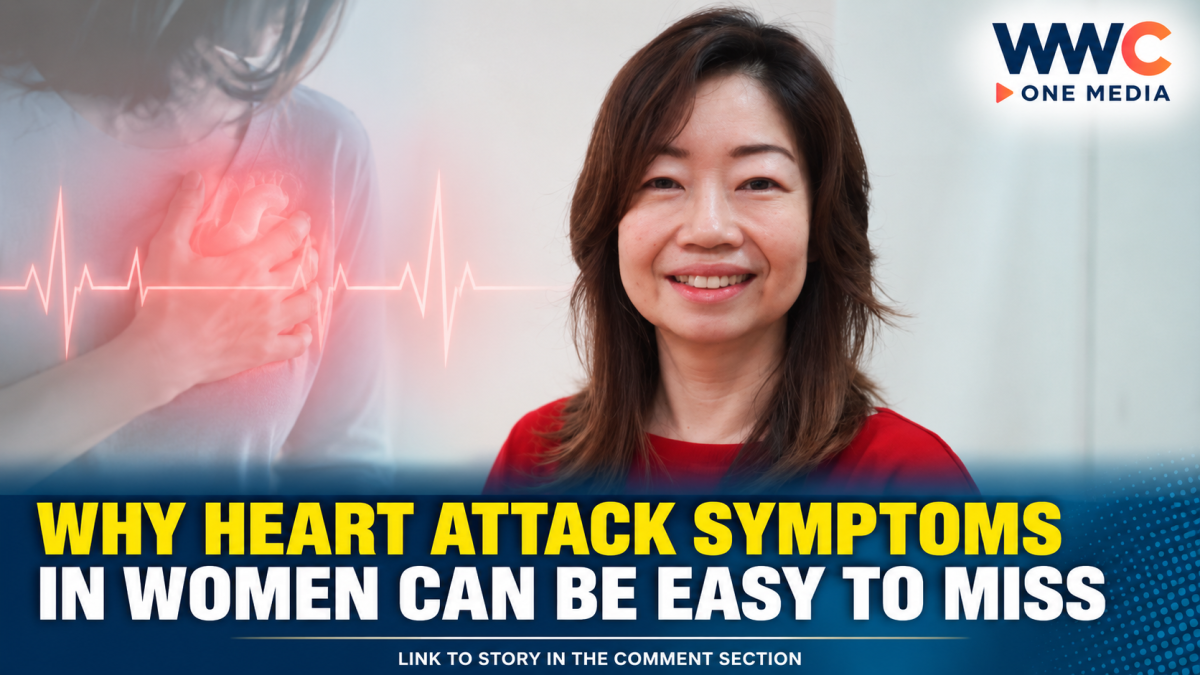
When Angie Ng began experiencing breathlessness and chest tightness during a church service in 2022, she initially thought the symptoms were caused by anxiety or stress rather than a heart attack. Her experience highlights a broader concern among women, whose heart attack symptoms can sometimes differ from the classic warning signs many people associate with the condition.
Women can experience chest pain or pressure during a heart attack, but they may also develop less obvious symptoms such as unusual fatigue, shortness of breath, nausea, dizziness, sweating, or discomfort in the back, neck, shoulder, jaw or upper abdomen. These symptoms can sometimes be mistaken for indigestion, exhaustion or emotional stress.
The Singapore Heart Foundation has highlighted unusual fatigue, nausea, sudden dizziness, cold sweats, breathing difficulties and pain in areas such as the back, shoulder, neck or jaw as possible warning signs for women. It advises people experiencing suspected heart attack symptoms to seek emergency medical attention immediately.
Medical specialists have also emphasized that heart attacks are not limited to older men. Singapore has recorded an increase in heart attack cases over the years, including among younger adults. Data cited by the National University Heart Centre Singapore showed that the number of heart attacks rose from about 8,000 in 2011 to more than 12,400 in 2021, with 8% to 12% occurring among people below 40.
Another challenge is that some heart problems can initially resemble other conditions. For example, breathlessness, sweating, chest discomfort or an irregular heartbeat can have several possible causes, making medical assessment important when symptoms are new, severe or unexplained.
Heart specialists stress that unusual symptoms should not simply be dismissed because they do not resemble the stereotypical image of a heart attack. Recognising the warning signs early can help people seek treatment sooner, when urgent medical intervention may limit damage to the heart.
Anyone experiencing possible heart attack symptoms should seek emergency medical care rather than attempting to diagnose the cause themselves. In Singapore, the Singapore Heart Foundation advises calling 995 for an ambulance and avoiding self-driving to the hospital.