For nearly four decades, business journalism in the Philippines has evolved alongside the economy, technology and the changing needs of companies and investors. As the country enters another period of economic transformation, reliable business information has become increasingly important to understanding where opportunities and risks are emerging.
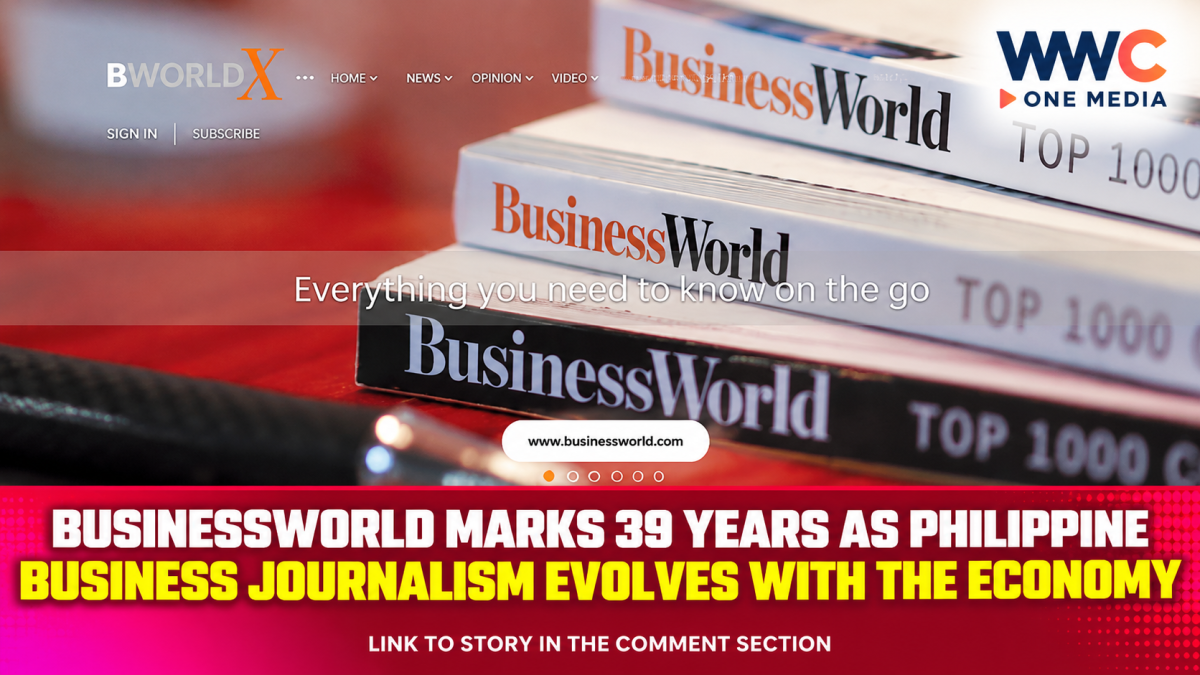
BusinessWorld, which is marking its 39th anniversary, has built its identity around covering the forces shaping Philippine business and the wider economy. Its anniversary coverage looks back at how the publication has navigated major economic disruptions while adapting to a media environment increasingly shaped by technology and digital platforms.
The Philippine business landscape has changed dramatically since the publication began. Companies that once operated primarily within domestic markets now face increasingly integrated regional supply chains, digital competition, shifting consumer behavior and faster changes in technology.
That transformation has also expanded the role of business intelligence. Economic data, corporate results, market movements and industry trends now reach decision-makers at a much faster pace, making the ability to interpret information almost as important as access to it.
For businesses, the need for credible information has become particularly important as the Philippines navigates an uneven economic recovery. Recent indicators have pointed to both opportunities and vulnerabilities, including stronger manufacturing activity, changing investment flows and continuing concerns over growth, inflation and market confidence.
The country’s longer-term outlook remains tied to its ability to attract investment, expand productive capacity and improve competitiveness. Recent projections have placed the Philippines among Southeast Asia’s faster-growing major economies over the coming decade, although achieving that potential will depend on domestic reforms, infrastructure, productivity and the global economic environment.
Technology has meanwhile changed not only how businesses operate but also how business news is produced and consumed. Digital platforms allow financial information, market developments and corporate announcements to reach audiences almost instantly, while data-driven reporting provides greater opportunities to explain trends beyond individual headlines.
The expansion of digital payments, financial technology and data analytics is another example of how quickly the Philippine business environment is changing. At the same time, digitalization brings new challenges, including cybersecurity risks and the need for businesses to adapt their systems and workforce to increasingly technology-driven operations.
Small and medium-sized enterprises are also becoming increasingly important to the country’s business ecosystem. New digital tools are allowing companies outside the largest corporate centers to analyze consumer behavior, manage operations and reach customers in ways that were previously more difficult or expensive.
This broader access to information is changing the relationship between businesses and their customers. Data from retail and digital platforms, for example, can reveal regional purchasing patterns and consumer preferences, giving companies more detailed information for decisions involving products, pricing and distribution.
But the expansion of business intelligence also creates a greater responsibility for accuracy. In an environment where financial information, economic forecasts and corporate claims can spread rapidly, businesses and investors increasingly need reporting that separates verified data from speculation and provides enough context to understand what the numbers actually mean.
That challenge is likely to become even more significant as artificial intelligence and automated data tools become more deeply integrated into business operations. Faster access to information can improve decision-making, but the value of that information still depends on its reliability, interpretation and context.
The Philippine economy is therefore entering a period in which information itself has become an increasingly important business resource. From large corporations and financial institutions to entrepreneurs and MSMEs, companies are operating in an environment where understanding economic signals can influence investment, expansion and long-term planning.
After 39 years, the evolution of Philippine business journalism reflects that broader transformation. The country has moved from a largely print-centered information environment into one where news, data and analysis circulate continuously across multiple platforms.
As the Philippines continues to expand its digital economy and deepen its regional and global connections, the demand for credible business intelligence is likely to grow with it. The next phase will not simply be about reporting more information, but about helping businesses understand an economy that is becoming faster, more interconnected and increasingly driven by data.