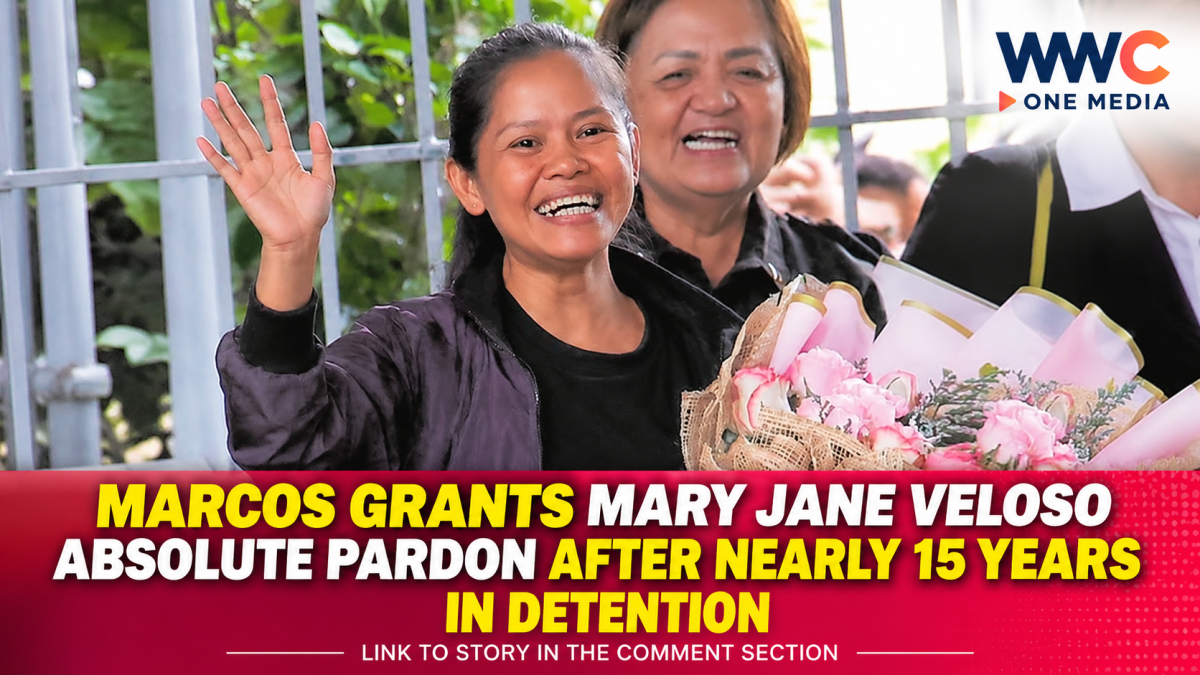
President Ferdinand Marcos Jr. has granted an absolute pardon to Mary Jane Veloso, ending a long legal ordeal that began with her arrest and death sentence in Indonesia in 2010.
Marcos confirmed on Friday, Sept. 25, that he signed Veloso’s pardon the previous day. The announcement came just two days after Malacañang said the administration was seriously considering clemency on humanitarian grounds.
Veloso was arrested in Yogyakarta, Indonesia, in 2010 after authorities discovered about 2.6 kilograms of heroin concealed in her suitcase. She was convicted of drug trafficking and sentenced to death, while consistently maintaining that she did not know the drugs were inside the luggage.
Her execution was halted at the last minute in April 2015 after the Philippine government appealed to Indonesia to allow her to remain alive so she could potentially testify in proceedings involving people accused of recruiting and trafficking her.
Veloso subsequently remained in Indonesian custody for years. After negotiations between Manila and Jakarta, the two governments reached an agreement allowing her transfer to the Philippines. She returned in December 2024 and was brought to the Correctional Institution for Women in Mandaluyong City.
Her case remained under discussion after her return, with calls for executive clemency continuing while she served the remainder of her sentence under Philippine custody. The Office of the President reviewed her request for clemency before Marcos ultimately signed the absolute pardon.
The decision means Veloso is no longer required to continue serving the sentence that followed her Indonesian conviction. Her legal team expects her release following the completion of the necessary procedures.
The pardon also closes a case that has remained closely followed in the Philippines for more than a decade, involving questions about migrant-worker protection, human trafficking and the treatment of Filipinos facing severe penalties overseas.
For Veloso and her family, the signing of the pardon marks a major turning point after years of imprisonment — from a death sentence in Indonesia to a return home, and now the prospect of freedom in the Philippines.